Tree pruning often feels like the easiest bit of garden care: a quick tidy, a cleaner outline, a bit more light through the canopy. But trees can look “fine” for years while a subtle, repeated cut pattern quietly rewires their growth and weakens their structure. Once you spot it, you’ll see it in street trees, neat front gardens, and even supposedly well-kept orchards.
The overlooked pattern is simple: the same points get cut back, again and again, creating knobbly “heads” and dense tufts of shoots at the ends of branches. It reads as maintenance. In reality, it can be a slow-motion stress test.
The pattern you’re looking at: repeated tip cuts that create “tufts”
The giveaway isn’t one bad cut. It’s repetition: every year (or every other year) someone shortens the same branch tips to the same line, leaving clusters of old stubs. The tree responds with a burst of new shoots just behind the cuts, because it’s lost leaf area and tries to replace it fast.
From a distance the crown still looks green and full. Up close, you see tight brooms of upright shoots, thickened end joints, and a strange “lollipop” density out on the perimeter.
A full canopy can hide a poor pruning history. The structure tells the truth.
Quick visual checks in 60 seconds
- Lots of thin, straight shoots shooting upward from the ends of branches (not from the trunk).
- Knobbly swellings where cuts were made repeatedly over several seasons.
- A “hedged” outline on a tree that should have a layered, natural shape.
- Dense outer foliage with a sparse, shaded interior.
Why it happens (and why it’s so common)
This pattern usually comes from good intentions and a tight schedule. People prune to “keep it in bounds”, clear a path, or reduce shade, but they do it the same way each time: shorten everything back a bit. It’s fast, it looks instantly tidy, and it avoids bigger decisions about which branches to remove.
The problem is that many species interpret repeated shortening as an injury to compensate for. Instead of building strong, well-spaced limbs, they produce lots of fast regrowth near the cut points. Over time, the canopy becomes a mass of weak attachments competing for space.
What it does inside the tree
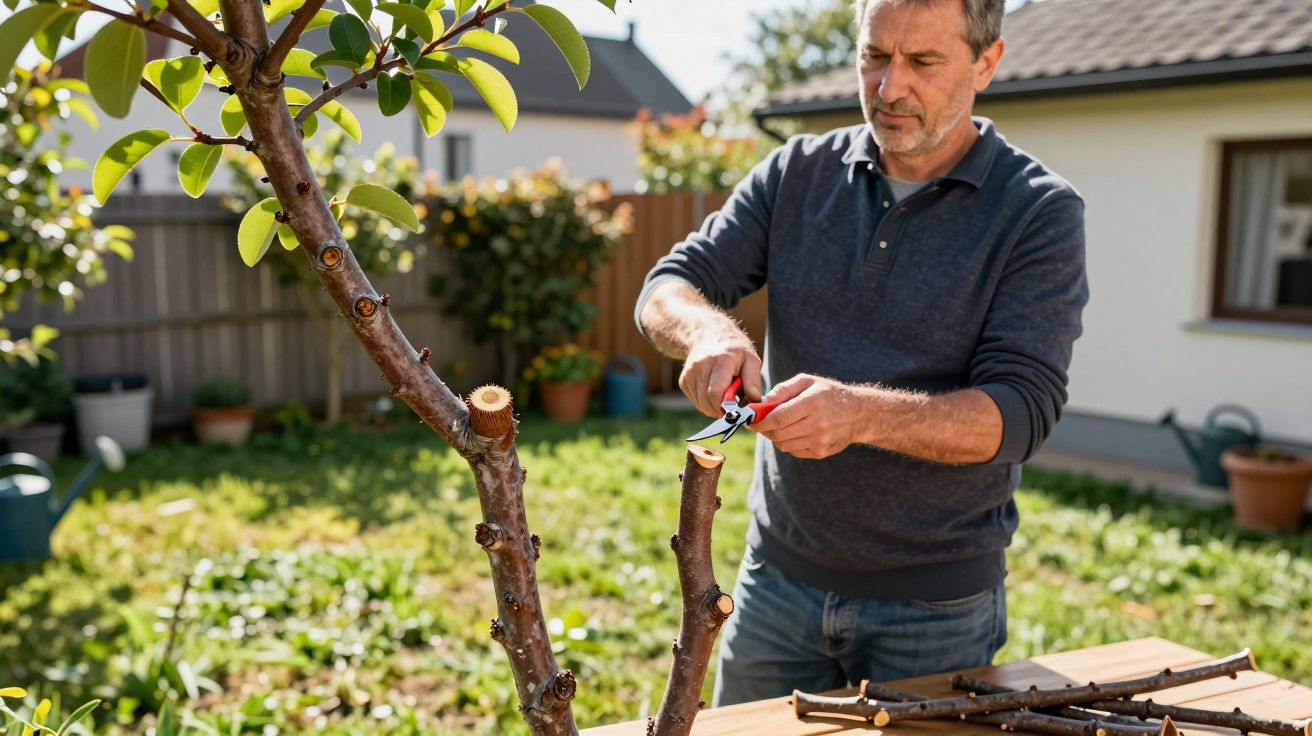
Repeated heading cuts (shortening a branch without removing it back to a suitable side branch) shift growth to the outside and increase crowding. Each burst of regrowth shades the interior, so older, productive wood declines and the tree becomes dependent on frequent cutting to “behave”.
It also changes leverage. Dense tufts at branch ends catch wind like small sails, and the weight sits further out from the trunk. That increases the chance of breakage during storms, especially if the regrowth is attached to older stubs with poor wood formation.
The long-term risks people don’t connect to pruning
- Weak junctions: multiple shoots from one point can split as they thicken.
- Sun scorch and stress: removing too much leaf area prompts harsh rebound growth and can expose bark.
- Bigger future cuts: delaying proper structural work often means larger wounds later.
- Cycle of dependence: the tree becomes “messy” quickly, so it gets pruned harder next time.
The better alternative: fewer cuts, but more intentional ones
The aim isn’t a perfectly even outline. It’s a stable framework: a clear leader where appropriate, well-spaced scaffold branches, and enough light inside the crown that the tree can hold foliage throughout-not just at the tips.
A simple rule of thumb is to remove some branches completely (at the right point), rather than shortening lots of branches indiscriminately. That reduces density without triggering the same frantic tufting response.
A practical approach for most garden trees
- Start with dead, damaged, crossing branches. These are decisions you won’t regret.
- Thin for spacing, not shape. Choose a smaller number of branches to remove entirely to reduce crowding.
- Use reduction cuts sparingly. When shortening is needed, cut back to a side branch that’s large enough to take over (avoid leaving stubs).
- Step back twice. If the tree suddenly looks “too open”, you’ve probably done enough for this season.
You’re not trying to make the tree smaller in one session. You’re trying to make it easier to live with for the next ten years.
If you’ve inherited a “tufted” tree, don’t try to fix it in one go
The temptation is to hack it back hard and reset everything. That usually doubles down on the problem: more stress, more regrowth, more weak attachments. A better plan is staged correction over two to four seasons, reducing density and improving structure gradually.
Focus on removing a few of the worst competing shoots from each tuft, leaving the best-placed ones to mature. Over time you can shift growth back from the outer tips and rebuild a calmer canopy.
Signs you should slow down (or call an arborist)
- Large limbs over targets (house, drive, public path).
- Multiple old topping points with heavy end weight.
- Cracks, included bark, or previous tear-outs.
- The tree is protected by a Tree Preservation Order or in a conservation area (common in the UK).
Timing and restraint: the quiet difference between “tidy” and “healthy”
Many routine prunes happen because the calendar says so, not because the tree needs it. But trees respond differently depending on season, species, and stress level (drought, construction, poor soil). A light, well-chosen prune at the right time often beats an annual heavy cut done on autopilot.
As a guiding principle, the less you remove, the less the tree has to “panic replace”. If you’re repeatedly dealing with a surge of shoots each year, that’s feedback: the method is driving the mess.
A quick comparison of pruning choices
| Pattern | What you see next | Typical outcome |
|---|---|---|
| Repeated heading cuts at tips | Dense tufts, fast upright shoots | Weak structure, more maintenance |
| Selective thinning & proper reduction cuts | Slower regrowth, clearer branch lines | Stronger canopy, fewer interventions |
| One-off heavy “reset” prune | Explosive regrowth, sun exposure | Stress, risk of failure, repeat work |
FAQ:
- Can I just keep clipping the new shoots each year? You can, but it usually locks the tree into a cycle of weak, tufted regrowth. It’s better to reduce the cause by removing a smaller number of branches properly, and spacing the remaining growth.
- Is this the same as pollarding? Not quite. Pollarding is a specific, started-young management system with repeated cuts at defined points. Random, late, repeated tip cutting on mature trees often mimics the look without the structure or safety of true pollarding.
- How do I know if a cut is a “stub”? If you’ve shortened a branch and left a short length with no suitable side branch to take over, that’s effectively a stub. Aim to cut back to a lateral branch that can become the new tip.
- When is it safest to get professional help? If major limbs are involved, the tree is near buildings or roads, or you’re unsure about legality (TPO/conservation areas), consult a qualified arborist before changing the pruning approach.





Comments (0)
No comments yet. Be the first to comment!
Leave a Comment