It’s tempting to treat garden maintenance like a list you can tick off: mow, weed, trim, done. But professional practice rarely works that way, because gardens aren’t a set of separate chores - they’re a living system with timing, weather, plant biology and knock-on effects. If you learn to think like a pro, you stop fighting your garden every weekend and start getting ahead of it.
On a bright Saturday you can hear it in every street: mowers roaring, strimmers whining, someone dragging a green bin to the kerb like it owes them money. The work looks organised from the outside. Up close it’s often reactive - a frantic haircut because the lawn “got away”, a hedge hacked back because a neighbour mentioned it, a bed “weeded” because you can see the soil again.
Professionals don’t dislike task lists. They just know that a task list is the end of planning, not the beginning.
The mistake isn’t the work - it’s the order you’re thinking in
A task-based plan treats mowing and pruning as separate, equal jobs. A professional plan treats them as outputs of a bigger question: what does this garden need this month to stay stable and look good? That shift sounds airy until you try it once, then everything gets simpler.
Here’s what task-thinking creates:
- You do the visible jobs first (lawn edges, hedge faces) because they feel satisfying.
- You miss the quiet jobs (soil, mulching, watering patterns) because they don’t “show”.
- You bounce between areas with different tools, making five small messes instead of one tidy finish.
- You prune at the wrong time, then wonder why flowering is weak or growth is frantic.
A pro isn’t magically faster. They’re just not paying the “wrong-order tax” every visit.
What professionals actually organise by: outcomes, cycles, and constraints
Ask a good gardener how they’ll “do” your garden and you’ll hear fewer tasks and more outcomes. They’ll talk about keeping perennials upright, keeping shrubs in scale, keeping the lawn dense, keeping paths clear, keeping soil covered. Then they’ll map that to seasonal cycles and constraints.
Common professional organising principles look like this:
- Plant clocks: prune after flowering, not when you notice bulk.
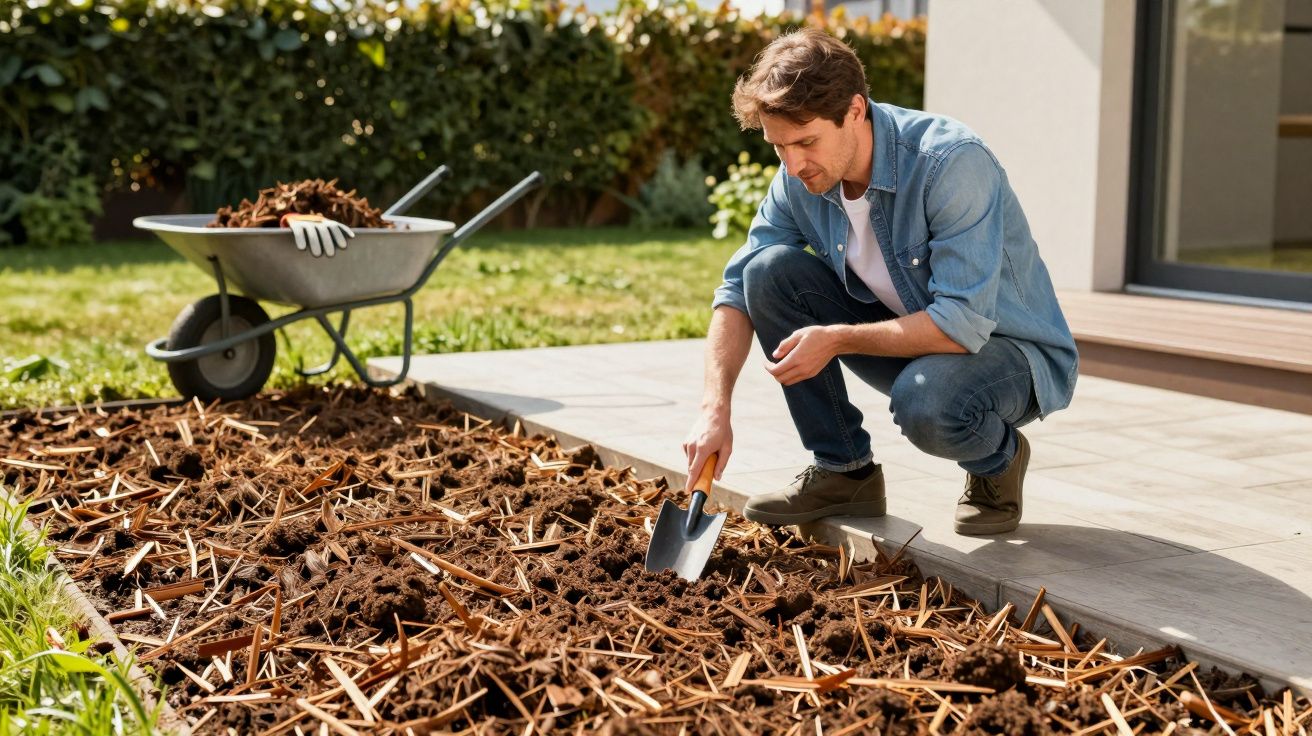
- Soil cover: mulch to reduce weeds and watering, instead of endlessly weeding bare soil.
- Growth direction: train and thin to shape, rather than repeatedly shearing the outside.
- Access and mess: do dirty, disruptive work first (cutbacks, moving compost, edging), then finish work (raking, deadheading, sweeping).
- Weather windows: spray, sow, mow, and transplant based on conditions, not dates.
You can hear the difference immediately. Task-thinking says, “I need to weed.” Professional thinking says, “I need to stop weeds getting the light and bare soil they love.”
A five-minute “pro scan” you can do before you pick up a tool
The fastest way to copy professional practice is to stop walking straight to the loudest job. Do a lap first. Not with a clipper in your hand - with your eyes.
- Look for stress, not untidiness: wilting, pest damage, yellowing, wind rock on new plants, bare patches in lawn.
- Spot the jobs that multiply if ignored: invasive weeds seeding, brambles rooting, gutters overflowing onto beds, climbers strangling supports.
- Check structure: anything blocking paths, shading veg, flopping onto lawns, or rubbing against windows.
- Notice “soil showing”: bare beds are a workload generator. Covered soil is a workload reducer.
- Plan the mess: where will cuttings go, where will the compost sit, what needs tarps or bags?
Then you pick one zone and finish it properly. Let’s be honest: most of us “do a bit everywhere” and feel busy, but the garden still looks unfinished.
The professional sequence: stabilise, then beautify
When you watch someone who’s good, their visit has a quiet logic. They’re building stability first, so the pretty jobs actually hold.
A simple sequence to steal:
- Contain and clear: pick up litter, move pots back, open paths, remove obvious trip hazards.
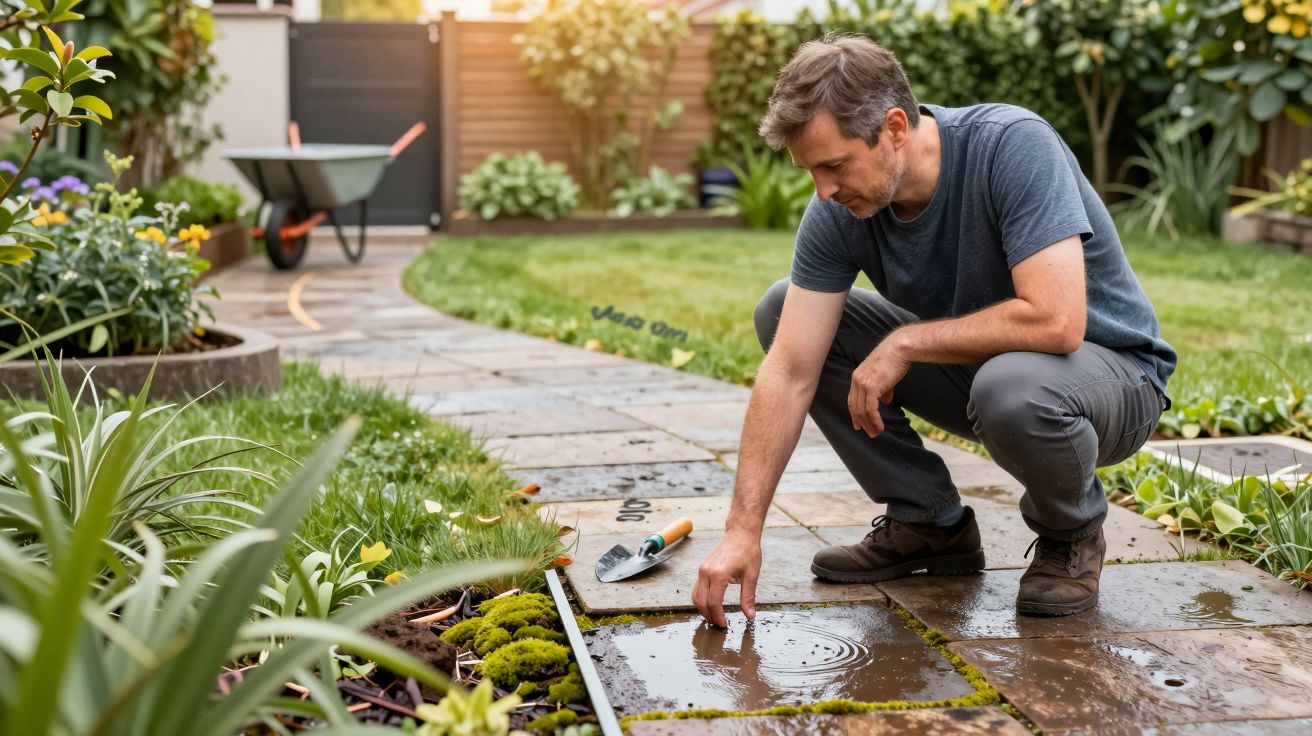
- Correct the big levers: water problems, soil coverage (mulch/compost), staking, removing dead or diseased material.
- Reduce future growth pressure: thin where necessary, cut back strategically, train climbers, deal with self-seeders before they set seed.
- Finish surfaces: mow, edge, sweep, rake, deadhead - the jobs that make it look “done”.
Task lists often reverse this. You mow first because it’s quick, then you stomp clippings into beds while wrestling brambles, then it rains, then you’re cross. Pros protect the finish by scheduling it near the end.
The hidden reason pros seem “on top of it”: they carry fewer decisions
Home gardeners spend half their time deciding what to do next. Pros reduce decisions by using repeatable rules: one visit focuses on cutbacks and structure, the next on weeding and mulching, then a lighter visit on lawns and detail. The garden gets a rhythm, and the gardener stops negotiating with it weekly.
Try giving yourself three repeatable visit types:
- Structure visit (45–90 mins): pruning for shape, staking, removing deadwood, training, cutting back.
- Soil visit (45–90 mins): weeding then mulching/composting, feeding, checking irrigation, topping up pots.
- Surface visit (30–60 mins): mowing, edging, sweeping, deadheading, quick tidy.
You’ll still do tasks. You’ll just do them in a way that makes the next visit easier instead of harder.
If you only change one habit, change this one
Stop treating weeding as a stand-alone chore. Professionals weed to enable a follow-up action - usually mulching, planting, or improving ground cover - so the same weeds don’t return at full volume next week.
Weed-without-cover is like bailing water without fixing the leak. It’s honest work, but it’s a trap.
“Most ‘high-maintenance’ gardens are just gardens with too much bare soil and too many sheared shrubs,” a contractor once told me. “They’re not difficult. They’re just unmanaged systems.”
| Shift | What you do instead | Why it works |
|---|---|---|
| From tasks to outcomes | “Keep soil covered” rather than “weed beds” | Fewer repeat jobs, steadier growth |
| From dates to conditions | Mow and sow when growth supports it | Better results, less damage |
| From everywhere to zones | Finish one area fully per visit | Visible progress, less chaos |
FAQ:
- Do professionals still use task lists? Yes, but they build them from priorities (plant health, access, timing) rather than starting with generic chores.
- What’s the quickest win for a messy garden? Do a lap, pick one zone, and finish it in the pro sequence: contain/clear → big levers (soil, staking, disease) → reduce growth pressure → surface finish.
- Why does my garden look worse after I “tidy up”? Often because finishing jobs (mowing, sweeping) happen before disruptive jobs (cutbacks, edging, moving compost). Reverse the order so your finish stays finished.
- Is mulching really that important for garden maintenance? Usually, yes. Mulch reduces weeds, evens moisture, and improves soil structure - it’s one job that quietly deletes several others.
- How do I know what to prune and when? Start by identifying what flowers on old wood versus new wood, and prune after flowering if unsure. When in doubt, remove dead/diseased wood and avoid hard pruning at random times.



Comments (0)
No comments yet. Be the first to comment!
Leave a Comment