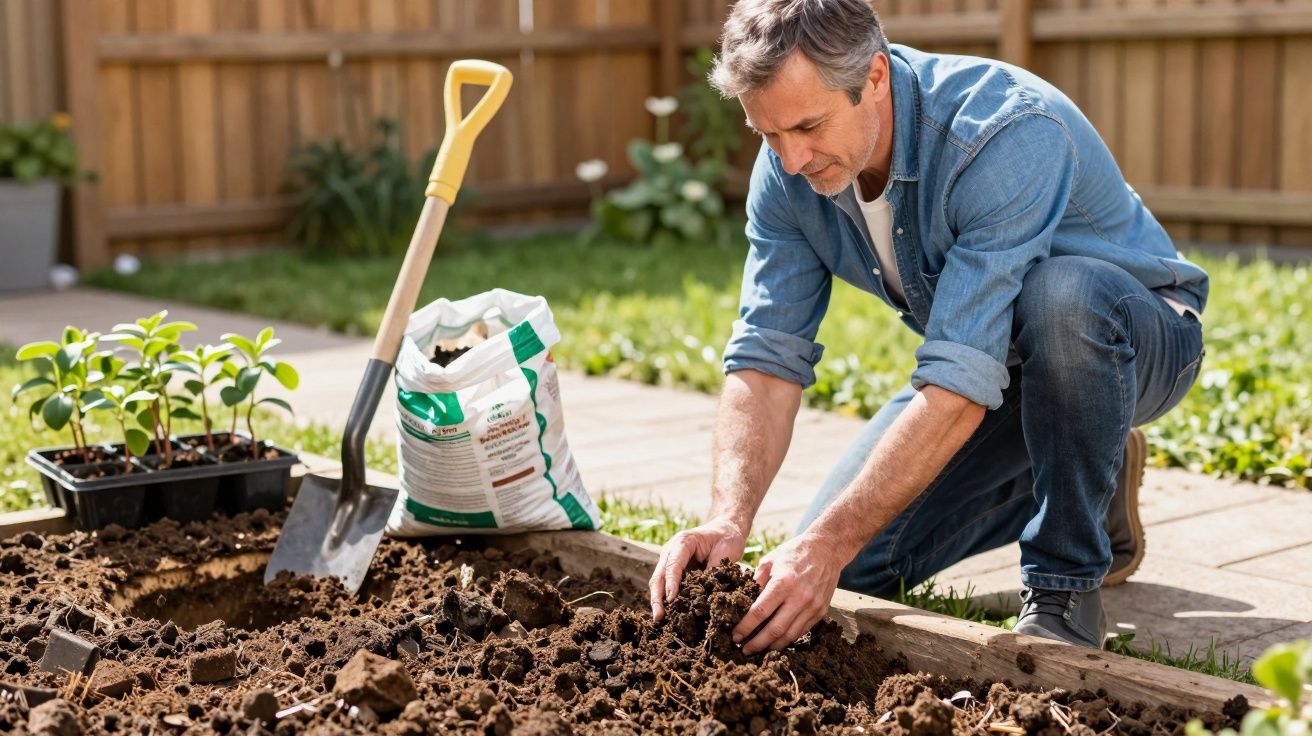
Most garden “failures” don’t start with the plant. They start with soil and the assumptions we make about it, long before the first root goes in. Planting services can source good stock and place it neatly, but if the ground is compacted, starved, or waterlogged, you’ve built a problem into the job.
The fix is rarely exotic. It’s usually quieter: air where there was none, structure instead of dust, drainage that doesn’t swing from swamp to crack. Get the soil right and planting choice becomes a refinement, not a gamble.
Soil preparation is the part you don’t see-but plants live in it
Above ground, you notice leaves, flowers, and growth rate. Below ground, plants negotiate oxygen, moisture, temperature, and nutrients minute by minute, and they can’t do that in a pan of hard clay or a dry, sandy sieve. Poor establishment looks like “bad luck” when it’s really roots failing to move.
Think of preparation as setting the rules of the garden. It decides whether roots can explore, whether beneficial microbes can hold, and whether water arrives in usable doses rather than extremes. A plant can tolerate a lot; it can’t tolerate a suffocating root zone.
Choose plants for the look. Prepare soil for the life.
What’s really happening under your spade
A healthy bed is not just “fertile”. It has pores-tiny channels that hold air and water in balance. Compaction collapses those pores. Over-tilling can smash aggregates into powder, which then cakes, crusts, and sheds water.
You’re aiming for three outcomes that make almost everything easier:
- Structure: stable crumbs that don’t turn to sludge when wet.
- Drainage with reserve: water moves through, but the bed doesn’t dry out overnight.
- Biology: worms, fungi, and bacteria that cycle nutrients and build resilience.
If you only feed, but don’t fix structure, nutrients wash away or lock up. If you only loosen, but don’t add organic matter, it settles back down like a bad mattress.
The quick checks that tell you more than labels
Before you buy compost by the tonne or pick a plant palette, spend ten minutes reading the ground. You don’t need lab kit to spot the big barriers.
- Dig a test hole (spade depth). If it’s grey, smells sour, or has orange mottling, drainage is struggling.
- Squeeze a handful: if it ribbons into a sticky worm, it’s clay-heavy; if it falls like sugar and won’t bind, it’s sand-heavy.
- Look for roots: if existing plants have shallow, circling roots, something is blocking depth-often compaction.
- Watch after rain: puddles that linger for hours suggest poor infiltration, not just “a wet week”.
These checks decide your next move: add air, add organic matter, raise the bed, or stop walking where you intend to plant.
The preparation playbook: slow down once, speed up for years
Good prep isn’t about throwing “more” at the soil. It’s about combining the right changes so they last.
- Stop compaction at the source: define paths, use boards if you must step on beds, and don’t dig when it’s waterlogged.
- Add organic matter for structure: garden compost, well-rotted manure, leaf mould. Spread 5–8 cm and incorporate lightly, or mulch and let biology pull it down.
- Open the profile: fork or broadfork to relieve compaction without pulverising. In heavy clay, this can be the difference between survival and rot.
- Level and settle: prepared soil should be firmed gently, not left fluffy. Roots want contact, not air gaps.
If you’re using planting services, ask what they do before they plant. “We’ll pop in some compost” is not the same as correcting drainage, relieving compaction, and setting mulch depth.
Why planting choice loses power when preparation is poor
People blame “the wrong plant” because it’s visible and easy to change. But a plant’s tolerance range shrinks dramatically in bad soil. A shrub tagged “full sun, well-drained” can cope with plenty-until its crown sits in winter water, or its roots hit a compacted pan.
Bad preparation also hides in summer. Plants look fine on stored nursery moisture, then stall weeks later when roots should be running. That lag makes diagnosis harder, and it’s why remedial work always feels more expensive than doing it first.
Here’s the pattern you’ll recognise:
- Waterlogging → yellowing leaves, dieback, fungal issues, sudden collapse.
- Compaction → stunted growth, drought stress even after watering, shallow rooting.
- Low organic matter → feast-and-famine growth, more feeding needed, poorer resilience.
Matching preparation to common UK garden situations
Most gardens fall into a few repeat categories, and each has a “best first action”.
| Situation | Best first action | What it prevents |
|---|---|---|
| Heavy clay, puddling | Improve structure + raise level slightly | Winter rot, slow establishment |
| Sandy, fast-drying | Add organic matter + mulch | Summer scorch, constant watering |
| New-build, subsoil near surface | Break compaction + import/top up quality topsoil | Roots hitting a hard barrier |
In every case, the goal is the same: create a root zone that holds water and air together, and stays that way.
The handover that separates “planted” from “established”
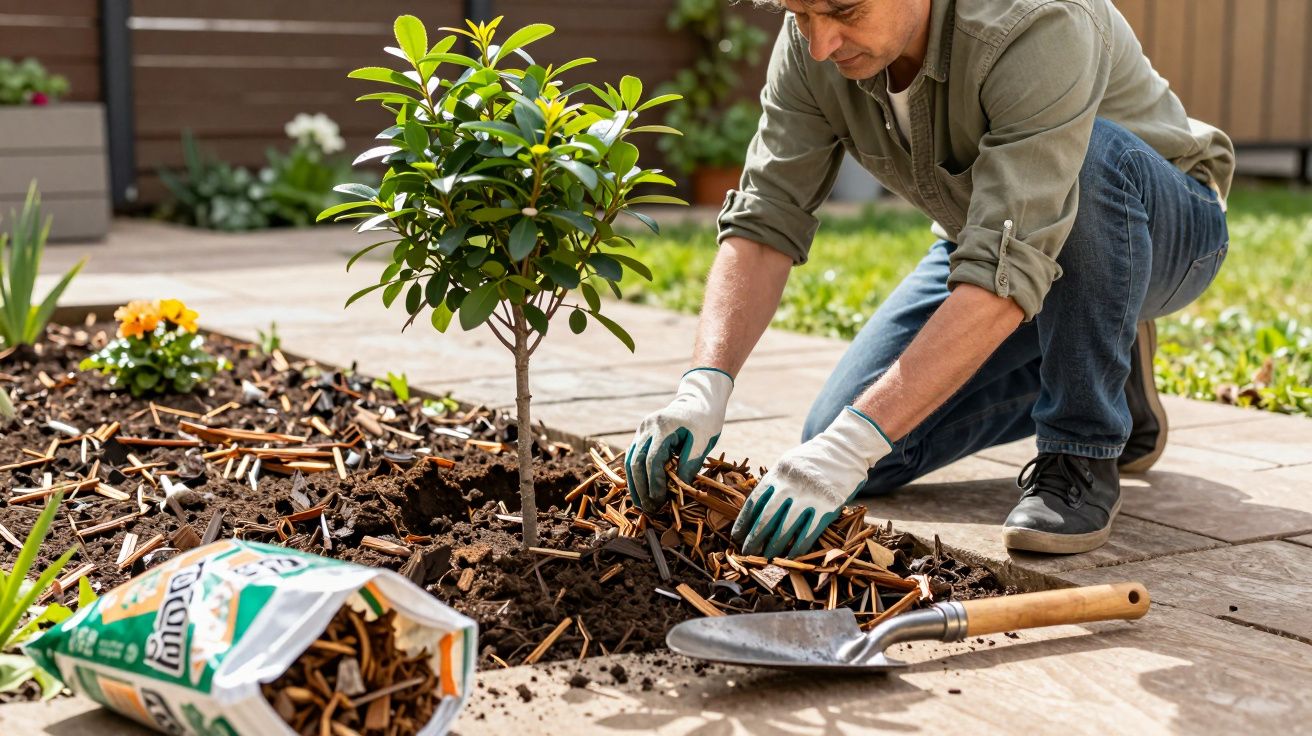
Planting isn’t the finish line; it’s the start of a new soil–root relationship. After prep and planting, lock in the gains with a simple rhythm: water deeply, mulch consistently, and avoid digging that resets structure.
If you’re paying for planting services, get clarity on aftercare. Ask how watering will be scheduled for the first 6–12 weeks, what mulch depth they’ll apply, and whether they’ve checked that the planting hole isn’t acting like a pot inside heavy soil.
FAQ:
- What’s the single biggest soil mistake before planting? Planting into compacted ground and hoping the plant “will root through it”. Many won’t, and the ones that do take longer and need more care.
- Do I need to replace all my soil? Rarely. Most gardens improve dramatically with compaction relief, organic matter, and better surface management (mulch, paths, reduced digging).
- Should I add grit to heavy clay? Not in small amounts. It can create a cement-like mix. Focus on organic matter and structure, and consider raising beds if drainage is persistently poor.
- How soon can I plant after preparing the soil? Usually straight away, provided it’s not waterlogged and you’ve firmed it back. Fresh organic additions are best as composted materials rather than hot, raw inputs.
- Is soil testing worth it? A basic pH test is very useful, especially for lawns, veg beds, and acid-loving shrubs. Nutrient tests help when problems persist despite good structure and watering.




Comments (0)
No comments yet. Be the first to comment!
Leave a Comment