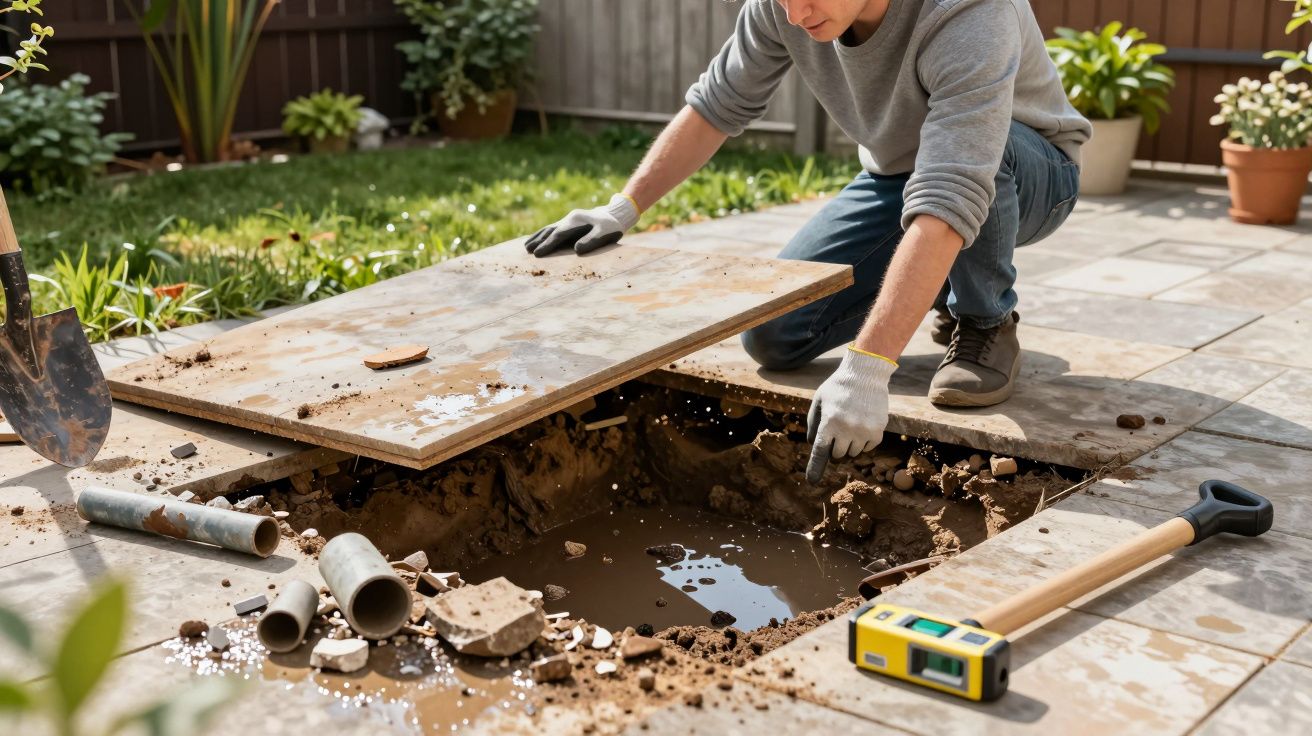
You book site clearance because you want a blank slate, whether it’s a tight back garden refurbishment or a bigger rebuild that’s been looming for years. It’s the bit that makes everything else possible: access, levels, drainage, deliveries, the lot. And yet it’s often the moment the site starts talking back-showing you what’s really been happening under the weeds, slabs and “temporary” fixes.
The first skip arrives, someone lifts the first sheet of rotting plywood, and the whole place feels different. Soil that looked flat turns out to be a slope. A patio edge is hiding a void. Roots are running exactly where your new fence line needs to go. You thought you were clearing mess; you’re actually uncovering the history of the plot.
Why clearance changes the plan (even when you think it won’t)
Most people imagine clearance as a simple before-and-after: remove rubbish, strip vegetation, get on with it. In reality, site clearance is an investigation with a spade. It reveals what’s solid, what’s improvised, and what’s going to move the moment you build on it.
Sometimes it’s harmless information-old planting beds, a redundant water butt, a layer of builders’ sand. Sometimes it’s the kind of discovery that quietly adds time and money if you ignore it. The frustrating part is that none of it looks dramatic until you’ve already started.
Clearance doesn’t just remove obstacles. It exposes constraints.
The “hidden layers” you only see once things come up
The neat lawn and the tidy path can be a costume. Once you start lifting, you find layers that weren’t on any plan and weren’t mentioned when you bought the house.
Common surprises include:
- Buried rubble and hardcore left from older patios, extensions, or shed bases
- Multiple surface layers (slabs on sand on concrete on soil), each needing a different approach
- Root plates and stumps from long-removed shrubs that still hold the ground together
- Sunken spots where old pits, soakaways or trenches were backfilled poorly
- Old edging and geotextile that turns digging into a tug-of-war
These aren’t “mistakes” so much as clues. They tell you how water has been moving, where the ground has been disturbed, and why your garden has always felt a bit boggy in one corner.
The awkward truth about water: clearance is when drainage problems finally show up
Before clearance, water issues can hide in plain sight. Plants drink it, debris absorbs it, and surface levels disguise it. Strip it back and you see the real behaviour: where it pools, where it runs, and what it does after a downpour.
A classic example is the patio that “always dries eventually”. Once the slabs are lifted, you discover the fall is wrong, the sub-base is thin, and the soil beneath is a heavy clay that holds water like a bowl. In a garden refurbishment, that one revelation can decide whether you need a French drain, a soakaway, raised beds, or simply a rethink of levels.
If you want your new finish to last, this is the moment to watch the site in wet weather, not after everything is prettified again.
What you might uncover (and what it means) during a garden refurbishment
When people say, “We’re just clearing it,” they usually mean, “We’re just removing what we can see.” The snag is that refurb decisions-paving, turf, decks, sleepers, pergolas-depend on what’s underneath.
Here’s what tends to turn up, and why it matters:
Old concrete pads and footings
Great if they’re usable and in the right place; a nuisance if they’re cracked, uneven, or exactly where you need to plant.Services you didn’t realise were there (water feeds, old electrics to a shed, mystery pipes)
Clearance is when you spot them before someone cuts through one at speed.Boundary oddities (half-buried fence posts, retaining walls, edging that’s acting like a dam)
These can explain why one side always floods or why the fence line “leans” every winter.Invasive roots and self-seeded trees
A few saplings can mean a dense root mat that will fight your new lawn and lift paving later.
None of this is a deal-breaker. It’s just information you were always going to need-clearance simply forces it into daylight.
“A garden doesn’t start where the grass starts. It starts where the ground decides to behave,” a landscaper once told me after we uncovered a collapsed soakaway the size of a wheelie bin.
The small clearance choices that prevent expensive redo work
The temptation is to go fast: hire a mini digger, clear everything, get the new materials in. Speed has its place, but a few calmer choices save you from rebuilding the same area twice.
- Sort waste as you go: green waste, inert rubble, mixed waste. It reduces disposal costs and avoids re-handling.
- Keep one “evidence pile”: anything odd (pipes, cable, broken drainage, suspicious hardcore) stays visible until you decide what it is.
- Mark what stays: trees, shrubs, inspection covers, stop taps. Clearance is when they’re easiest to lose.
- Take level readings early: even a basic laser level can show falls that your eyes miss.
- Pause after rain: if you can, wait for a wet day before finalising surfacing plans.
It’s not about being cautious for the sake of it. It’s about letting the site tell you what will fail first.
Why it feels like you’re finding “extra work” (and how to frame it)
Discoveries during site clearance often feel like unfair add-ons. But most of the time, you haven’t created more work-you’ve uncovered work that was already there, quietly affecting the garden.
A hidden concrete slab isn’t new; it’s been stopping drainage for years. A root-choked corner isn’t a surprise attack; it’s the reason your fence panels always rot first on that side. Clearance just moves those problems from “mystery” to “choice”.
And that’s the real win: once you can see it, you can design around it properly.
| What clearance reveals | Why it matters | Best next step |
|---|---|---|
| Soft spots, voids, sinking | Future movement under paving/decking | Investigate, compact, rebuild sub-base |
| Buried rubble and layers | Affects levels, planting, drainage | Separate waste, decide reuse/removal |
| Water paths and pooling | Dictates falls and drainage solutions | Check levels, plan drains/soakaway |
FAQ:
- Do I always need professional site clearance for a small garden refurbishment? Not always. But if there’s heavy waste, unknown ground conditions, or you’re changing levels/surfacing, professional clearance can prevent costly mistakes.
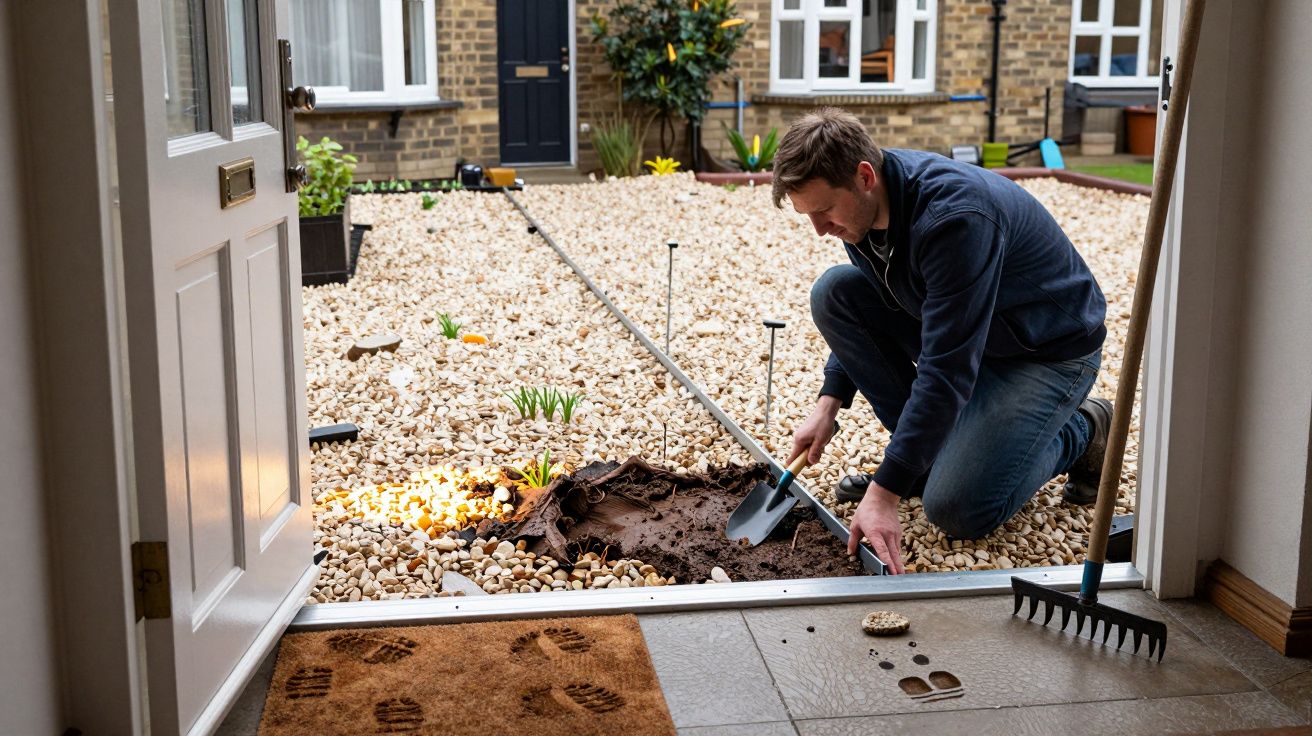
- What’s the most common surprise once clearance starts? Buried rubble and old construction layers-especially under lawns or “temporary” gravel areas.
- Can site clearance uncover pipes and cables? Yes. Treat anything you uncover as live until proven otherwise, and avoid digging blindly near suspected service runs.
- Should I clear everything before finalising the design? Ideally, yes for key areas. Even partial clearance of the main build zones can reveal level, drainage and access constraints that affect the plan.
- How do I keep costs down when unexpected things appear? Separate waste streams, photograph discoveries, decide quickly what can stay, and prioritise fixes that protect foundations, drainage and access.





Comments (0)
No comments yet. Be the first to comment!
Leave a Comment