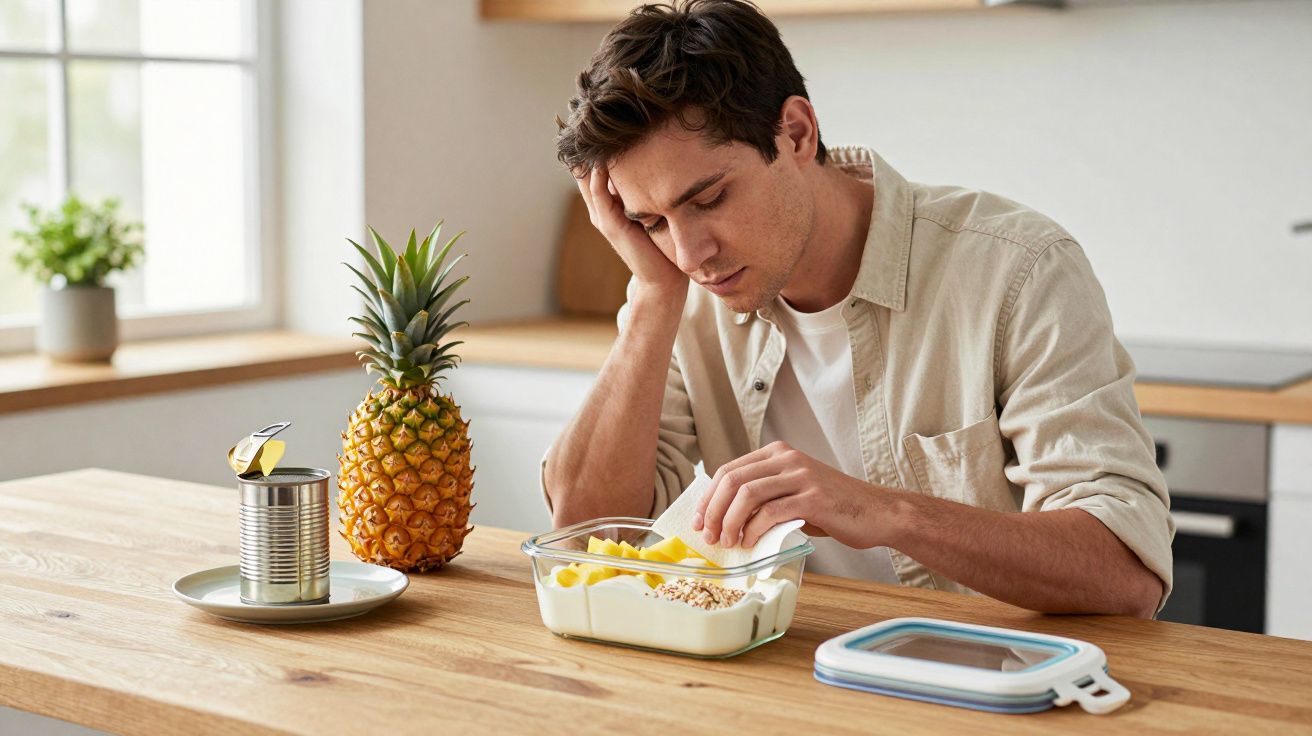
It started, oddly, with a Slack message that read: “of course! please provide the text you would like me to translate.” Someone had pasted it into the wrong channel, and the joke rolled on for an hour while a tray of pineapples sat on the counter, already peeled for a client lunch. Half the team avoided them out of habit - too sweet, too acidic, too messy - but a dietitian on the call asked for them specifically.
That small request captures the shift. In offices, gyms, cafés and even hospital canteens, professionals are quietly rethinking what pineapples are for: not a tiki garnish, not a sugar bomb, but a practical tool for taste, texture and recovery when you use them with intent.
The pineapple problem wasn’t flavour - it was predictability
Ask chefs why pineapple fell out of favour and you’ll hear the same complaints: it’s inconsistent, it floods a plate, and it can turn dairy bitter and proteins mushy if you’re careless. Fresh pineapple varies wildly by ripeness and variety; canned is reliable but often syrupy; pre-cut trays can taste flat by day two. That lack of predictability is death in a professional kitchen.
Nutritionists had their own reasons. “Pineapple = sugar” became a shorthand in wellness culture, and nobody wanted to be seen recommending something that looked like a cocktail ingredient. The fruit got lumped in with juices and smoothie bowls that spike calories without keeping people full.
But a few things changed at once: higher protein eating went mainstream, meal prep became normal, and people started caring about how food behaves in the real world - in a lunchbox, after a gym session, in a hospital ward at 6am. Pineapple happens to behave in interesting ways.
What the pros are actually using pineapples for right now
The rediscovery isn’t mystical. It’s a set of small, repeatable uses that solve annoying problems: blandness, appetite, texture, and getting people to eat enough when they don’t feel like it.
Here’s what keeps coming up when you talk to people who feed other people for a living:
- A high-impact flavour “brightener” for otherwise beige meals (rice bowls, cottage cheese, chicken wraps). A few chunks can do what extra salt would do, without pushing sodium.
- A compliance hack in sports nutrition. Athletes who are sick of another banana will still eat pineapple because it feels like a treat.
- A texture tool in catering. When you grill it or roast it, the fruit turns jammy and holds its shape better than you expect, especially in bulk service.
- A gentle appetite cue in clinical settings. The aroma and acidity can make food feel more “alive” to patients with low appetite, where dry toast simply loses.
You’ll notice what’s missing: talk of miracle detoxes. The professionals leaning back in are doing it for boring reasons - cost, uptake, repeatability.
The enzyme question: useful, but easy to overdo
Pineapple contains bromelain, a family of enzymes that can break down proteins. That’s why your mouth can feel a bit raw after a big bowl, and why “pineapple tenderises meat” is a thing people swear by. In a professional context, bromelain is treated like a sharp knife: handy, but not something you wave around.
A chef in Manchester described it neatly: they’ll use fresh pineapple in a marinade only when they can control time tightly. Ten minutes can help; an hour can ruin texture. In a prep kitchen where trays get labelled and forgotten, it’s safer to use cooked pineapple or canned (heat processing largely knocks the enzyme back).
For home cooks, the rule is simple: if you want pineapple flavour without protein breakdown, cook it, char it, or use canned in juice. If you want tenderising, keep the contact time short and don’t pretend it’s foolproof.
The “small habits” approach that makes pineapple workable at work
The teams who’ve brought it back aren’t doing elaborate fruit sculptures. They’re building tiny habits that make pineapple less messy, less wasteful, and more consistent.
- Buy one format for one job: fresh for eating as-is, canned in juice for mixing into yoghurt or oats, frozen for blending.
- Drain and pat dry if it’s going anywhere near bread, salads, or meal prep containers. Wet pineapple is what makes lunches sad by 2pm.
- Pair it with protein or fat (Greek yoghurt, cottage cheese, nuts) so it’s not just a sugar hit that disappears.
- If you’re serving dairy, use ripe fruit or cooked fruit. Under-ripe pineapple plus milk can taste harsh.
Let’s be honest: the main reason people “don’t like pineapple” is that they’ve mostly had it at its worst - pale chunks from a plastic tub, watery and sharp, dumped onto something it doesn’t suit.
What this rethink really buys you
The pineapple comeback isn’t about chasing a superfood label. It’s about making food easier to eat, easier to repeat, and easier to enjoy when you’re busy, stressed, or feeding a lot of people with different needs.
It also nudges a useful mindset: treat ingredients as tools, not tribes. A fruit can be sweet and functional. A professional doesn’t need pineapple every day; they need a few dependable ways to use it without wrecking texture, budgets, or people’s appetites.
| Use case | Best format | Why it works |
|---|---|---|
| Meal prep with yoghurt/oats | Canned in juice (drained) | Consistent, less enzymatic bite, predictable sweetness |
| Hot service (bowls, sides) | Fresh, grilled/roasted | Better texture, deeper flavour, less watery |
| Smoothies after training | Frozen | Easy portioning, no waste, steady taste |
FAQ:
- Does pineapple actually help recovery after exercise? It can help you eat after training because it’s refreshing and easy to tolerate, but it isn’t a magic recovery switch. Pair it with protein and fluids for the basics.
- Why does pineapple make my mouth tingle? Acidity plus bromelain can irritate the mouth, especially with large amounts or under-ripe fruit. Cooking or choosing ripe pineapple usually reduces it.
- Can I use pineapple to tenderise meat safely? Yes, but keep it short. Fresh pineapple can turn meat mushy if left too long; cooked or canned pineapple is gentler and more predictable.
- Is canned pineapple “worse” than fresh? Not automatically. Canned in juice is consistent and useful for meal prep; just avoid heavy syrup if you’re watching added sugars.
- How do I stop pineapple making my lunch soggy? Drain it well, pat it dry, and keep it separate until eating if the meal includes bread or crisp salads.



Comments (0)
No comments yet. Be the first to comment!
Leave a Comment