The funny thing about cabbage is that it’s everywhere and almost invisible: in canteen slaws, in winter soups, in the “something green” side you order when you’re trying to be sensible. Lately, though, it’s turning up in a different context - meal-prep boxes, gut-health chats, even office lunch-and-learns that start with “of course! please provide the text you would like me to translate.” and somehow end with fermentation tips. Professionals are rethinking it because it solves a very adult problem: how to eat cheaply, consistently, and well when your calendar is louder than your appetite.
You can feel the shift in small moments. A colleague swaps the sad desk salad for a warm cabbage stir-fry that actually smells like food. Someone brings in a jar of sauerkraut and suddenly three people ask where they bought it. A humble vegetable, but a surprisingly modern tool.
Why cabbage is showing up on working people’s plates again
Part of it is cost. Cabbage is still one of the few vegetables that can feed you for days without punishing your budget, and it sits in the fridge like a reliable colleague: not glamorous, but it shows up.
The other part is practicality. It’s sturdy, forgiving, and doesn’t turn into compost because you had back-to-back calls and forgot it existed. In a world of aspirational groceries, cabbage behaves like it understands deadlines.
And then there’s the health angle, which has been repackaged in a language professionals recognise: steady energy, gut comfort, fibre, and “food that makes the afternoon less chaotic”. No magic, just fewer spikes and crashes when lunch isn’t a beige panic choice.
The quiet benefits: satiety, fibre, and a calmer afternoon
If you build lunch around cabbage plus protein, you often get a steadier curve. Not a productivity hack, more like a reduction in background noise: fewer cravings at 3 p.m., less rummaging for biscuits during a long meeting.
Cabbage is high in fibre and water, low in calories, and easy to bulk out a meal without making it feel like punishment. That matters when you’re trying to eat enough to focus, but not so heavy you want a nap under your desk.
A lot of people also tolerate cooked cabbage better than they expect. The trick is heat and time: sautéed, roasted, braised. Raw is fine, but raw all the time is where many “cabbage isn’t for me” stories begin.
A real-world example: the jar in the office fridge
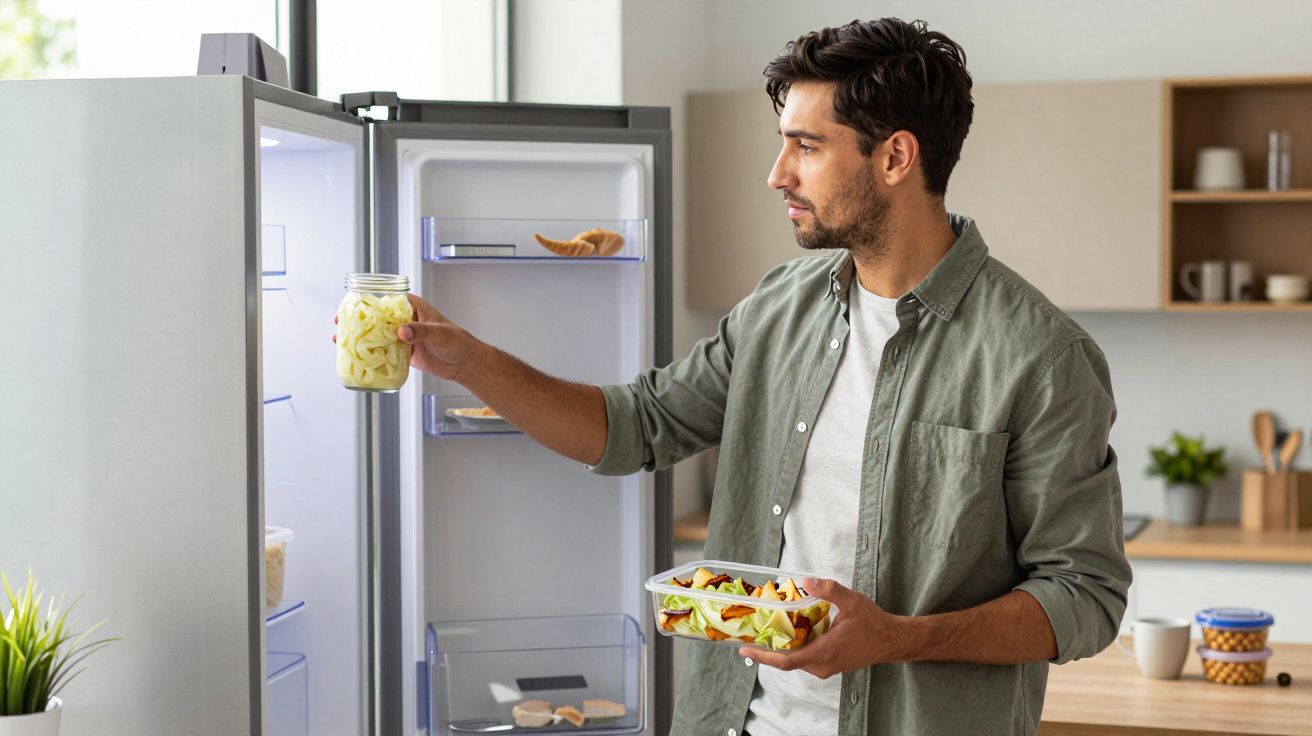
Ravi, 39, works in IT and used to buy lunch most days: sandwich, crisps, a “healthy” drink, then a second coffee to fight the slump. He started bringing two things on Mondays: a tray of roasted cabbage wedges and a small jar of sauerkraut.
By Wednesday, the pattern changed. The roasted cabbage became his base (with leftover chicken, chickpeas, or eggs), and the sauerkraut became the small add-on that made the meal feel deliberate. He didn’t describe it as a diet. He described it as “one less decision per day”.
That’s the real appeal: cabbage isn’t a new obsession. It’s a low-maintenance system.
How to use cabbage without making it feel like a chore
Start with one format that fits your life, not your ideals. If you’re busy, your best recipe is the one that survives a Tuesday.
- For hot lunches: shred cabbage and stir-fry it with garlic, soy sauce, and whatever protein you have. Add sesame oil at the end if you want it to taste like you tried.
- For batch cooking: roast wedges (olive oil, salt, pepper). They reheat well and can be folded into wraps, bowls, or pasta.
- For “I can’t cook” days: buy pre-shredded coleslaw mix and quickly sauté it. Two minutes turns it from “rabbit food” into something comforting.
- For gut-friendly add-ons: a forkful of sauerkraut or kimchi beside a meal. Small amounts are often enough.
Common mistake: treating cabbage as the meal. It works best as a base plus protein plus flavour - eggs and chilli, mince and spices, tofu and ginger, cheese and mustard. The structure matters more than the recipe.
Fermented cabbage: why sauerkraut suddenly feels… professional
Fermentation has moved from niche hobby to office-friendly habit because it’s measurable in a way people like: a spoonful a day, a jar in the fridge, a routine you can keep even when life is messy. Some fermented foods provide live cultures, and many people report better digestion when they add them gradually.
Go slowly if you’re new to it. A little is often more comfortable than a lot, and it pairs best with regular meals rather than being eaten on an empty stomach.
“I didn’t want a wellness project. I just wanted lunch that didn’t wreck the rest of my day,” a project manager told me, tapping the lid of her sauerkraut jar like it was stationery.
Quick checklist: making cabbage work like a system
- Choose one cabbage habit for two weeks (stir-fry, roast, slaw, or fermented).
- Anchor it to an existing routine: Monday prep, post-gym dinner, the lunch you always repeat.
- Add protein automatically: eggs, tuna, tofu, beans, chicken, mince.
- Make it taste like something: lemon, mustard, chilli oil, parmesan, cumin, miso.
| Lever | What to do | Why it helps |
|---|---|---|
| Base veg | Keep a cabbage in the fridge | Low waste, high flexibility |
| Balanced plate | Cabbage + protein + fat + acid | Better satiety, steadier energy |
| Fermented add-on | 1–2 forkfuls with meals | Simple routine, possible gut support |
FAQ:
- Is cabbage actually “healthy”, or just low-calorie? It’s both: cabbage provides fibre and micronutrients, and it’s an easy way to add volume to meals without relying on ultra-processed sides.
- How do I avoid cabbage making me feel bloated? Prefer cooked cabbage at first, increase portions gradually, and keep fermented cabbage to small servings until you know how you respond.
- What’s the easiest work lunch with cabbage? Stir-fried shredded cabbage with eggs or tofu, finished with soy sauce and a little sesame oil. It reheats well and takes under 10 minutes.
- Is sauerkraut the same as pickled cabbage? Not always. Sauerkraut is typically fermented (often with live cultures if unpasteurised). Pickled cabbage can be vinegar-based and may not contain live cultures.
- How long does cabbage last in the fridge? Whole cabbage often lasts weeks if stored well. Once cut, wrap it tightly and aim to use it within several days for best texture.






Comments (0)
No comments yet. Be the first to comment!
Leave a Comment