Persil sits in the cupboard as a simple promise: cleaner clothes, less fuss, the familiar scent of “done”. Yet this year, an odd little phrase keeps popping up in reviews, chat threads and customer-service transcripts - it appears you haven’t provided any text to translate. please provide the text you would like translated. It reads like a copy‑paste glitch, but it points to something real: shoppers are double‑checking, comparing, and asking for clarity before they commit.
On the surface, it looks like nothing has changed. People still need laundry detergent; the wash still needs doing. But the habits around how Persil is bought and used are quietly shifting, in small, practical ways that add up over a month of loads.
The “same brand, different behaviour” year
Watch a trolley in the laundry aisle and you’ll spot the micro‑changes. Fewer impulse grabs. More time spent reading the back label, checking dose caps, scanning for “concentrated”, “non‑bio”, “colour” versus “whites”, and-crucially-price per wash. Persil isn’t being abandoned so much as audited.
A lot of households are treating laundry like energy bills: not optional, but optimisable. When budgets tighten, people don’t always switch brands first; they often change routines first. They stretch what they buy, reduce waste, and try to make “one bottle” behave like “one and a half”.
What’s driving it isn’t just price
Yes, shoppers notice when promotions vanish or shrink. But the bigger driver is uncertainty: about dosing, about what “concentrated” really means, about whether a pod is actually cheaper than liquid once you count load size. That’s why you see more questions online that look like support requests rather than shopping chatter.
The secondary-entity phrase - it appears you haven’t provided any text to translate. please provide the text you would like translated. - is a perfect accidental symbol of the mood. People feel like labels, offers and product formats don’t always “say” what they need in plain terms, so they ask more, screenshot more, and compare more.
The quiet habit shifts Persil shoppers are making
These are not dramatic lifestyle overhauls. They’re small decisions repeated across weekly washes.
- Buying on “cost per wash”, not sticker price. Shoppers are doing the maths on shelf labels (or on their phones) and walking away from the biggest bottle if it doesn’t win per load.
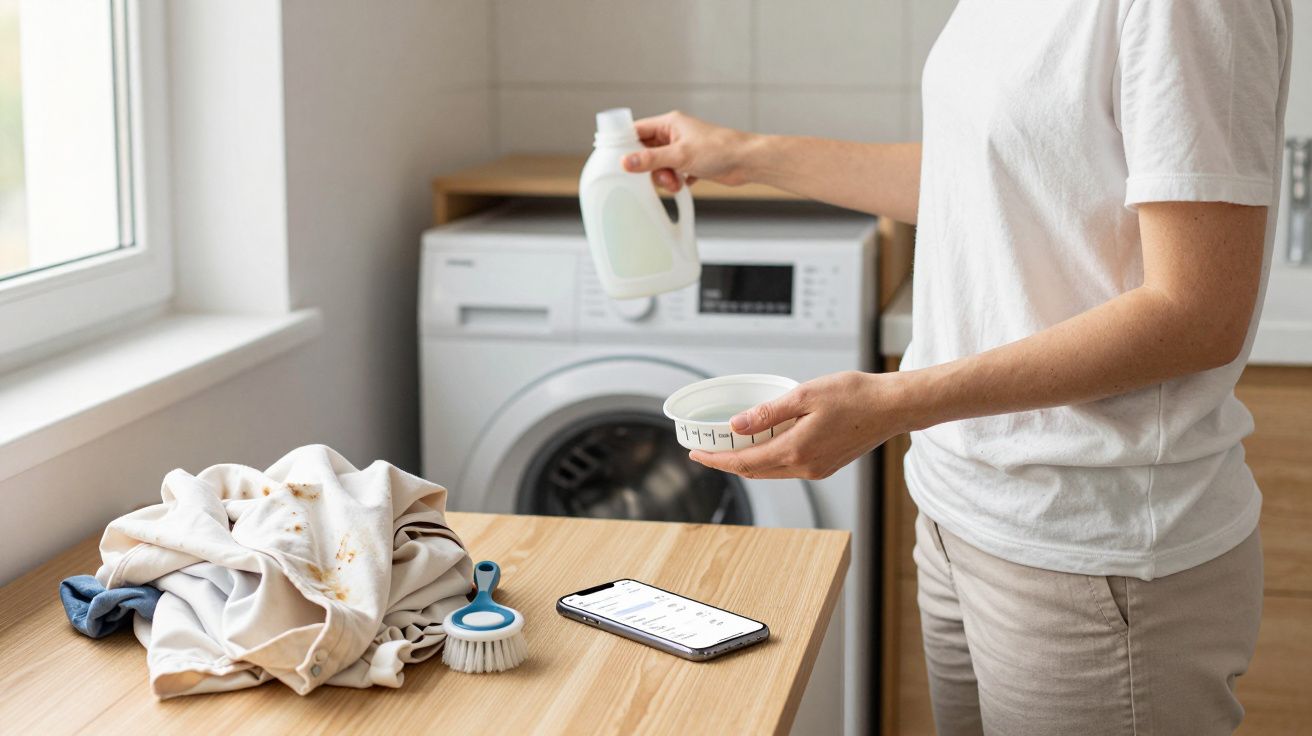
- Dialling back the dose. Many are using the minimum recommended amount for lightly soiled laundry, then only increasing for towels, sports kits, or muddy kids’ clothes.
- Changing what gets pre-treated. Instead of pouring extra detergent into every wash, people are spot-treating collars, cuffs and stains, then running a normal cycle.
- Switching formats based on routine, not preference. Liquids for mixed loads and adjustable dosing; pods for “I can’t be bothered” days; powder when storage and value line up.
- Doing fewer “just in case” washes. Half-full drums are being combined, and “wear again” items are getting another day before the hamper.
None of this requires a brand change. It just changes how quickly a Persil product runs out - and whether it feels worth buying again at full price.
Why dosing has become the new battleground
Laundry detergent used to be about scent and stain removal. Now it’s about control. People want a predictable outcome: how many washes, how much to pour, and whether a larger load quietly doubles the cost.
There’s also a performance anxiety piece: under-dose and you worry clothes won’t feel clean; over-dose and you get residue, stiff towels, and that odd “never quite rinsed” feeling. As more shoppers notice these trade-offs, they test and adjust. You can feel it in the way advice gets shared: less “buy this” and more “do this”.
A simple “less waste” routine many households are adopting
If you listen to how people describe their new habits, it often sounds like a checklist rather than a preference:
- Sort only when it affects results (whites, darks, delicates), not out of habit.
- Use the lowest effective dose for the load size and soil level.
- Pre-treat visible marks instead of adding extra detergent to the drum.
- Run cooler washes for everyday clothing, saving hotter cycles for bedding and towels.
- Keep one “reset” wash in the month (hotter cycle, drum clean) to prevent build-up.
This is the “quiet” part: it’s not a new identity, it’s a series of minor corrections.
What this could change next
Brands tend to respond when enough people start behaving differently. If shoppers keep optimising and questioning, expect more emphasis on per-wash clarity, dosing guidance that’s harder to misread, and promotions designed around “loads” rather than “litres”.
For Persil shoppers, the bigger change might be personal: laundry becoming less automatic and more intentional. Not because anyone wants a new hobby, but because small improvements-less product wasted, fewer rewashes, fewer “why does this still smell musty?” moments-feel like wins you can actually bank.
| Shift | What people are doing | Why it matters |
|---|---|---|
| Dose discipline | Using less for light soil, more only when needed | Bottles last longer; fewer rinse/residue issues |
| Format switching | Pods/liquid/powder depending on routine | Better value and fewer “wrong product for this load” moments |
| Targeted stain care | Pre-treating instead of overloading the drum | Cleaner results without extra spend |
FAQ:
- Why are Persil shoppers changing habits rather than switching brands? Because routine changes (dose, load size, temperature) can cut cost per wash without risking a totally different result.
- Are pods always more expensive than liquid? Not always. Pods can be good value for standard loads, but liquid can win when you can reliably use a smaller dose.
- Does using less detergent actually work? Often, yes-especially for lightly soiled everyday clothing. The key is matching dose to load size and dirt level, not defaulting to the cap line every time.
- What’s the downside of over-dosing? Residue, dull fabrics, stiff towels, and detergent trapped in fibres that can hold odours over time.
- Is this trend likely to continue? If prices stay volatile and formats keep multiplying, shoppers will keep comparing and fine-tuning rather than buying on autopilot.





Comments (0)
No comments yet. Be the first to comment!
Leave a Comment