In most gardens, patios feel like the obvious first move: a flat, usable surface where you can sit, eat, and make the outdoors feel like an extra room. But in landscape design, patios are rarely the starting point because they lock in levels, drainage, and routes before the rest of the space has had a chance to make sense. If you get the patio “right” but the garden “wrong”, you end up with a beautiful slab and a messy experience around it.
There’s also a quieter reason. A patio is the part you notice most, so it’s tempting to start where the eye goes. Yet the garden doesn’t live from the middle out; it lives from the edges in-how you arrive, where water goes, where the sun falls, and what you want to do there.
The patio is a consequence, not a concept
A good patio works because it supports a bigger idea: morning coffee in sun, kids running in loops, a short path to the shed, a view that makes you exhale. Those are the concept pieces, and they tell you where hard landscaping should sit and how large it needs to be. Without them, patios often become “default rectangles” that dominate the garden simply because they were poured first.
Think of it like furnishing a house. You don’t buy a massive sofa before you know where the doors swing and how you move through the room. Outdoors is the same: the surface comes after the flow.
A patio should solve a problem-space, access, comfort-not simply occupy a blank area.
The unglamorous basics that decide everything
Most patio regret isn’t about the paving choice. It’s about what the paving forced you to ignore.
Levels and thresholds
The relationship between the patio and the house is unforgiving. Door thresholds, air bricks, damp proof courses, and step heights all dictate where finished levels can sit. If you build first and ask questions later, you risk awkward steps, water tracking towards the building, or an outdoor surface that always feels slightly “off”.
Drainage and fall
Hard surfaces need a fall, and water needs somewhere to go. When the patio is set without a drainage plan, you get puddles, algae, splashing against walls, and in worst cases, water pressure against the property.
A simple checklist that usually comes before patio layout:
- Where does rainwater naturally run now?
- What will change when soil is replaced with paving?
- Do you need a channel drain, soakaway, or permeable build-up?
- Is the rest of the garden higher, lower, or flat relative to the house?
Routes and daily use
Patios are often laid as if people teleport onto them. In real life, you walk: to the washing line, to the bin store, to the shed, to the side gate. If those routes aren’t mapped first, you end up cutting across planting or creating “desire lines” that turn borders into mud tracks.
The common trap: building a stage with no audience
A patio can be technically perfect and still feel empty. That usually happens when it isn’t tied to a purpose.
One household builds a large dining area because it looked right on a brochure, then realises they eat outdoors only a handful of times each summer and mostly want a small sunny perch for tea. Another family installs paving right outside the doors, only to find it’s a wind tunnel, while the warmest corner sits unused at the far end of the lawn.
Patio size and position should follow behaviour, not aspiration. If your “outdoor living” is actually ten-minute moments between tasks, you might need stepping stones, a narrow terrace, and a dry path more than you need a grand entertaining zone.
What landscape designers usually decide first
If you watch how a thoughtful plan forms, it rarely begins with materials. It begins with constraints and intentions, then it earns its hard surfaces.
1) The view and the feeling
Where do you want to look from the kitchen sink, from the sofa, from the patio doors? Landscape design often prioritises the sightlines first because they shape everything else: screening, focal points, and the sense of depth in small gardens.
2) The “rooms” of the garden
Instead of one big space, designers often create zones: a sunny seat, a play patch, a growing area, a quiet corner. Once those are placed, the patio becomes just one room among several-sometimes smaller than expected, sometimes split into two areas for different times of day.
3) The structure that lasts all year
Plants change weekly; structure stays. This is where boundaries, trees, pergolas, raised beds, steps, and retaining elements are considered. A patio usually connects to these, not the other way round, because it needs something to belong to.
When starting with the patio does make sense
There are exceptions, and they usually involve hard constraints.
- New builds with a strict finished floor level where you must resolve steps and drainage early.
- Accessibility needs (level access, turning circles, non-slip surfaces) that dictate layout.
- Tiny urban gardens where one surface genuinely becomes the whole garden, and you’re effectively designing a courtyard.
- Severe drainage problems where regrading and water management are the first priority, and the patio is part of the fix.
Even then, the “starting with the patio” is really starting with levels and water. The paving is just the visible bit.
A practical order that avoids expensive rework
If you want a patio you won’t resent later, treat it as a decision you earn.
- Write down how you’ll use the garden on an average weekday, not a perfect weekend.
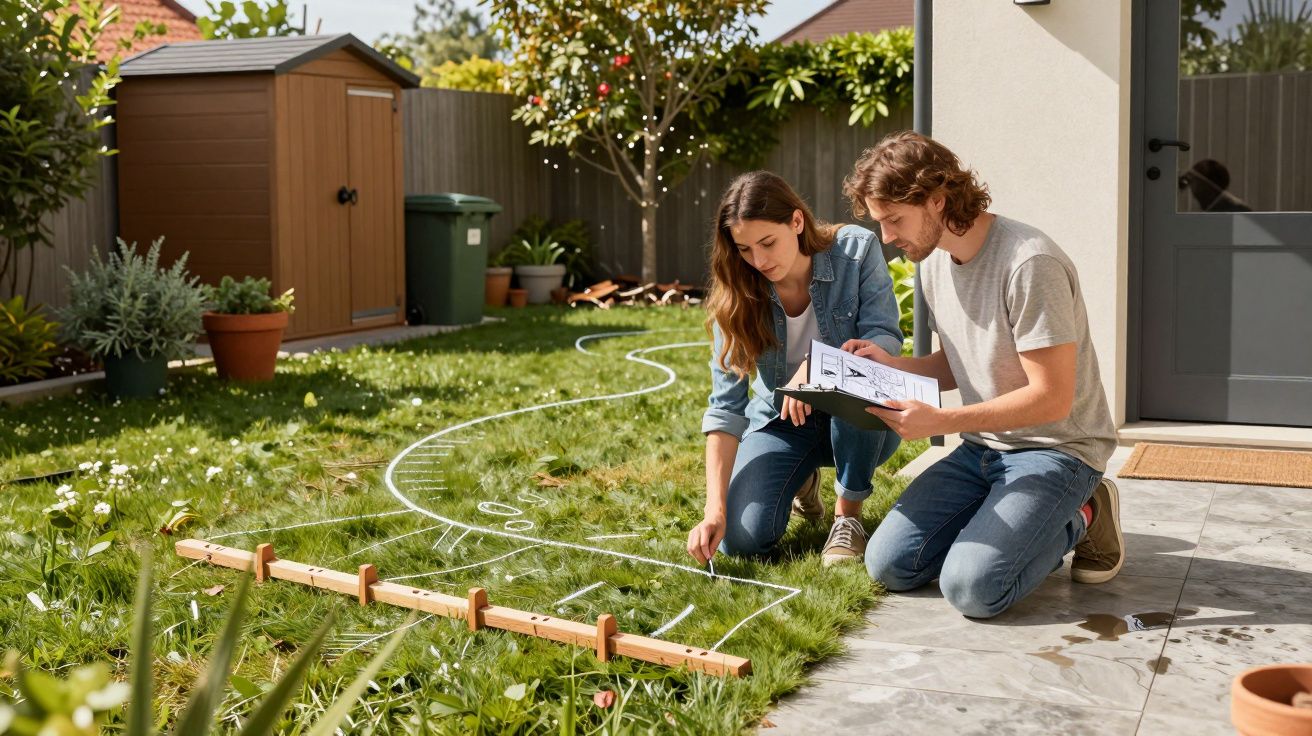
- Mark routes: doors to bins, side return, shed, washing line, seating.
- Note sun and shade at three times: morning, mid-afternoon, evening.
- Decide what must be screened (neighbours, road, storage) and what should be showcased.
- Only then set patio position, size, and level-then choose materials.
The best patios feel inevitable, as if the garden could never have been organised any other way.
Quick sanity checks before you commit
A few questions catch most mistakes early:
- Will this space get used in the weather you actually have, not the weather you wish you had?
- Can two people pass comfortably between doors and furniture?
- Where will the barbecue smoke go, and where will you store it?
- If it rains hard, where does the water go within 30 seconds?
- Does the patio connect to something: a path, a border, a feature, a view?
If you can answer those clearly, the patio stops being a gamble and becomes what it should be: a stable, practical base for the rest of the garden to thrive.
FAQ:
- Should I design planting before my patio? Often, yes-at least in outline. You don’t need every plant picked, but you do need to know where borders, screening, and focal points will sit so the patio faces something worth looking at.
- How big should a patio be? Big enough for your real furniture and circulation. Measure the table, chairs pulled out, and walking space; then test it with pegs or chalk before you build.
- Is a patio always necessary? No. Some gardens work better with gravel, decking, or a series of small seating spots linked by paths-especially where drainage or budget is tight.
- What’s the most common patio mistake? Putting it where it fits rather than where it works: wrong sun, wrong wind, poor routes, and no plan for water.





Comments (0)
No comments yet. Be the first to comment!
Leave a Comment