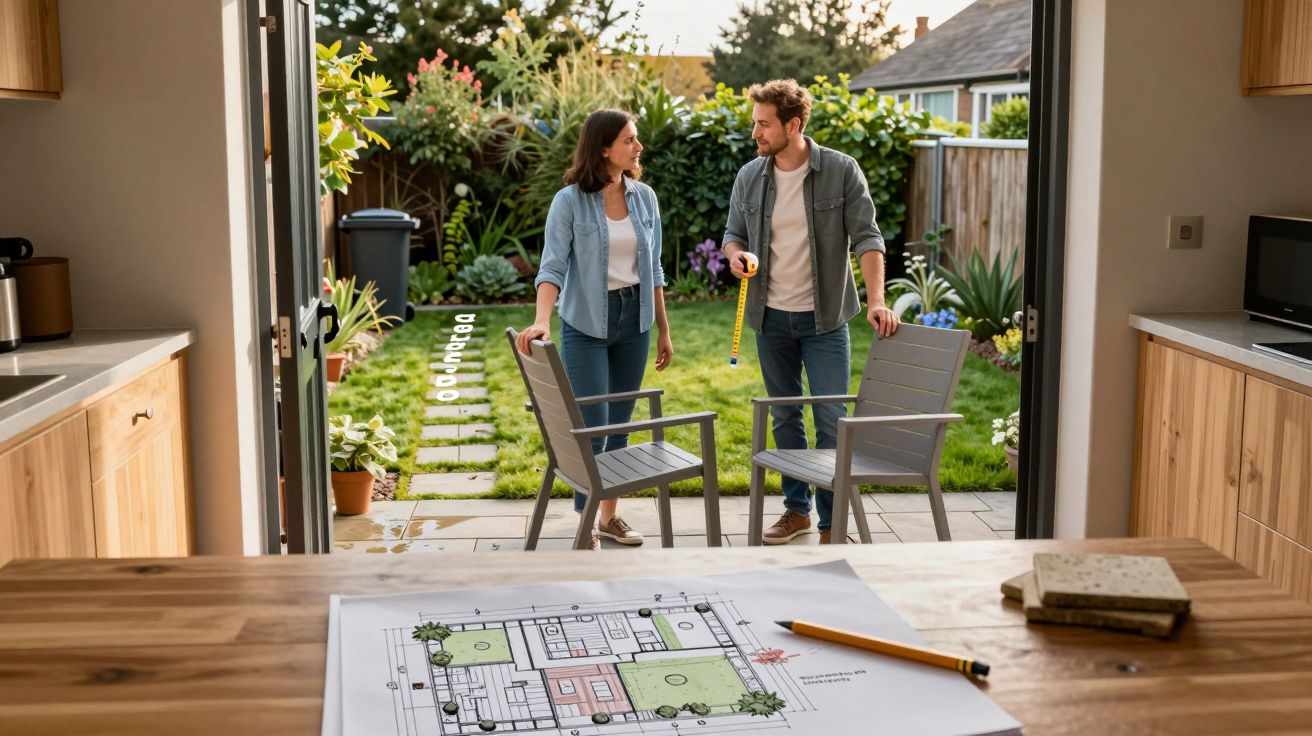
Patios are where UK gardens get lived in: morning coffee, summer dinners, muddy boots left by the back door. In landscape design, they’re also the hard, expensive bit that locks everything else into place. That’s why, counter‑intuitively, patios are usually positioned last in the planning sequence, not first - and why that order decides whether the space still works five winters from now.
You can spot the gardens where it was done the other way. The paving sits awkwardly in relation to doors and steps, the “sunny corner” turns out to be windy, and the best view is of bins. It isn’t bad taste; it’s bad sequencing. The patio got built before anyone knew what the garden needed to do.
The garden doesn’t revolve around paving - people do
A patio feels like the obvious starting point because it’s tangible. You can price it, measure it, picture the furniture, and tick it off. But a patio is the result of decisions about movement, light, privacy, storage, drainage, and planting - not the decision itself.
The cleanest landscapes usually begin with three blunt questions: where do you walk, where do you sit, and what do you look at? The answers change once you’ve stood in the space through a day, watched where shade falls, and noticed how you actually use the back door in the rain. Build the patio first and you commit to guesses.
Why patios are positioned last (and why that’s not procrastination)
There’s a practical logic to putting patios at the end of the design order: everything that can ruin a patio tends to be decided, installed, or discovered earlier.
1) Levels, thresholds, and the boring details that stop future headaches
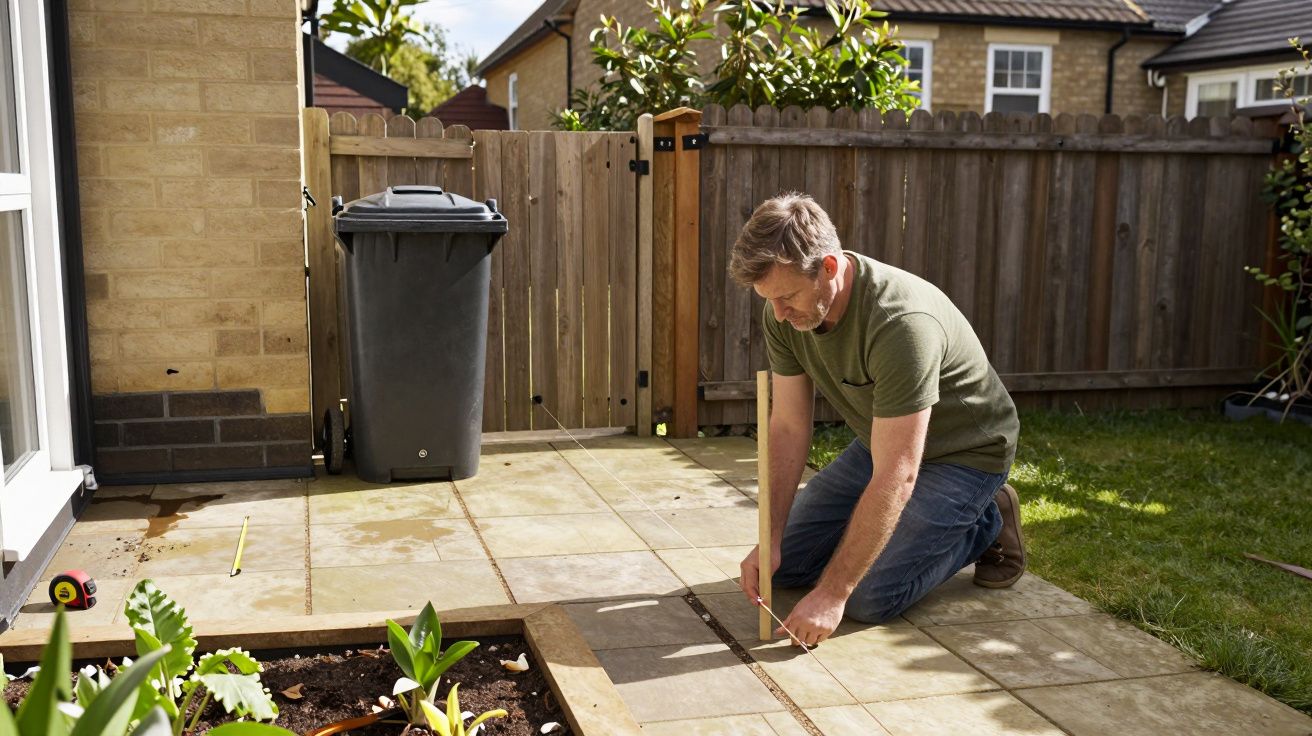
The patio’s finished height is not a style choice; it’s risk management. It has to work with:
- damp proof course levels (and avoiding bridging)
- door thresholds and step heights
- falls for drainage (so water runs away from the house)
- any future changes like bifolds, a porch, or an extension
Get the levels wrong and you’ll live with puddles, algae, slippery spots, and doors that catch - or you’ll pay to fix it later. Most of that is easier to solve when you’ve finalised the wider layout and any building work.
2) Services and structures need to go in first, not through your finished paving
Lighting, power for a pergola, a tap for watering, drainage channels, even a base for a garden room - all of these are easier and cheaper before paving is laid. The “we’ll add it later” approach usually means one of three things: surface trunking you hate, digging up new slabs, or deciding you can live without it.
If you plan the patio last, you can route cables and pipes where they belong, build proper footings, and keep access points sensible. Your future self won’t have to choose between aesthetics and function.
3) Planting and privacy change what the “right” patio is
A patio position that feels exposed in year one might feel perfect in year three once a hedge thickens and trees soften the boundary. Equally, a patio tucked away for “privacy” can become gloomy once planting matures.
This is where landscape design earns its keep. You’re not placing slabs; you’re staging the garden’s long-term microclimate: wind breaks, shade patterns, sight lines from neighbours, and the views you want to frame. The patio should land after you’ve decided what the garden will become, not what it looks like on install day.
The long-term use problem: what happens when you place it first
Most patio regrets don’t show up immediately. They creep in through seasons, routines, and small annoyances.
The common pattern is simple: the patio is built where it fits, not where it functions, and the garden ends up “managed around” a fixed mistake.
- It’s too small to be useful. A two-chair patio becomes a dead zone once you try to add a table, a barbeque, and space to pass without shuffling sideways.
- It’s too far from the kitchen. Food and plates travel like a relay. You stop using the space because it’s a faff, not because you don’t like it.
- It bakes or freezes. Full sun sounds great until you’re squinting at 6pm with no shade; a north-facing nook sounds cosy until it’s permanently damp.
- It fights the route you actually walk. People wear desire lines into lawns for a reason. If your pathing ignores them, you’ll always feel the layout is “off”.
- It becomes a maintenance sink. Poor falls, trapped debris, and constant damp make the patio the bit you’re always pressure-washing, not enjoying.
A patio is supposed to make outdoor living easier. When it’s positioned first, it often does the opposite: it adds friction.
A better sequence that still feels decisive
You don’t need months of overthinking. You need a short, structured order of decisions - like building a plan that won’t collapse when real life turns up.
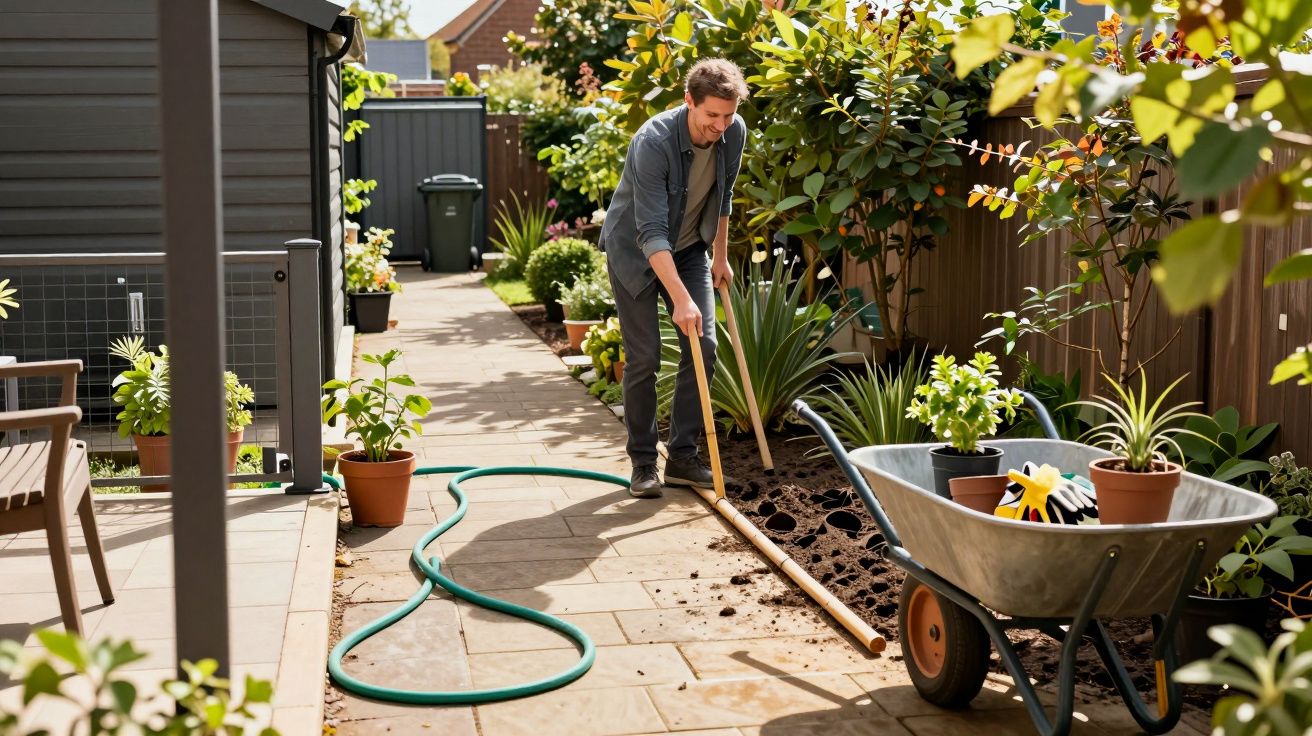
- Map movement first. Back door to bins, shed, clothes line, side gate, seating. Mark the routes you already take.
- Choose the “sit” spots second. One near the house for weeknights; optionally a second for evening sun or a sheltered coffee corner.
- Solve privacy and views. Decide what you’re screening and what you’re framing (fences, neighbours’ windows, that one good tree).
- Place structures and services. Pergola, steps, raised beds, lighting, drainage, tap, sockets - route it all.
- Then size and position the patio. Fit it to furniture and circulation, not guesswork. Leave space for planting edges so it doesn’t feel like a landing pad.
- Finally, choose materials. By now you’ll know whether you need grip, low glare, easy cleaning, or something that takes moss less personally.
Let’s be honest: most people start with stone samples because they’re satisfying. Start with behaviour instead, and the stone choice becomes straightforward.
The payoff: patios that still work when life changes
When the patio comes last, it tends to survive change: kids, pets, mobility needs, new furniture, an outdoor kitchen, ageing parents visiting more often. You’re not trapped by a slab rectangle that made sense for a single summer.
A good patio isn’t just “nice paving”. It’s a reliable interface between house and garden - dry underfoot, easy to reach, comfortable to sit in, and flexible enough to host different versions of your life.
| Point clé | Détail | Intérêt pour le lecteur |
|---|---|---|
| Patios placed last | Levels, services, planting and routes decided first | Fewer regrets and less rework |
| Position beats materials | Sun, wind, privacy, and distance to kitchen matter most | More real-world use, not just looks |
| Long-term thinking | Allow for change, access, and maintenance | Patio stays practical for years |
FAQ:
- Should I always build the patio last in the project? In the design sequence, yes: decide routes, levels, drainage, services, and privacy first. In the build programme, it’s often near the end to avoid damage from heavy work.
- How do I know where to put a patio? Start with how you move from the house and where you naturally want to sit (sun, shelter, privacy). Test with chairs in different spots for a week if you can.
- What’s the biggest long-term mistake people make? Getting levels and drainage wrong. Poor falls and damp edges lead to puddles, algae, and constant cleaning - and sometimes issues at the threshold.
- Is one patio enough? Often yes, but two smaller seating areas can work better than one large slab: one near the house for convenience and another for evening sun or shelter.
- Can a patio be moved later if we get it wrong? It can, but it’s disruptive and expensive. The whole point of placing it last in the design is to avoid paying twice for the same square metres.




Comments (0)
No comments yet. Be the first to comment!
Leave a Comment