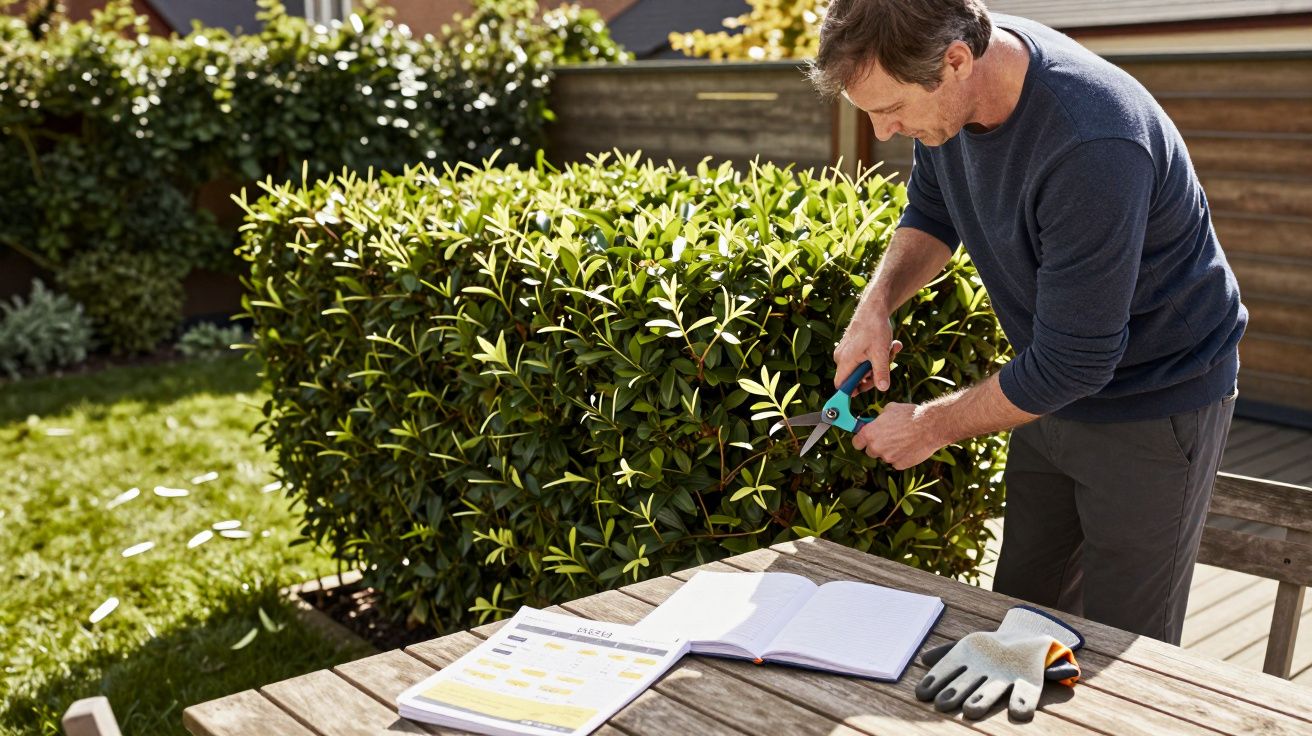
You don’t notice hedge cutting timing until you get it wrong. One weekend you tidy the garden, the hedge looks sharp for a fortnight, then it sulks: patchy growth, brown edges, fewer flowers, or a sudden bare window into next door. The difference is usually seasonal context - not your shears, not your effort, just when you did it.
Most people treat trimming like a simple clean-up job. In reality, it’s closer to steering a plant’s whole year: what it saves, what it spends, and what it can recover from.
The quiet mistake: trimming when the hedge can’t “bounce back”
Picture a hedge like a bank account. In spring and early summer it’s earning: lots of new shoots, lots of stored energy, lots of capacity to heal. In late summer and into winter it’s spending less and repairing slowly. If you cut hard in the wrong window, you’re asking it to regrow at the exact time it’s least able to.
That’s why two identical cuts can have totally different outcomes. One leads to a dense, green wall by August. The other leaves a thin, tired hedge that looks like it’s permanently mid-recovery.
The frustrating part is that the damage often shows up later. You trim in September, it looks neat, you feel pleased, and then spring arrives and it’s sparse at the base. Timing was the culprit, but you only see the evidence months afterwards.
What “good timing” actually protects (beyond looks)
Most advice talks about keeping things tidy. That’s the smallest benefit.
Good timing protects three bigger things:
- Vigour: cutting when the plant is actively growing means it can seal wounds and push new shoots quickly.
- Privacy and shape: you’re guiding where it thickens (especially at the base), not just where it shortens.
- Wildlife and flowers: you’re avoiding the weeks when you’d destroy nesting sites or remove the year’s buds and berries.
If your hedge is a boundary, a windbreak, and a bit of habitat, timing stops being a “gardening preference” and starts being basic stewardship.
The seasonal context most gardens forget: growth spurts and hard stops
In the UK, hedges don’t grow smoothly. They sprint, pause, then sprint again.
A common pattern is:
- Spring surge: lots of soft, fast growth.
- Early summer thickening: leaves mature, stems harden, the hedge starts to hold its shape.
- Late summer slowdown: growth reduces, energy shifts towards storing for winter.
- Winter dormancy: very little repair, and cold snaps can turn fresh cuts into dieback.
This is why “just do it when you have time” backfires. You’re not booking a diary slot. You’re choosing whether the hedge has the biological conditions to respond well.
A simple way to choose a trimming window (without memorising plant science)
Instead of trying to be perfect, use a few practical checks.
Look at the growth, not the calendar
If the hedge is pushing out lots of soft, pale-green tips, it’s in active mode and can usually handle a light-to-moderate trim. If it looks settled, darker, and slower, it will recover more reluctantly.
Decide what you’re trimming for
There’s a difference between a quick tidy and a shaping cut.
- Tidy trim: takes off the soft outer layer. Lower risk, more flexible timing.
- Shaping/reduction: goes into older wood. Higher risk, needs a stronger recovery window.
Many “timing disasters” happen because someone intends a tidy but accidentally gives the hedge a reduction. Taking 5–10 cm off is one job. Taking 30–50 cm off is another.
Think in terms of “aftercare weather”
A hedge doesn’t want drama right after a haircut. Avoid trimming just before:
- a heatwave (scorched edges and stress)
- a dry spell (poor regrowth)
- a hard frost (dieback on cut tips)
You don’t need to predict the whole season. You just need to avoid setting the hedge up for a rough fortnight.
The real-world scenarios people recognise
You can usually tell what happened just by the look.
- Brown, crisp edges after trimming: often heat or dry conditions straight after cutting, or blunt blades tearing rather than slicing.
- Thin, see-through hedge in spring: often too hard a cut too late the previous year, leaving little leaf area to power regrowth.
- Lots of growth at the top, bare at the bottom: repeated trimming that ignores taper (wider base, narrower top) and blocks light from the lower branches.
- No flowers or berries: trimmed at the wrong time for that species’ buds, or trimmed too frequently to let it set.
None of these mean you’re “bad at gardening”. They mean the timing didn’t match the hedge’s cycle.
If you only remember one rule, make it this
Trim when the hedge is growing strongly enough to recover, but not so frantically that you’re chasing it every two weeks.
That middle zone is where you get the neatness without the punishment. It’s also where the hedge learns the shape you want: dense, even, and boring in the best way.
A quick timing cheat-sheet (with the caveat that species matter)
Different hedges behave differently, but this keeps you out of most trouble:
| Goal | Safer general window | Avoid if you can |
|---|---|---|
| Light tidy trim | Late spring to mid-summer | During nesting activity, extreme heat |
| Shape and thicken (gentler) | Early to mid-summer | Late autumn into winter |
| Hard reduction/renovation | Late winter (before active growth) or early spring | Frosty spells, late summer onward |
The species caveat is real. If you’re managing flowering hedges (like hawthorn), or fast growers (like leylandii), the “best” window shifts. Still, seasonal context will get you 80% of the way there.
What to do if you trimmed at the wrong time
Panic pruning is where things get worse. The hedge needs stability.
- Water in dry spells (especially for new or stressed hedges).
- Leave it alone for a while so it can rebuild leaf area.
- Check your cut quality: sharp blades make clean cuts that heal better than torn edges.
- Plan the next trim around recovery, not guilt.
A hedge is surprisingly forgiving when you stop interrupting its recovery.
The takeaway: you’re not just cutting growth, you’re choosing next season’s hedge
The tidy look is immediate, which tricks people into thinking timing doesn’t matter. But hedges live on delayed consequences: the buds you remove, the wood you expose, the weeks you leave them to heal.
Once you start matching hedge cutting to seasonal context, the job gets easier. You cut less often, you fight fewer problems, and the hedge starts acting like a hedge again: dense, private, and quietly doing its job.
FAQ:
- When is the “best” time to trim a hedge in the UK? It depends on species, but for many hedges a light trim in late spring to mid-summer is safer because the plant is actively growing and can recover well.
- Why does my hedge go brown after trimming? Common causes are heat/drought right after cutting, blunt blades tearing leaves, or cutting into older wood that doesn’t regrow readily.
- Is it okay to trim in autumn to keep things neat for winter? A very light tidy can be fine, but heavier cuts in autumn often recover poorly because growth is slowing and frost can damage fresh cut tips.
- How do I stop a hedge going thin at the bottom? Keep the hedge slightly wider at the base than the top so light reaches lower branches, and avoid repeatedly shaving just the top and sides without managing overall shape.
- What about birds nesting in hedges? Check carefully before trimming and avoid disturbing active nests. If in doubt, delay the cut or trim only small sections where you’re confident it’s clear.





Comments (0)
No comments yet. Be the first to comment!
Leave a Comment