Most people meet the lawn at the exact wrong moment: it’s patchy, it’s gone pale, and it’s making the whole garden feel unfinished. Then planting services arrive to quote for borders and beds, and suddenly you’re juggling two conversations that seem related but don’t quite fit together. That separation is not fussiness - it’s how gardeners avoid creating a garden that looks good for a month and struggles for years.
A lawn behaves like a surface. Planting behaves like a community. When you treat them as one blended project, you often end up feeding the wrong thing, watering at the wrong time, and blaming the plants for problems that started under your feet.
The lawn looks like “just grass”, but it’s actually a managed floor
A lawn is the most intensively used part of many gardens. It gets walked on, sat on, mown, scarified, and occasionally punished by a barbecue that “was only there for an hour”. That use compacts the soil, and compaction is not a cosmetic issue - it’s physics. Water can’t move properly, air can’t get to roots, and grass thins out in slow motion.
Planting beds, on the other hand, are usually protected from regular foot traffic. Their soil can stay looser, richer, and more biologically active, because you’re not turning it into a pathway six days a week. Even when beds look messy, they often have healthier structure than a pristine lawn.
This is why gardeners mentally label them as two systems: one is a durable, tolerant “carpet” that must recover quickly; the other is a living mix that needs stability and depth.
The real reason mixing lawn care and border care causes chaos
The classic DIY move is to treat the whole garden with one solution. Feed everything. Water everything. “Improve the soil” everywhere. It feels efficient, and it looks sensible on a Saturday morning with a bag of something from the garden centre.
In practice, it creates mismatched conditions.
A lawn feed is typically high in nitrogen because you’re chasing leaf growth and colour. Many ornamentals don’t want that much nitrogen; they’ll grow soft, sappy foliage, flop over, and become more appealing to pests. Meanwhile, the lawn might need scarifying and aeration, which you can’t do properly if your borders are spilling across it and you’re trying not to disturb freshly planted perennials.
There’s also timing. Lawn renovation is often a “hit it hard” window - spring or early autumn, when soil is warm and moisture is reliable. Planting can be more flexible, but it’s also more sensitive to disturbance and drought in the first season. When you force both into one timetable, something usually suffers.
Water proves the point: the lawn wants different rules
A lawn prefers deep, infrequent watering that encourages roots to chase moisture downwards. Frequent light watering keeps roots near the surface, which is how you end up with turf that panics the moment the weather turns dry. It looks fine until it suddenly doesn’t.
New planting is almost the opposite. Freshly installed shrubs and perennials often need smaller, more regular watering at the root zone until they establish. Not a daily sprinkle across everything - targeted water, where the plant actually is.
That’s why good planting services will often talk about drip lines, mulch, and watering-in routines while a lawn specialist talks about irrigation coverage and how to avoid shallow rooting. Same hosepipe, different logic.
A quick reality check that saves a lot of guilt later:
- If you’re watering the lawn because your new plants are wilting, you’re paying a water bill for the wrong diagnosis.
- If you’re watering your new plants like a lawn (wide spray, quick pass), you’re training them to stay fragile.
Edges are where gardens quietly fail
The border-lawn edge looks like a detail, until it isn’t. A messy edge lets grass creep into beds, steals water and nutrients, and turns weeding into a weekly low-grade argument with yourself. A very tight edge with no buffer can dry out quickly and cook the roots of plants that sit too close to the lawn’s hotter, shorter surface.
Gardeners separate systems because edges are effectively “borders between climates”. The lawn is open, exposed, and mown short - it heats up and dries out faster. Beds are sheltered by foliage and mulch - they hold moisture and stay cooler. When you pretend they’re the same, you place plants in conditions they didn’t sign up for.
A clean, intentional edge is not about neatness. It’s a boundary that makes both systems easier to manage.
How professionals plan it: two systems, one garden
When the separation is done well, you don’t feel it as a division. You feel it as calm. Maintenance becomes obvious rather than overwhelming, because each area has a job.
A simple way gardeners frame it is:
- Decide what the lawn is for. Playing, lounging, dog-running, “just green”, or “showy stripey”. Each use changes the tolerance for wear and the renovation schedule.
- Design planting to suit the lawn, not fight it. Keep high-impact plants off the mowing line, use groundcovers where strimmers would otherwise scalp everything, and choose shapes that make sense to mow.
- Build a buffer. A mowing strip, a path edge, or a mulched margin stops the constant turf-versus-border battle.
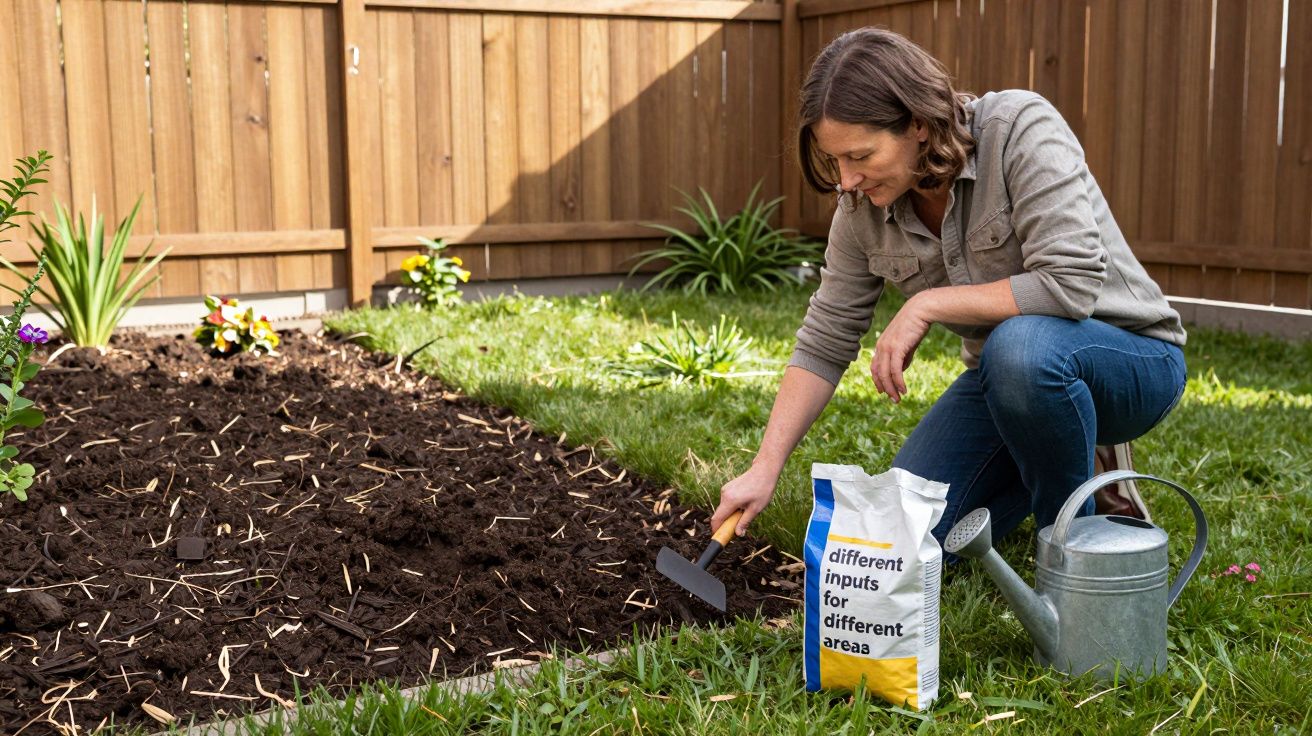
- Match inputs to needs. Lawn feed where the grass is; compost and mulch where the plants are; watering that’s targeted, not sentimental.
It’s also why some planting services will ask questions that sound oddly unrelated to flowers: “Where do you walk?” “Where do you put the trampoline?” “Do you mow with a rotary or cylinder mower?” They’re not being nosy. They’re mapping the lawn system so the planting system doesn’t get sacrificed to it.
The small shift that makes the whole garden easier
The mental trick is to stop seeing “the garden” as one uniform space. Think of it as a house: the lawn is the hallway floor, the beds are the rooms. You wouldn’t clean carpet and mop tiles with the same product and expect equal results.
Once you accept that, a lot of frustration disappears. Patchy grass stops being a personal failure and becomes a soil-and-traffic issue. Struggling plants stop being “fussy” and start being a placement-and-water issue. The garden stops feeling like a single unsolved problem and starts looking like a few manageable systems with clear rules.
| Point clé | Détail | Intérêt pour le lecteur |
|---|---|---|
| The lawn is a surface under stress | Compaction, mowing, wear and quick recovery | Helps you choose the right fixes (aerate, overseed, renovate) |
| Planting is a root and soil ecosystem | Mulch, targeted watering, stable soil structure | Better establishment and fewer “mystery” failures |
| Edges are a functional boundary | Stops grass creep, reduces maintenance conflict | Makes mowing and weeding faster and cleaner |
FAQ:
- Should I renovate the lawn before using planting services? Often yes if heavy work is needed (aeration, levelling, reseeding), because it’s easier to do without damaging new plants. If your lawn is basically fine, planting can come first as long as access and edges are planned.
- Can I use lawn feed in my borders if it’s “general fertiliser”? It’s rarely ideal. Lawn feeds are typically nitrogen-heavy for leaf growth. Borders usually respond better to compost, mulch, and a balanced fertiliser chosen for the plants you have.
- What’s the quickest sign my lawn is a separate problem? Water sitting on the surface, moss returning quickly, or grass thinning in the same walked-on areas each year. Those point to compaction and wear patterns, not planting design.
- Do I need a hard edge between lawn and beds? Not always hard, but you do need a clear boundary (edging, mowing strip, gravel margin, or a wide mulched edge). The aim is to reduce grass invasion and stop mowing damage to plants.
- Is it normal for the lawn to look worse after planting work? Briefly, yes - soil gets disturbed, foot traffic increases, and edges may be re-cut. A good plan brings it back within a few weeks, then the two systems settle into their own rhythms.



Comments (0)
No comments yet. Be the first to comment!
Leave a Comment