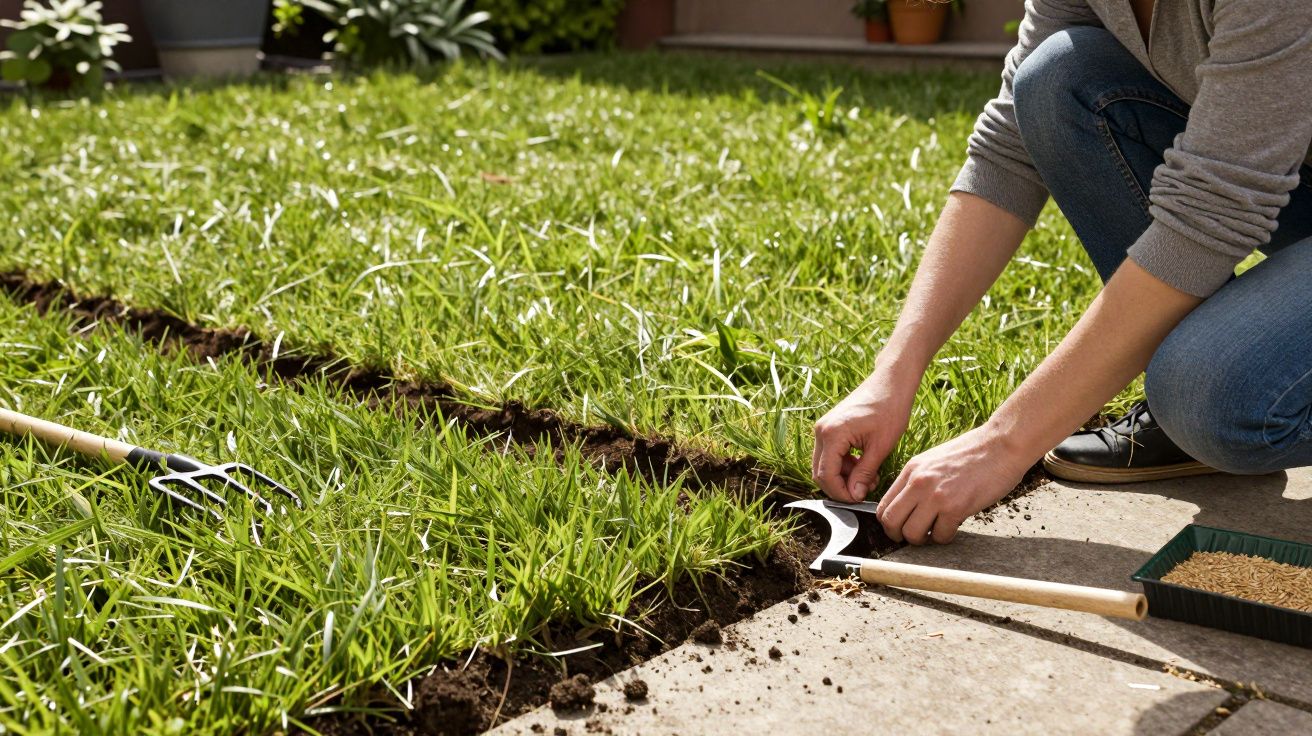
You notice it on an ordinary mow: the lawn looks fine in the middle, but the border is a mess. In any garden layout, that strip where grass meets beds, paving, or fencing behaves differently, and it’s why the lawn edge ends up demanding its own plan. Treat it like the rest of the turf and you’ll keep “fixing” the same problems on repeat.
Gardeners don’t separate edges because they’re fussy. They do it because the edge is where the lawn stops being a simple carpet and starts acting like a boundary zone with different light, moisture, traffic, and competition.
The edge is a different habitat, not just the last 10 centimetres
Most lawns are managed as if conditions are broadly uniform: similar sun, similar watering, similar mowing height. Then you get to the perimeter and everything changes at once. The soil is often drier under a hedge, wetter near a downpipe, and compacted beside a path.
Edges also sit in the shadow of “things”: fences, shrubs, raised beds, kerbs. That means weaker growth and more moss in cool, shaded stretches, and scorched, thin grass where heat reflects off paving. One lawn, several microclimates, all compressed into a narrow ring.
Why lawn edges fail first (even when the centre looks perfect)
The edge is where mistakes show fastest because it’s where stresses stack up. You’ve got competition from roots, inconsistent watering, and mowing that’s physically harder to do cleanly. Add a bit of foot traffic cutting corners and the grass simply can’t keep up.
Common edge failures usually come from a few predictable triggers:
- Mower limitation: wheels can’t get close, so you leave a tufted fringe that shades itself and thins underneath.
- Nutrient drift: fertiliser is spread in arcs; edges often get less, or get scorched where granules bounce onto hard surfaces.
- Root pressure: hedges, trees and even big perennials pull moisture and nutrients from the same band of soil.
- Hardscape heat: paving and edging stones warm up and dry out the border faster in spring and summer.
If the centre is lush but the border is pale and wiry, it’s rarely “bad grass seed”. It’s the edge acting like an entirely different growing environment.
The hidden physics: water, compaction, and the “path effect”
Watch how people move through a garden and you’ll see the edge problem being created in real time. We naturally walk along borders, step off paving onto grass, and clip corners. That compresses soil right where the lawn is already struggling.
Compaction reduces oxygen and stops roots from exploring. Then water behaves oddly: it either runs off towards the path or puddles in ruts, depending on the slope and soil type. So the lawn edge swings between drought stress and waterlogging, sometimes in the same week.
The middle of a lawn is managed. The edge is negotiated-with boots, wheels, dogs, and wheelie bins.
Edging is a design decision in your garden layout
People think of edging as a neat line. In practice it’s a control system: it decides whether grass creeps into beds, whether mulch spills onto turf, and whether mowing is quick or a weekly wrestling match.
A clean edge also reduces the “maintenance tax” on the whole garden. If you can mow right up to a firm boundary, you trim less, you scalp less, and you stop widening the scruffy strip that develops when machines can’t reach.
Three edge styles and what they really do
- Flush mowing edge (level with paving): fastest to maintain, but unforgiving if levels shift and the lawn sinks.
- Raised edging (kerb or metal): keeps soil in beds and defines the line, but can leave a scalped strip if mower wheels ride the hard edge.
- Trench edge (cut into soil): crisp and cheap, but needs re-cutting and can crumble in sandy soils.
Choose based on how you use the space, not on what looks best on day one.
Treat the lawn edge like a separate programme
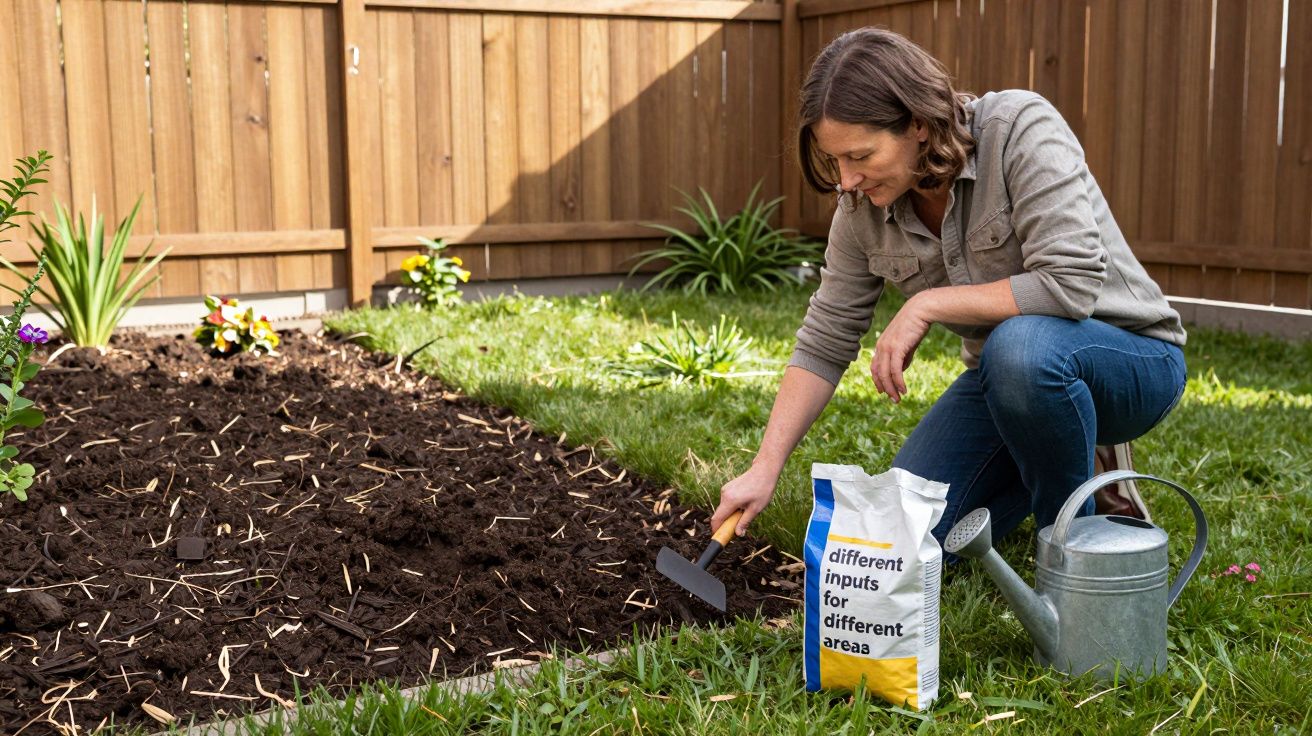
If the edge has different conditions, it needs different inputs. That doesn’t mean buying special products; it means managing differently on purpose, especially in spring and early autumn when grass can actually respond.
A practical “edge routine” looks like this:
- Reset the line: cut a clean edge (half-moon edger or spade) so grass isn’t slowly invading beds and getting ripped back.
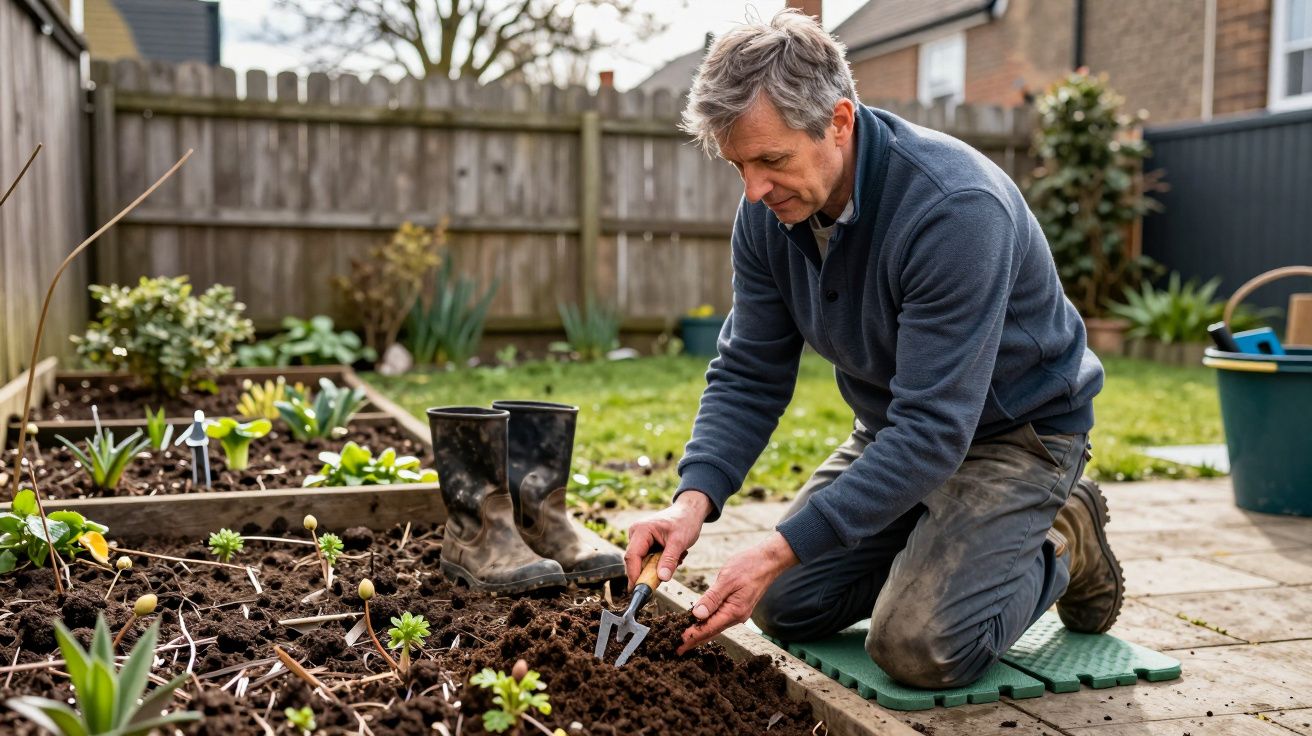
- Lift compaction: fork or use a hand aerator along the border, especially by paths and gates.
- Overseed only the strip: use a hard-wearing mix where traffic is high; don’t waste seed across the whole lawn.
- Top-dress lightly: a thin layer of loam/compost mix helps levels and improves moisture holding without smothering.
- Water deliberately: edges need targeted watering, because they dry first and often get missed by sprinklers.
The trick is to stop “spot fixing” and instead assume the edge will always need its own maintenance rhythm.
Quick diagnostics: what your edge is trying to tell you
You can often read the problem by the pattern. A uniform thin ring suggests mower reach and compaction. Patchy die-back near shrubs points to root competition. Moss and weak growth in one section usually means shade plus moisture.
Use this simple check before you throw more feed at it:
| Symptom at the edge | Likely cause | Best first move |
|---|---|---|
| Tufty fringe, pale underneath | Mower can’t reach; shading | Redefine edge; strim less by mowing to a firm line |
| Bare strip by path/gate | Compaction + traffic | Aerate; overseed with wear mix; consider stepping stone |
| Mossy, thin grass under hedge | Shade + damp + low vigour | Raise mowing height; improve light/airflow; scarify lightly |
The payoff: a calmer lawn and a cleaner border
When edges are defined and supported, the rest of the lawn becomes easier. Mowing is quicker, the grass looks denser because the perimeter isn’t fraying, and beds stay beds instead of becoming a fuzzy negotiation between mulch and turf.
Most importantly, your garden layout starts to look intentional. A lawn with a strong boundary reads as “finished”, even if the planting is still evolving.
FAQ:
- Why does my lawn edge go brown before the middle? Edges dry out faster due to heat from paving, wind exposure, and root competition from nearby plants. They’re also commonly missed by sprinklers.
- Is edging just for appearance? No. A good edge reduces trimming time, prevents grass creeping into beds, and makes mowing more consistent, which improves the whole lawn.
- Should I fertilise the edges more? Sometimes, but start with compaction relief and watering. Extra feed won’t fix shade, dry soil, or worn-out ground by paths.
- What’s the easiest low-maintenance edge? A flush edge next to paving is often simplest because you can mow right up to it-provided levels are stable and the lawn isn’t sinking.


Comments (0)
No comments yet. Be the first to comment!
Leave a Comment