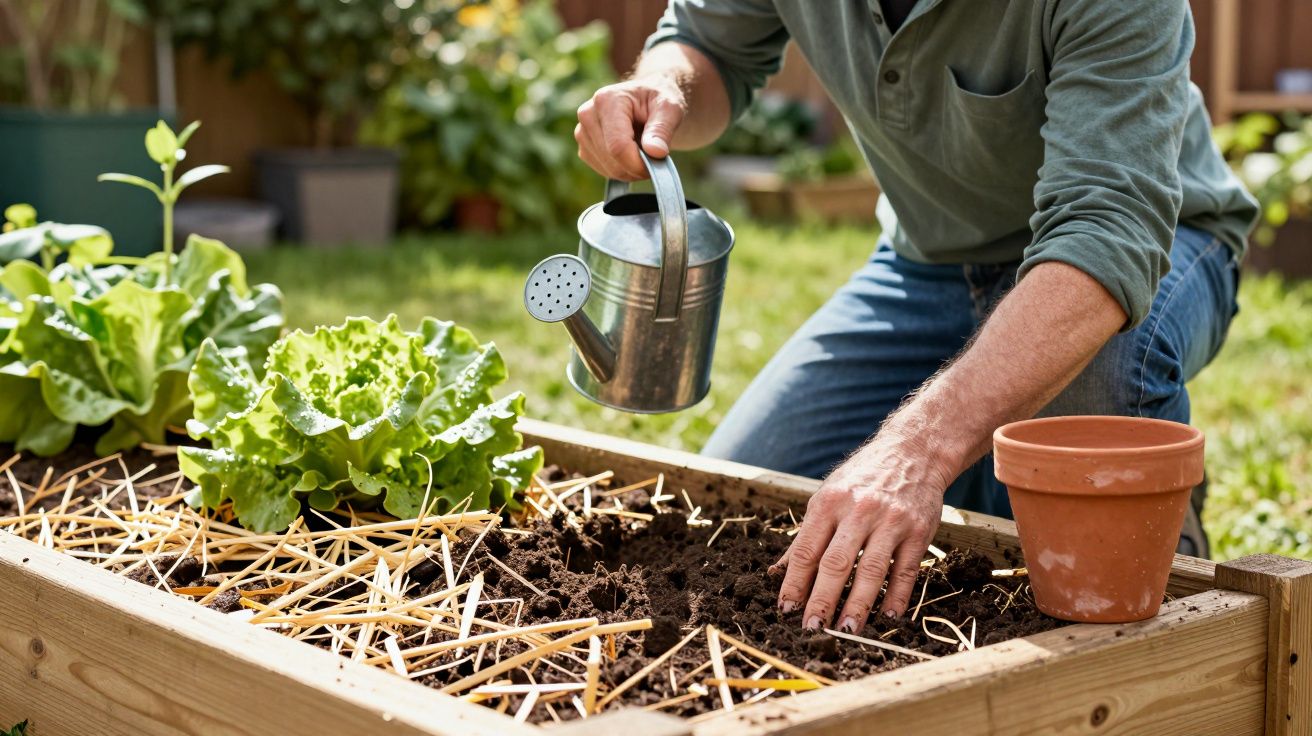
Water is the quiet hinge of garden maintenance: it carries nutrients, cools stressed roots, and decides whether seedlings stand up or sulk. Yet most gardeners don’t treat it like a constant resource, because it isn’t one in practice - not in a British summer that swings from hosepipe bans to thunderstorms, and not in soil that drinks fast one week and holds on the next.
I noticed it in my own beds the first year I tried to “be consistent”. I watered every evening on principle, then watched the lettuces bolt anyway, while the courgettes stayed moody until the day I stopped fussing and started watching the ground.
Why water feels predictable on paper - and never is in the beds
You can measure a litre. You can’t measure what the soil does with it without putting your hands in. One patch sits in shade until noon, another catches wind like a sail, and the bed you improved with compost last autumn holds moisture like a sponge while the one beside it sheds it like a colander.
Even the same bed changes week to week. Early summer roots are shallow and greedy; late summer roots go hunting. The canopy thickens, evaporation drops, and suddenly “the usual” watering gives you split tomatoes and mildew, not gratitude.
Gardeners learn this fast, usually after a small heartbreak. The beans that were fine yesterday are limp at breakfast, then perky again by tea time after a cloud rolls in. It teaches you that the plant is responding to a moving target: heat, wind, humidity, soil structure, and the root zone you can’t see.
The three things that quietly change your water budget overnight
Stand by a bed on a breezy day and you can almost feel the moisture leaving. Most watering plans fail because they ignore the bits that don’t show up in a watering can.
1) Weather isn’t just rain - it’s demand
A warm, still day and a hot, windy day can be the same temperature, yet the second will pull far more water out of leaves and topsoil. Humidity matters. Wind matters. A light rain can wet the surface and do almost nothing for roots if it never soaks in.
If you’ve ever watered “because it rained yesterday” and still found dust under the mulch, you’ve seen this. The garden remembers the last deep soak, not the last drizzle.
2) Soil texture decides whether water stays or slips away
Sandy soil drinks quickly and dries quickly. Clay can hold a lot, but it doesn’t always give it back when plants ask - and it can turn watering into runoff if the surface is hard and dry. Add organic matter and the whole story shifts: infiltration improves, moisture lasts longer, and you can water less often without stress.
This is why two neighbours can follow the same advice and get opposite results. The advice isn’t wrong; the ground is different.
3) Plants don’t all drink at the same time
Leafy greens want steady moisture close to the surface. Tomatoes and squash prefer deeper watering and a bit of drying between, once established. New transplants need frequent, gentle drinks until roots spread; established shrubs often do better with a rare, thorough soak than little sips that never reach depth.
You can’t run the whole garden on one rhythm unless you like constant triage.
“Water the soil, not your guilt,” an allotment holder once told me, watching me drag a hose around like a penance.
What gardeners do instead: a flexible system that looks like inconsistency
Most experienced gardeners aren’t being casual. They’re running a set of small checks and adjusting, because that’s what works when water supply and water demand refuse to sit still.
Here’s what that flexible system usually includes:
- A quick soil test: fingers in the top 5–10 cm. If it’s cool and damp, wait; if it’s dry and dusty, water.
- Deep watering over frequent sprinkling: less often, but long enough to reach roots.
- Mulch as a moisture buffer: compost, leaf mould, straw - anything that shades the soil and slows evaporation.
- Watering at the right time: early morning if you can; evenings only if that’s real life, and with care around mildew-prone plants.
- Prioritising: seedlings, pots, and new plantings first; established beds last.
Let’s be honest: nobody keeps perfect notes on millimetres of rain versus litres applied. They notice what wilts first, what holds on, and where the hose actually reaches without knocking over the sweet peas.
The hidden reason water is never “constant”: infrastructure and rules
There’s the garden, and then there’s everything around it. Water butts run out. Outdoor taps freeze or leak. Hosepipe bans arrive right when your borders look their best. Even if you’re keen, your supply isn’t guaranteed - and your time isn’t either.
So gardeners build resilience rather than precision. They catch rain when they can, mulch when they remember, and design beds that forgive a missed day. It’s not laziness; it’s adapting to a resource that comes in bursts.
A simple way to think about it: aim for stable moisture, not stable watering
Treat water as a variable input, and your goal becomes steady conditions in the root zone. That’s where plants live. The trick is to smooth the peaks and dips, rather than trying to hit the same number every day.
| What changes fast | What you control | What it does for the garden |
|---|---|---|
| Wind, heat, sudden dry spells | Mulch + deeper watering | Slows drying and reduces stress swings |
| Soil that drains or caps over | Organic matter + gentler soaking | Improves infiltration and water holding |
| Uneven plant needs | Grouping by thirst + prioritising pots/seedlings | Less waste, fewer failures |
The small shift that makes watering feel easier
Walk the garden before you water it. Look for the dull leaf, the pot that’s light, the bed that’s cracking, the patch that stays dark after rain. If you water only where the soil asks, you stop treating water as a constant - and you start treating it as information.
That’s when garden maintenance gets calmer. You’re no longer trying to outsmart the weather with routine. You’re responding to the living, changeable thing in front of you, which is the only “schedule” the garden really keeps.
FAQ:
- Does watering every day help in summer? Not usually. Daily watering often stays near the surface, encouraging shallow roots. Most beds do better with deeper watering less often, adjusted to heat and wind.
- How can I tell if I’ve watered deeply enough? Check 10–15 cm down an hour later. If it’s damp and cool at that depth, you’ve reached the root zone for most veg and annuals.
- Is rainwater always better than tap water? Rainwater is often gentler and free, but the best water is the water you have when plants need it. Use water butts when you can, and prioritise wisely when supply is tight.
- What’s the quickest win to use less water? Mulch. A 5–8 cm layer of compost or leaf mould can dramatically cut evaporation and stabilise soil moisture between waterings.





Comments (0)
No comments yet. Be the first to comment!
Leave a Comment