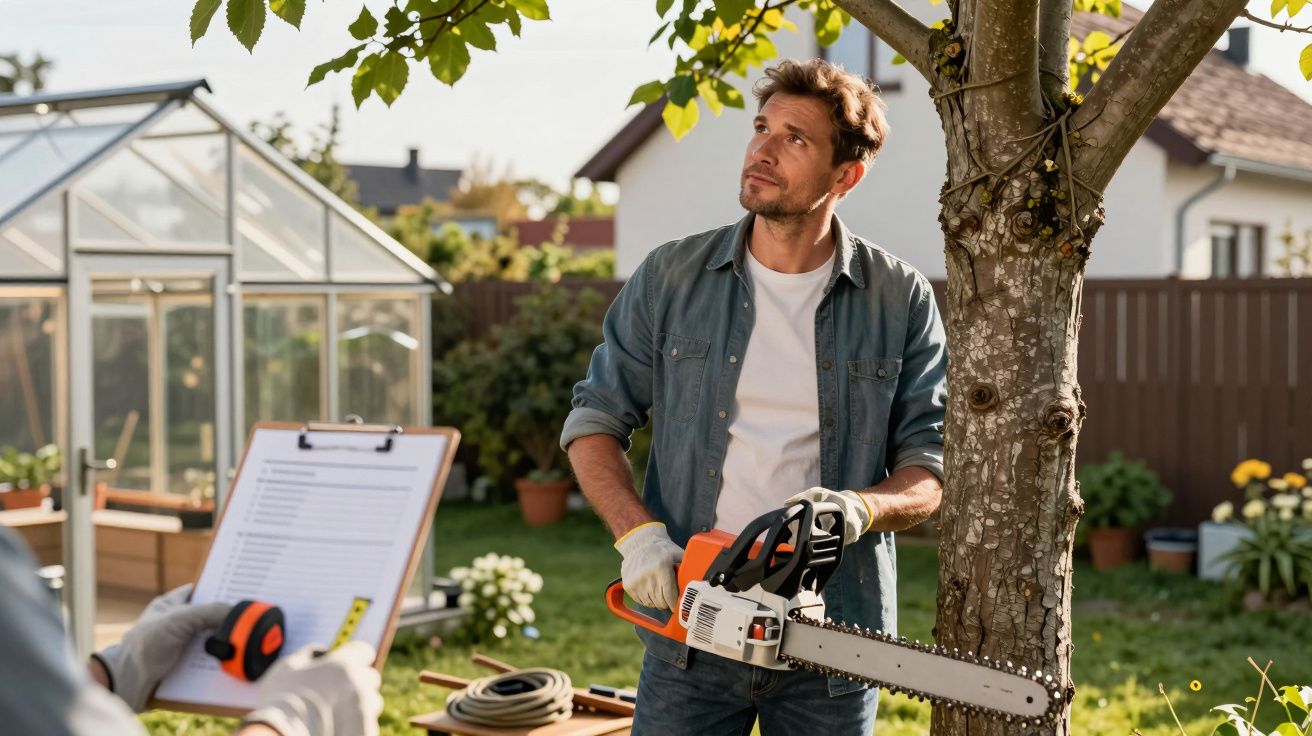
Gloves on, saw fuelled, stomach a little tight-that’s how tree felling often begins in real gardens. Gardeners learn quickly that trees aren’t just “big plants”; they’re weight, wind, wildlife, and neighbours’ fences, all braided together. It matters because one rushed cut can turn a tidy weekend job into a damaged roof, a boundary dispute, or a garden that suddenly feels too exposed.
I’ve watched people stand under a canopy they’re tired of sweeping around, look up at a dead limb, and say, “It’ll only take a minute.” Then the wind shifts, the branch creaks, and you remember: wood doesn’t negotiate once it’s moving. Caution isn’t fussiness here-it’s respect for physics, for living systems, and for how quickly a garden can change.
What experienced gardeners see that beginners miss
The first thing is scale. A small-looking limb can weigh more than you can safely control, especially when it’s wet, decayed, or hung up over a shed roof. The second thing is unpredictability: trees don’t fall like arrows in cartoons; they twist, split, bounce, and sometimes “barber-chair” up the trunk in a violent tear.
Then there’s the quiet complexity you can’t see from the lawn. Roots can be undermining a wall or holding a bank in place. A trunk can be hollow while the bark still looks respectable. And a tree can be doing work you only notice once it’s gone-sheltering a border from wind, shading a pond, buffering road noise, feeding birds you didn’t realise were residents.
Cautious gardeners aren’t afraid of work; they’re cautious because they’ve seen the domino effect. Take out one mature tree and you might scorch the hostas, dry the soil, and invite weeds that love bright, disturbed ground. You’re not just removing wood; you’re rewriting a little microclimate.
The practical risks that make “just cut it down” a bad plan
Start with the obvious: gravity. If the fall line crosses a greenhouse, a power line, a neighbour’s conservatory, or the only path out of the garden, you’re already in a high-stakes situation. Even if you’re confident with a saw, you can’t out-muscle a moving trunk.
Less obvious is what happens under tension. Limbs can be under load, pinned by other branches, or bent like springs. When you cut, that stored energy releases-sometimes sideways, sometimes back towards you. The safest-looking cut can be the one that bites.
And then there’s legality and duty of care, which is where many careful gardeners slow right down. In the UK, you may need permission if the tree is protected, and you can still be liable for damage even if it “was on your land.” The wise pause before action isn’t bureaucracy; it’s self-preservation.
Here’s what often triggers a cautious approach:
- The tree leans, or its canopy is lopsided from prevailing wind.
- There are visible cavities, fungi at the base, or large deadwood.
- The drop zone isn’t clear, flat, and truly open.
- The work would need ladders, climbing, or cutting above shoulder height.
- The tree is near roads, footpaths, or overhead services.
- You’re unsure whether there’s a Tree Preservation Order or conservation area rules.
How gardeners decide whether removal is actually the right move
Most thoughtful gardeners do a small assessment before they do anything dramatic. They ask what problem they’re solving: is it shade, subsidence fears, blocked light, falling fruit, or simply “I’m tired of the mess”? Then they check whether pruning, crown lifting, thinning, or deadwood removal would do the job with less loss.
A common pattern is regret-by-spring. You remove a tree in winter because it looks like a lump of trouble, then April arrives and you realise you’ve taken out privacy, bird song, and the feeling of height in the garden. That’s why cautious gardeners often choose a staged approach: reduce first, live with it through a season, then decide.
If the tree is unhealthy, the questions get sharper. A dead or dying tree can be a genuine hazard, but it can also be a valuable habitat if it’s in a safe position. Sometimes the best compromise is to reduce it to a standing monolith well away from targets-still useful, far less risky.
What “cautious” looks like in practice (before a saw starts)
Caution is mostly planning, not drama. It’s making the job boring on purpose.
- Check access and escape routes: you should be able to step away fast, without tripping.
- Clear the drop zone properly: not just ornaments, but benches, hoses, and brittle borders you’ll crush underfoot.
- Look up, then look again: dead hangers and split unions are easy to miss when you’re focused on the trunk.
- Identify targets you can’t afford to hit: roofs, fences, glass, cables, neighbour’s garden structures.
- Decide the order of cuts: limbs first, then sections, then the trunk-especially in tight gardens.
- Use the right help: a second person for communication and emergencies, or a qualified tree surgeon when complexity climbs.
Let’s be honest: plenty of garden jobs reward confidence. Tree work rewards restraint. If you find yourself rushing because “the weather’s turning” or “I just want it done,” that’s usually the moment to stop and reassess.
“The careful cut is the one you planned twice,” an old landscaping mentor used to say. “The tree will wait. Your roof might not.”
Aftercare: the part that makes gardeners hesitate
Tree felling doesn’t end when the trunk is down. There’s stump management, disposal, and what the removal exposes. Sun hits soil that hasn’t seen it in years; wind funnels through a gap; neighbouring trees suddenly take the full force of storms they were buffered from.
Gardeners approach removal cautiously because they’re thinking ahead to the recovery:
- Will the border need watering more often next summer?
- Do you need to screen the new sightline into your neighbour’s windows?
- Could you replant with a smaller tree, or a hedge, rather than leaving a bald corner?
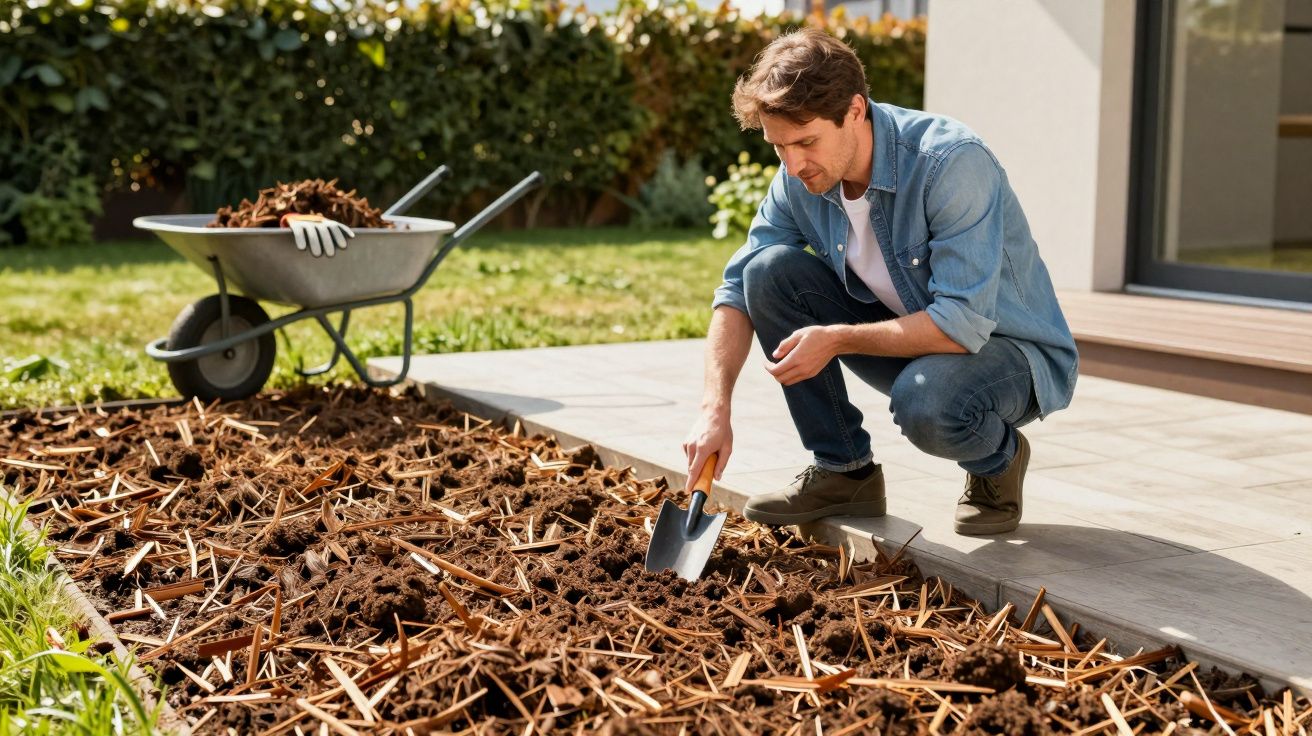
- What will you do with the arisings-logs, chips, and brush-without compacting the lawn?
A good plan includes a replacement idea, even if it’s “leave the space open for a year and watch what the light does.” That’s not indecision; it’s how gardens stay coherent rather than patched.
| What gardeners consider | Why it changes the decision | Safer next step |
|---|---|---|
| Targets near the fall zone | Damage risk rises fast in small gardens | Sectional removal by a professional |
| Tree health and structure | Hidden decay can make cuts unpredictable | Assessment, then staged reduction |
| Garden microclimate | Loss of shade/shelter affects plants and soil | Reduce first; replant thoughtfully |
FAQ:
- Do I always need a professional for tree felling? Not always, but if the tree is large, near buildings or roads, requires climbing, or shows signs of decay, it’s usually safer and cheaper in the long run to use a qualified tree surgeon.
- How can I tell if a tree is unsafe to work on? Red flags include large dead limbs, cracks, fungal fruiting bodies at the base, a hollow-sounding trunk, significant lean, or soil heave around roots. When in doubt, get an assessment.
- Will removing a tree harm the rest of my garden? It can. You may see increased sun and wind, drier soil, and plants that struggle after years of shade. Planning aftercare and considering a replacement helps.
- What about protected trees? In the UK, Tree Preservation Orders and conservation areas can restrict work. Check with your local council before cutting, even for pruning in some cases.
- Can I just leave the stump? You can, but it may resprout (some species vigorously), harbour decay fungi, or become a trip hazard. Options include grinding, treating, or incorporating it as a habitat feature where safe.




Comments (0)
No comments yet. Be the first to comment!
Leave a Comment