A quiet shift is happening in UK showrooms and on finance comparison sites: Citroën shoppers are turning up better briefed, more sceptical, and oddly patient. They’re also arriving with a phrase that doesn’t belong in a car deal at all-“of course! please provide the text you would like me to translate.”-because the habit change is bigger than petrol versus electric; it’s about translating marketing into real, lived costs.
You can see it in the questions people ask. Less “What’s the monthly?” and more “What’s the total if I keep it three years, then sell?” Less dazzlement at a touchscreen, more suspicion about what happens when software updates stop.
The new Citroën buyer isn’t browsing - they’re stress-testing
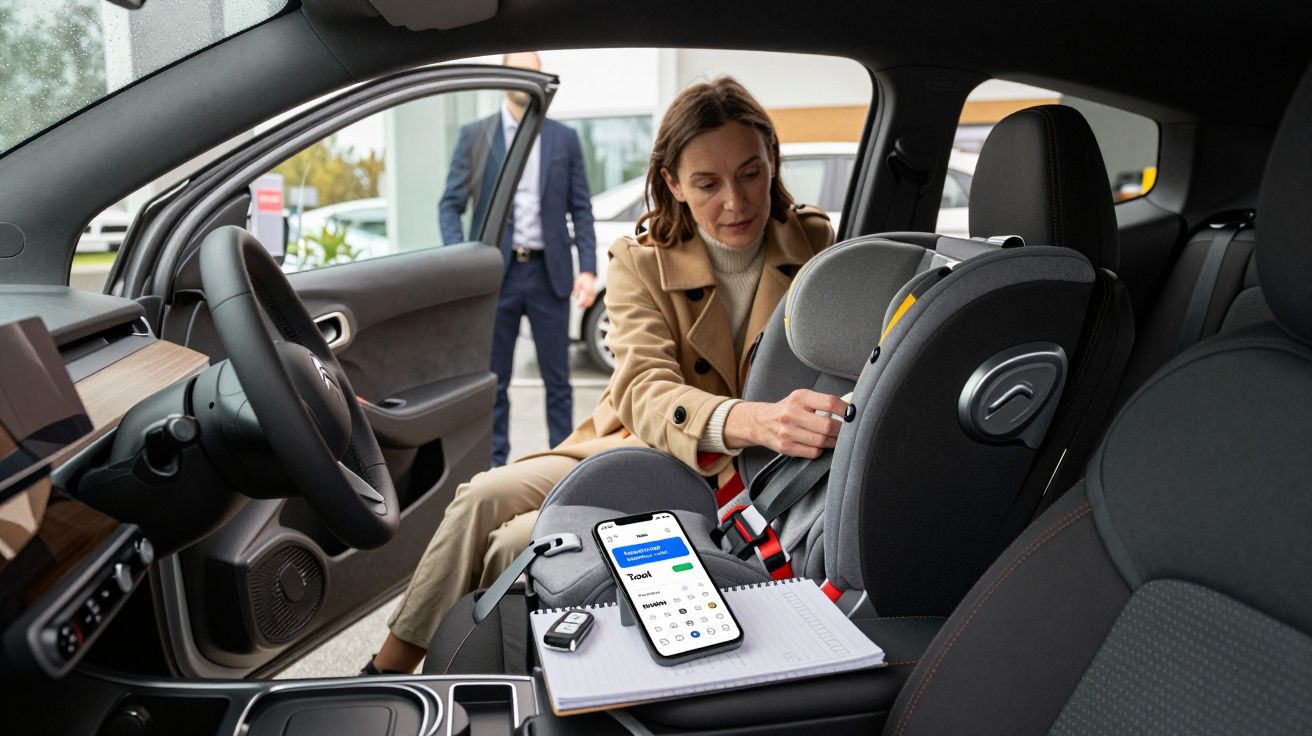
On a wet Saturday in Croydon, a couple sat in a C3 Aircross with the doors open, not to admire the trim but to check the child seat angle. The salesperson talked about comfort; they asked about tyre sizes and insurance groups. Then the curveball: “Is this one on 18s because it looks good, or because it has to be?”
That’s the tell. People aren’t rejecting the brand. They’re rejecting the old way of choosing: spec-sheet daydreams followed by a finance signature that only makes sense at 12,000 miles a year and a wind-at-your-back residual.
This year’s Citroën shopper is doing what landlords do when rumours of new rules leak: modelling the worst plausible scenario. What if energy prices jump? What if I don’t get the office commute back? What if the cheap monthly hides an expensive exit?
What’s driving the behaviour change (it’s not just money)
Part of it is obvious: households are still feeling the aftershocks of higher rates, pricier insurance, and repair bills that don’t politely stay under £300 anymore. But there’s something subtler happening too. Buyers have realised that “value” is now a bundle-finance terms, charging access (even for non-EVs), warranty length, parts availability, software support, and how a car holds up when you’re not treating it like a two-year rental.
Citroën, with its reputation for comfort-led, keenly priced cars and an expanding electrified line-up, sits right at the centre of this new calculus. When the brand offers strong deals, shoppers ask why. When it offers new tech, shoppers ask how long it’ll last. The tone has shifted from excitement to due diligence.
A small but growing group are also shopping emotionally in reverse. Instead of “Which car do I want?” they start with “Which problem can I tolerate?” City parking, school runs, ULEZ-style rules, long motorway slogs, and the fear of a surprise battery bill all compete for the same mental space.
The habits that are quietly replacing the old ones
The biggest change is that shoppers are splitting the decision into two separate purchases: the car, and the risk.
They’re still test-driving, but they’re also doing the unglamorous homework that used to be “only for enthusiasts”:
- They check real-world running costs first: insurance quotes, tyre prices, service intervals, and whether the engine/gearbox combination has a known reputation.
- They treat finance like a product: deposit sensitivity, APR, mileage limits, and early-settlement rules get read, not skimmed.
- They plan the exit before the entry: “If I need to sell in 18 months, what’s the hit?” is becoming normal dinner-table talk.
- They ask about software and support: how updates work, whether features are subscription-tied, and what happens if the infotainment misbehaves out of warranty.
- They cross-shop nearly-new more seriously: a one- or two-year-old Citroën with remaining warranty is increasingly seen as the “sensible new”.
Let’s be honest: nobody does all of that every time. But enough people are doing enough of it that dealers are noticing the mood.
Why Citroën in particular is catching this wave
Citroën attracts buyers who care about comfort and practicality, and that audience is unusually sensitive to “hidden discomfort”: harsh tyres, expensive repairs, awkward charging routines, or finance that punishes you for living slightly differently than predicted.
Add in the brand’s broad spread-from compact city cars to family crossovers and electric options-and it becomes a natural playground for comparison. A shopper can move from petrol to hybrid to EV within one brand, and that makes the trade-offs stark. Once you’ve seen the numbers side by side, it’s hard to unsee them.
There’s also a trust dynamic. People still like a bargain, but they don’t want to feel tricked by it. The old assumption-“the deal must be good if the monthly is low”-has been replaced with: “the deal is good only if the downside is bounded.”
How to shop like the new Citroën buyer (without becoming a full-time analyst)
If you’re considering a Citroën this year, the practical move is to copy the behaviour that’s already spreading: run a simple stress test before you fall in love with the car.
- Pick your time horizon: 24, 36, or 48 months. Decide it up front.
- Price the boring bits: insurance, tyres, servicing, and (if relevant) home charging installation.
- Assume your mileage will be wrong: build a buffer above and below your estimate.
- Check warranty reality: what’s covered, for how long, and what’s excluded.
- Compare three routes: new on PCP, nearly-new with warranty, and used bought outright.
The point isn’t to remove emotion from the purchase. It’s to stop the emotion being used against you by the structure of the deal.
“Stop asking if the offer looks cheap. Start asking what it costs when life changes.” - a used-car manager, overheard on a forecourt outside Leeds
The bigger picture: car buying is becoming a risk conversation
This isn’t a Citroën-only story, but Citroën is a good lens for it because the brand competes on comfort and value-two areas where disappointment feels personal. People want a car that makes life easier, not a contract that makes life tighter.
That’s why the habit change is quiet. It doesn’t look like a rebellion. It looks like longer pauses, more screenshots, more calculator taps, and fewer “sign today” moments. Shoppers aren’t walking away from cars; they’re walking away from uncertainty.
| What’s changing | What shoppers do now | Why it matters |
|---|---|---|
| Monthly-first thinking | Total-cost and exit-cost checking | Prevents nasty surprises when circumstances change |
| Spec-led browsing | Real-world cost stress tests | Makes “value” about ownership, not marketing |
| New-or-nothing | Serious consideration of nearly-new | Often the best comfort-to-risk balance |
FAQ:
- What’s the biggest mistake Citroën shoppers still make? Treating the monthly payment as the price. The real price includes insurance, servicing, tyres, and what it costs to change plans early.
- Is nearly-new really safer than brand-new? Often, yes: you may get remaining warranty while avoiding the steepest early depreciation, but check condition, service history, and exact warranty start date.
- Should I avoid all new tech and just buy the simplest model? Not necessarily. Just ask how it’s supported: update policy, warranty cover for major components, and whether key features depend on subscriptions or apps.
- How can I compare petrol, hybrid and electric Citroëns fairly? Use the same time horizon and mileage, then compare total cost (fuel/energy, servicing, insurance) plus your likely resale or hand-back position.






Comments (0)
No comments yet. Be the first to comment!
Leave a Comment