Cabbage has always been the quiet workhorse of British cooking: shredded into slaw, simmered into stews, tucked beside a roast. This year, though, a strange little phrase keeps surfacing in supermarkets and group chats - “of course! please provide the text you would like me to translate.” - as people swap tips, screenshots and substitutions like they’re decoding a new routine. It matters because cabbage is one of the first places shoppers feel the squeeze when budgets tighten, meals need stretching, and waste starts to look personally offensive.
You can see the change in the trolley. Fewer giant, hopeful heads destined for the crisper drawer. More smaller cabbages, more prepped wedges, more deliberate choices about what will actually get cooked before it goes limp.
The cabbage aisle has become a planning aisle
A whole cabbage is cheap until it isn’t. Not because the sticker price is suddenly outrageous, but because one forgotten head can turn into a bin-bound, watery regret in a week. Shoppers are doing the maths more often now: cost per meal, not cost per unit.
So the habits shift in small, practical ways. People buy what they can finish, not what looks thrifty in the moment. They also buy with a plan attached: “stir-fry Tuesday, soup Thursday, slaw at the weekend”, the same way you’d ration herbs or soft fruit.
You can hear it in how people talk about it, too. Cabbage isn’t just “healthy” or “cheap”; it’s “useful”, “reliable”, “the thing that won’t let me down if I cook it tonight”.
Smaller buys, quicker wins
One of the clearest changes is the move away from the big, full heads. A lot of shoppers are picking:
- pointed cabbage for fast slicing and quick sautés
- Savoy for texture in soups and braises
- red cabbage in smaller pieces for slaws and pickles
- pre-cut wedges when time (and willpower) is thin
Prepped cabbage used to feel like paying for laziness. Now it feels like paying for certainty. If the choice is between a £1.20 wedge that gets eaten and a £1.50 head that melts in the drawer, people are choosing the wedge and calling it sensible.
This isn’t about culinary purity. It’s about friction. Remove the chopping step, and cabbage makes it into the pan on a weekday. Leave it whole and heavy, and it waits for a “proper meal” that never arrives.
Storage habits are getting oddly specific
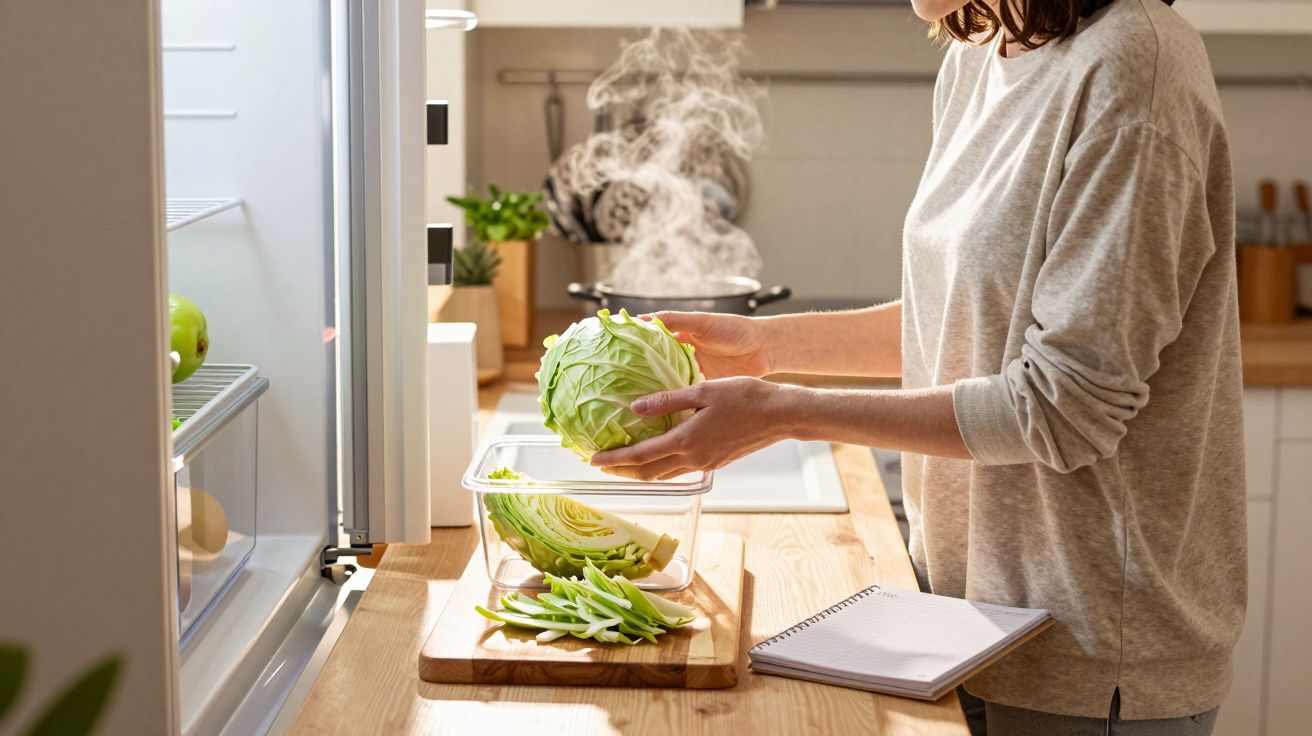
There’s a new kind of kitchen lore circulating: where cabbage lasts, what makes it sweat, which shelf turns it bitter. The practical truth is simple-cabbage keeps best when it’s cool, lightly protected, and not cut until needed.
A few habits are popping up again and again because they actually work:
- keep whole cabbage in the fridge drawer, loosely wrapped (not sealed tight in plastic)
- if cut, store cut-side down in a container or wrap to reduce drying
- slice only what you’ll cook in 24–48 hours
- keep it away from apples and pears if you’re sensitive to faster ageing in the drawer
The point isn’t perfection; it’s reducing the “mystery slump” that makes people give up on it. Once you trust it to last, you buy it more often.
The real shift: cabbage is being treated like a base, not a side
For years, cabbage sat in the background: a worthy vegetable you added once the interesting things were sorted. This year it’s moving to the centre because it does three jobs at once: bulk, crunch, and a kind of savoury sweetness when it’s cooked properly.
People are using it the way they use rice or pasta, especially in meals designed to stretch:
- fried cabbage with noodles, soy, and whatever protein is left
- “everything soup” where cabbage stands in for extra veg
- roasted cabbage wedges as the main texture on the plate
- quick pickled red cabbage to lift cheap sandwiches and jacket potatoes
This is where the quiet behaviour change shows up. The cabbage isn’t a virtue signal. It’s a tactic.
What shoppers are doing, right now
The most common pattern is less about recipes and more about choreography: buy with intent, prep with restraint, cook in phases. It’s the same mindset that makes people portion mince or freeze bread.
A simple routine that keeps appearing looks like this:
- Cook one hot cabbage dish early in the week (stir-fry, braise, traybake).
- Keep a small raw portion back for crunch (slaw, salads, tacos, sandwiches).
- If there’s still half a head left by day four, turn it into soup or fry it down with onions and stock.
Cabbage is forgiving, but it rewards momentum. The first cook makes the rest easier, because the fridge stops feeling like a vegetable obligation and starts feeling like ingredients.
The “new cabbage shopper” checklist
| Habit | What it looks like | Why it helps |
|---|---|---|
| Buy smaller | Wedges, pointed cabbage, mini heads | Less waste, faster cooking |
| Cook early | One deliberate dish in days 1–2 | Stops the slow decline in the drawer |
| Keep it versatile | Raw crunch + cooked softness | More meals from one buy |
FAQ:
- Is cabbage still good value compared with other veg? Usually, yes-especially when you actually use it all. The “value” collapses when half of it goes off, so smaller buys can be smarter than bigger bargains.
- Which cabbage is easiest for weeknight cooking? Pointed cabbage is quick to slice and softens fast. Savoy is great when you want texture in soup or a braise.
- How do I stop cut cabbage drying out? Wrap the cut side or store it cut-side down in a container, and use it within a couple of days for best texture.
- Can I freeze cabbage? You can, but it’s best cooked first (or blanched briefly). Frozen cabbage is ideal for soups, stews and stir-fries, not for slaw.
- Why does my cabbage smell strong when I cook it? High heat, short cooking times reduce sulphur smells. Slow simmering in lots of water tends to amplify them-try sautéing, roasting, or braising with the lid slightly ajar.




Comments (0)
No comments yet. Be the first to comment!
Leave a Comment