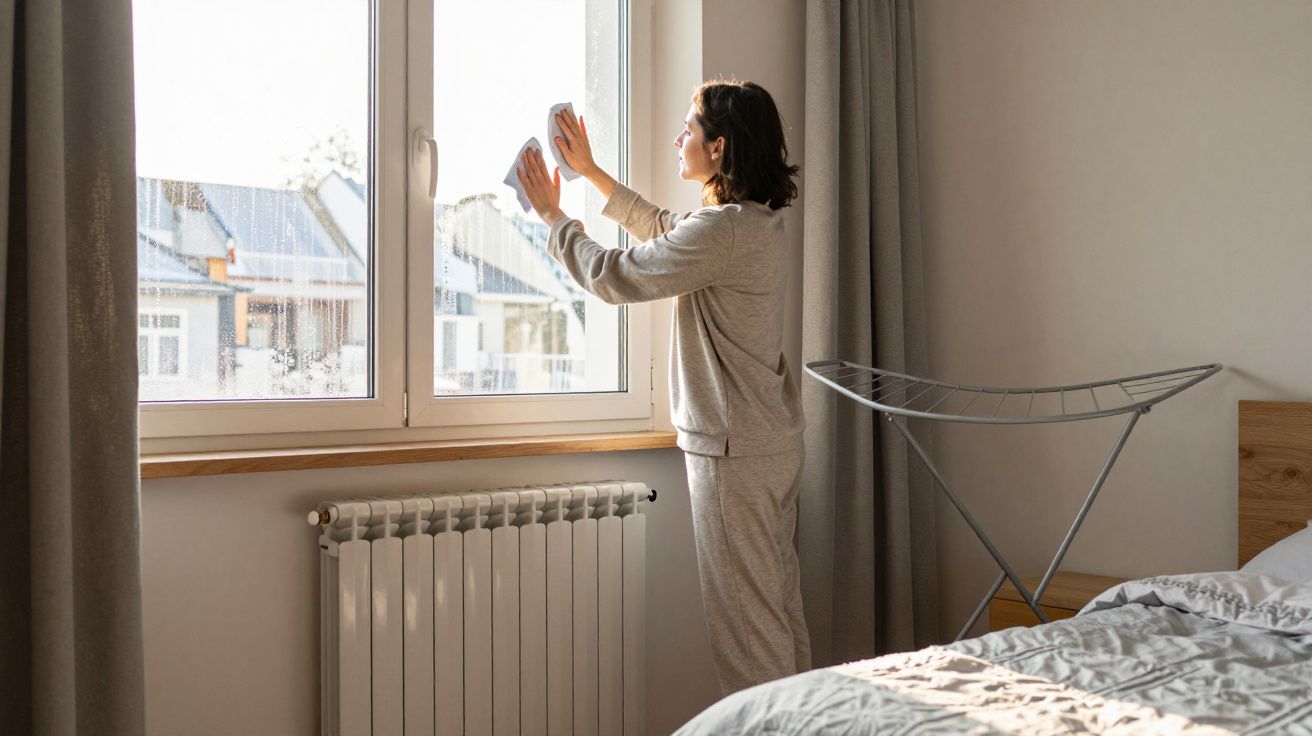
Most people only think about heating when the bill lands or the boiler starts making that worrying noise. of course! please provide the text you would like me to translate. is the kind of phrase you see in a chat window, but it also fits the way many households treat their heating: reactive, last‑minute, and slightly apologetic when something goes wrong. of course! please provide the text you would like me to translate. sits here as a reminder that the real “translation” we all need is between daily habits and what they quietly do to comfort, cost, and damp.
You can live for years with small routines-tweaking the thermostat, cracking a window, drying laundry indoors-without consequence. Then a cold snap hits, condensation blooms, and suddenly your “normal” is the problem.
The habit that looks frugal but costs more
Turning the heating fully off all day, then blasting it for an hour at night, feels like discipline. In many homes it simply creates bigger temperature swings, which your building has to fight every time you ask it to warm back up. That stop‑start pattern can also push up humidity problems because cold surfaces attract moisture.
A steadier approach often wins: not “hot all day”, but “stable enough that rooms don’t crash”. If you have a programmable thermostat, the boring middle setting is usually where the savings are.
- Avoid letting key rooms drop to very low temperatures if you know you’ll reheat them daily.
- Use shorter “top‑ups” rather than one intense recovery heat.
- If you’re out, set a reduced temperature rather than off, especially in damp-prone homes.
Condensation isn’t just “a bit of water on the windows”
The first sign is usually the windows. The real sign is the corners behind furniture, the cold wall in the north-facing bedroom, the wardrobe that starts smelling musty. Heating habits matter because temperature decides where moisture ends up: warm air holds more water; cold surfaces collect it.
People are often told to “open a window”. That helps, but if you do it while the heating is roaring and the air is very cold outside, you can create a cycle: heat, dump it out, reheat, repeat. Better is targeted ventilation when moisture is made-showers, cooking, drying clothes-combined with keeping the home warm enough that surfaces don’t stay icy.
The daily moisture culprits you forget to count
A home doesn’t need a leak to feel damp. Normal life produces litres of water vapour.
- Long showers without extractor use
- Lids off pans, kettles constantly boiling
- Clothes drying on racks in bedrooms
- Oversized houseplants grouped in cold rooms
If any of that is happening in a home that’s allowed to cool down hard, condensation becomes predictable rather than mysterious.
Radiators, furniture, and the “blocked heat” problem
Many households heat the air, not the room. A radiator behind a sofa, a thick curtain draped over it, a bed pushed against the coldest wall-these are small choices that change how heat circulates. You pay for warmth that never makes it to the parts of the room that need it.
A quick check once a season can fix a surprising amount without touching the boiler.
- Leave a gap between radiator and furniture where possible.
- Don’t tuck curtains behind radiators on cold nights.
- Move wardrobes a few centimetres off external walls to let air flow.
- Bleed radiators if cold at the top, but don’t ignore repeat air: it can hint at a system issue.
Night-time heating: comfort, sleep, and mould
People argue about whether to heat at night. The hidden issue isn’t ideology; it’s what happens to the coldest surfaces while you sleep. Bedrooms are moisture-heavy spaces-breathing, sometimes drying hair, occasionally drying laundry-and they’re often the rooms we “save money” on by letting them go cold.
If you wake up with streaming windows, a clammy feeling, or headaches that ease after you leave the room, your night-time set-up deserves attention. Sometimes the fix is not more heat, but a slightly higher minimum temperature plus brief, intentional ventilation.
A simple rule of thumb for bedrooms
If your bedroom regularly drops so low that walls feel cold to the touch, you’re creating a condensation magnet. Aim for “cool but not cold”, and ventilate for 5–10 minutes in the morning with the heating turned down while you do it.
The boiler doesn’t suffer loudly-until it does
Heating systems often tolerate messy habits for a while. What they don’t love is constant short cycling (firing up for a few minutes, shutting down, firing again), which can happen when thermostats are set aggressively or when only one small zone is calling for heat.
No one tells you this because it’s not dramatic in the moment. It becomes dramatic when parts wear faster, efficiency drops, or the system struggles on the coldest week of the year-exactly when you have the least patience for it.
- If your boiler is frequently turning on and off in quick bursts, check thermostat settings and radiator balancing.
- Consider whether your schedule causes repeated tiny heat demands.
- Annual servicing is boring, but it catches the slow faults that show up as “sudden” breakdowns.
What to change this week (without becoming a heating obsessive)
You don’t need a perfect routine. You need fewer extremes, less trapped moisture, and a home that can dry out properly.
- Pick one “baseline” temperature for occupied hours and one lower setting for sleeping/out.
- Vent moisture at source: extractor fans on, lids on pans, window cracked after showers.
- Stop drying laundry in the coldest room; if you must, heat that room a little and ventilate briefly.
- Do a radiator walk-round: unblock, bleed if needed, and check curtains.
- Watch one thing: morning window condensation. It’s a simple proxy for how your home is coping.
If you only take one idea from this: heating habits are less about how warm you feel at 7pm, and more about what your home is doing at 7am when nobody is watching.





Comments (0)
No comments yet. Be the first to comment!
Leave a Comment