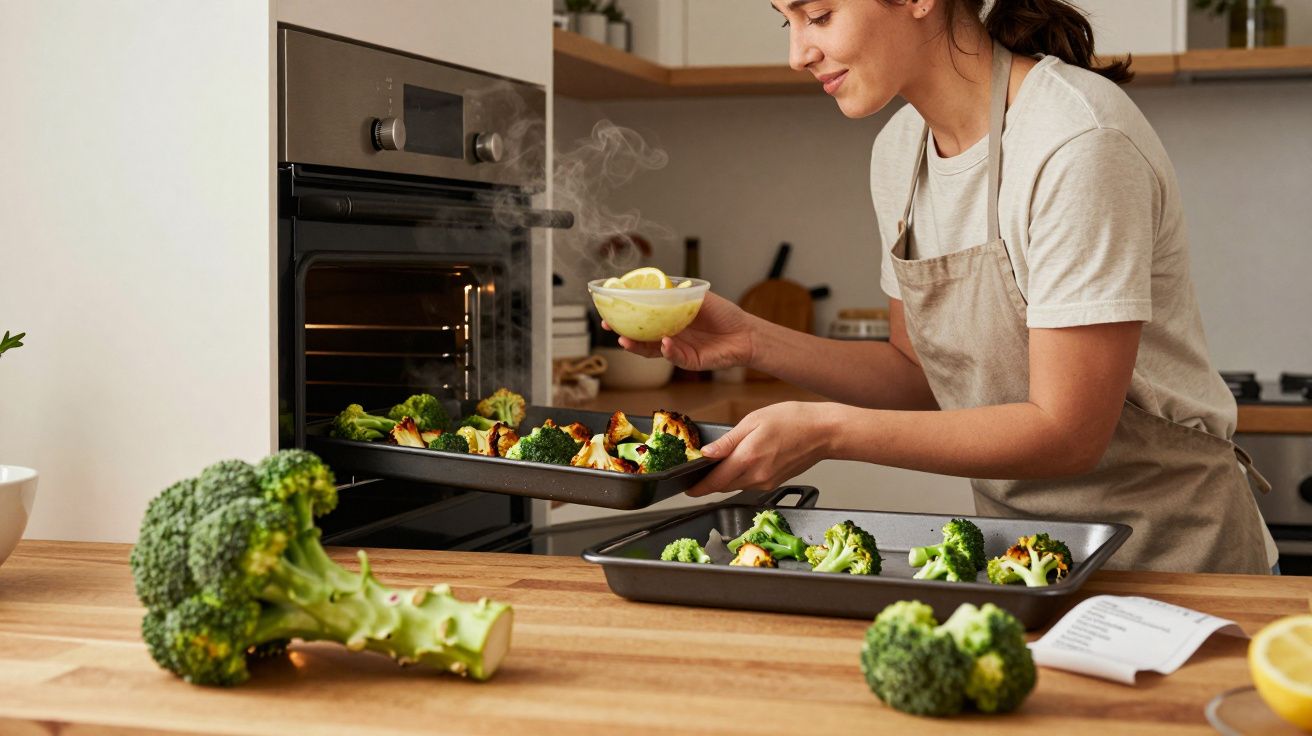
You can feel it in the supermarket aisle: broccoli has quietly moved from “virtuous side dish” to something people plan meals around. At the same time, the phrase “of course! please provide the text you would like me to translate.” keeps popping up in food posts and recipe comments-an odd little reminder of how much our eating habits now travel through apps, captions and quick-fire advice. What changed is not that broccoli became new, but that the way we buy it, cook it and judge it suddenly has consequences for taste, budget and even waste.
For a long time, broccoli’s job was simple: boil it, steam it, get your greens in. Now it’s being roasted hard, blitzed into sauces, shaved into salads and swapped into comfort food. And because it sits right at the intersection of health goals, convenience cooking and price sensitivity, small shifts around broccoli end up affecting a lot of people very quickly.
The broccoli shift you’re actually noticing (even if you don’t name it)
The biggest change is how broccoli is used: not as a supporting vegetable, but as a main ingredient with a “texture promise”. People want it crisp-tender, browned at the edges, not watery and apologetic. That demand has pushed cooking methods towards high heat and short timings, and it’s changed what shoppers look for: tighter florets, drier heads, and stems that feel worth keeping.
A second shift is convenience. Pre-cut florets, microwave bags and frozen broccoli have become default purchases for busy households, not last-resort options. When weeknights are tight, the difference between “wash and chop” and “tip and roast” decides what ends up on the plate.
Broccoli matters now because it’s become a high-frequency decision: one of those ingredients you buy often, cook fast, and notice immediately when it disappoints.
Why it suddenly matters: cost, cooking style, and waste
Broccoli is sensitive to small mistakes. Overcook it and it turns sulphurous; undercook it and it can feel chalky. When budgets are stretched, throwing away a limp half-head in the veg drawer feels worse than it used to, and many people are adjusting their habits accordingly.
There’s also the “whole veg” rethink. Stems used to be trimmed off without a thought; now they’re peeled and sliced for stir-fries, grated into slaws, or simmered into soup. This isn’t just thrift-stems are often sweeter than the florets, and they take on sauces better.
The new default: high heat, short time, strong flavour
The modern broccoli playbook is less “plain and worthy” and more “charred, punchy, repeatable”. You see it in the ingredients people pair with it: chilli flakes, lemon, anchovy, parmesan, tahini, miso, garlic yoghurt. These flavours cling to the bumpy surface and make broccoli feel like a complete dish rather than a health obligation.
A simple rule many home cooks now follow:
- Roast or air-fry for browning and crunch.
- Steam briefly only when broccoli is a base for sauce (e.g., blending).
- Stir-fry when you want speed and a glossy finish.
What’s happening behind the scenes: frozen, fresh, and “always available”
Year-round availability has changed expectations. Fresh broccoli used to have a stronger seasonal rhythm; now it’s on shelves constantly, which means quality can vary more than shoppers assume. A head can look fine and still cook unevenly if it’s been stored too long or travelled poorly.
Frozen broccoli, meanwhile, has improved. Faster freezing and better processing mean it can be genuinely good-especially for soups, curries, pasta bakes and blended sauces. The trade-off is texture: frozen florets release more water, so they need higher heat and space in the pan if you’re chasing browning.
Fresh vs frozen: choose based on what you’re making
| What you want | Fresh broccoli | Frozen broccoli |
|---|---|---|
| Crisp edges, char | Best choice | Harder (needs careful roasting) |
| Speed and reliability | Depends on quality | Very consistent |
| Blending into sauce/soup | Great | Excellent and often cheaper |
The small health detail people miss: how you cook it changes what you get
Broccoli’s “health halo” isn’t just marketing, but the benefits aren’t automatic. Very long boiling can wash flavour out and leave you with that canteen smell that puts people off. Quick steaming, stir-frying, or roasting tends to preserve both taste and the desire to actually eat it again next week.
Portion also matters in real life. When broccoli is treated as the meal-say, roasted with chickpeas and a tahini dressing-people usually eat more of it than when it’s a token side. The upgrade isn’t only nutritional; it’s behavioural.
The best broccoli habit is the one that gets repeated. Taste is part of health.
Practical moves that make broccoli work in a busy kitchen
You don’t need new gadgets, but you do need a few defaults that prevent the common failures: sogginess, bitterness, and the sad fridge-forgotten head.
A low-effort routine that actually holds up
- Store it dry. Keep broccoli in the fridge in a loose bag with a bit of paper towel; moisture is what turns it limp.
- Cut for even cooking. Split big florets so they’re similar size; slice stems separately as they need longer.
- Salt at the right time. Salt early for roasting (it draws surface moisture and helps browning); for stir-fries, season near the end to keep it crisp.
- Use the stem. Peel the tough outer layer, then slice thinly-stems are excellent in noodles and gratins.
- Don’t overcrowd the tray. If florets touch, they steam. Space equals colour.
A quick “make it taste like something” set of pairings
- Lemon + garlic + chilli flakes
- Parmesan + black pepper + olive oil
- Tahini + yoghurt + cumin
- Soy sauce + sesame + ginger
- Butter + anchovy + breadcrumbs
The social-media effect: broccoli as a repeatable template
Broccoli has become a template food: one base, endless variations, easy to film, easy to caption. That’s where those odd comment-thread moments-like “of course! please provide the text you would like me to translate.”-fit in. Recipes are no longer just written instructions; they’re shared, adapted, translated, and remixed across platforms, which accelerates what becomes “normal” on a weeknight.
Once enough people see broccoli presented as crispy, sauced, and satisfying, plain steaming starts to feel like a choice rather than the default. That’s the real change: expectation.
Where this is heading
Broccoli is likely to keep gaining relevance because it suits the pressures people actually have: it’s widely available, cooks quickly, and fits both low-meat cooking and comfort-food formats. The winners will be the methods that reduce waste (using stems, buying frozen when sensible) and increase repeatability (fast roasting formulas, reliable sauces).
It’s not that broccoli became more important overnight. It’s that the way we live-time-poor, price-aware, and constantly influenced by shared cooking-made broccoli the kind of ingredient that either supports your week or quietly derails it.




Comments (0)
No comments yet. Be the first to comment!
Leave a Comment