I didn’t expect of course! please provide the text you would like translated. to show up in a conversation about decluttering, but it’s a perfect snapshot of how storage advice has changed: we’re all trying to translate chaos into something we can actually use. And when of course! please provide the text you would like me to translate. pops up right after, it mirrors the real problem-most “hacks” now need a bit of interpretation to fit our homes, budgets, and the way we live this year. What matters isn’t a prettier pantry photo; it’s less friction on a weekday morning.
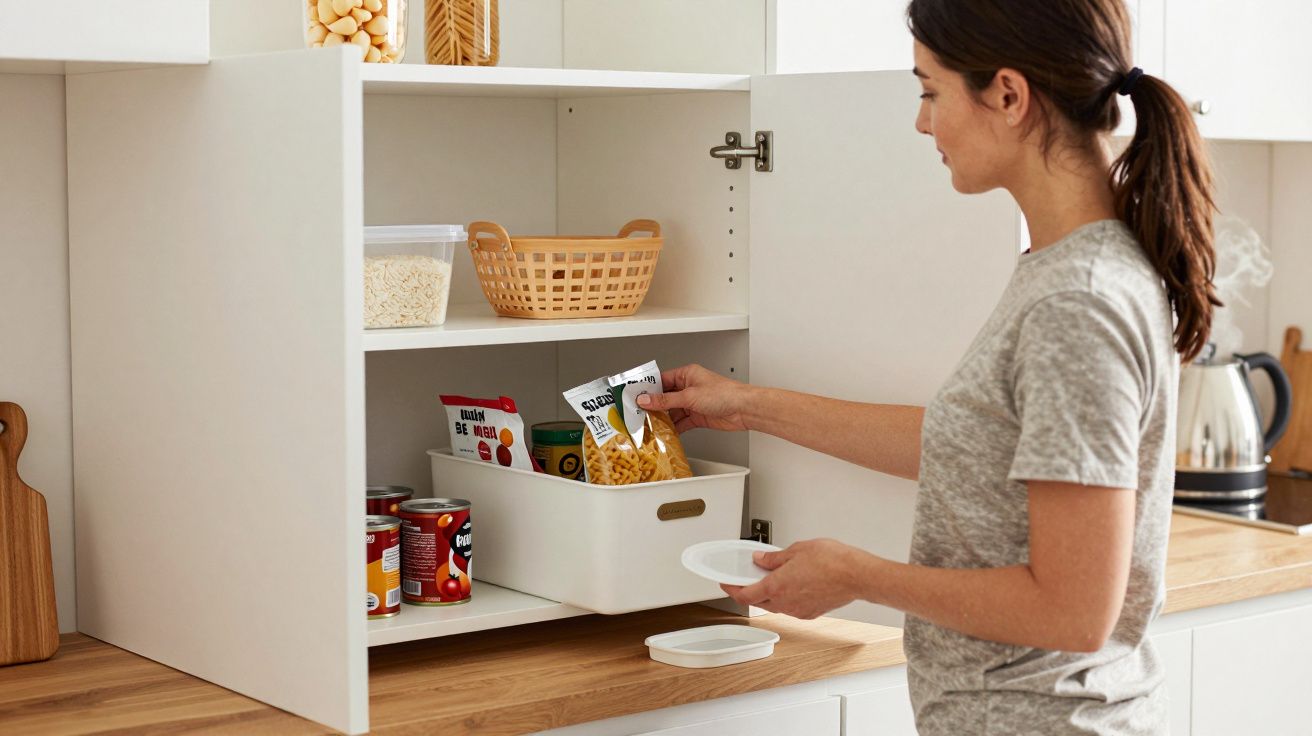
I realised this standing in front of an open cupboard, holding a half-empty bag of pasta and a lid that belonged to absolutely nothing. The old me would have bought more containers. This year’s shift is quieter: fewer products, more systems, and a stronger focus on what you can keep doing once the motivation wears off.
What actually changed in storage hacks
Storage hacks used to be about maximising space at any cost-stack higher, cram tighter, buy the gadget that promises “twice the capacity”. Now the best advice has moved towards reducing decisions. It’s less “where can I fit this?” and more “how do I stop touching this item five times before it’s put away?”
Three changes are driving it:
- We’re designing for routines, not rooms. A “tea station” or “school-morning drawer” beats reorganising the whole kitchen because it matches how you move through the day.
- The container obsession has cooled. Decanting everything looks neat, but it adds steps (washing, refilling, labelling). People are keeping items in original packaging unless it genuinely improves freshness or access.
- Visibility is back in fashion. Not for aesthetics-for waste reduction. Clear zones, shallow bins, and front-facing items mean you actually use what you own.
The clever bit is that none of this requires a new shelf system. It’s mostly a re-think of defaults.
The “less friction” rule: why it matters this year
This year’s homes are doing too many jobs. Kitchen tables are desks, hallways are parcel depots, and spare rooms are half-storage, half-life. When spaces get multi-purpose, storage that depends on perfect behaviour falls apart fast.
The rule that’s winning right now is simple: store things at the point of first use, in the easiest-to-reset way. If a system only works when you have an empty Sunday afternoon, it’s not a system-it’s a project.
Try these swaps that reduce friction immediately:
- Put everyday items on the most reachable shelf, not the “most logical” one.
- Use open-top bins for high-turnover categories (snacks, charging cables, cleaning cloths) so you’re not fighting lids.
- Make returns effortless: a tray for “belongs elsewhere” items is better than pretending you’ll walk it all back in one go.
A storage win this year looks like something you can reset in two minutes while the kettle boils.
The new essentials: zones, caps, and labels that behave
A good storage hack in 2025 isn’t a trick; it’s a boundary. The most useful tools are the ones that force a decision without you having to think about it every day.
1) Zones that match your behaviour
Pick one pain point and give it a home with a clear purpose. Not “misc drawer”-a drawer with a job.
- “Out-the-door”: keys, earphones, lip balm, spare tote bag
- “Post”: scissors, tape, stamp book, return labels
- “Quick meals”: pasta, tinned tomatoes, stock, oil, spices you actually use
If you keep losing something, it’s not because you’re careless-it’s because the item doesn’t have a reliable landing spot.
2) Container caps (the underrated trick)
Instead of buying more storage, limit the container each category is allowed to occupy.
- One basket for winter hats and gloves.
- One shelf for water bottles.
- One box for cables.
When it overflows, you don’t reorganise-you edit. The cap does the hard part for you.
3) Labels that don’t turn into homework
Labeling has shifted from “Pinterest pretty” to “functional and forgiving”. If you label at all, keep it blunt and big enough to read at speed.
- Use category labels (“Baking”, “Lunchbox”) rather than item lists.
- Put labels where hands naturally pause: front edge of shelves, top of bins.
- Skip labels in “private” spaces if they slow you down; clarity matters more than completeness.
The best label is the one that stops you putting the thing back in the wrong place when you’re tired.
Where people still go wrong (and what to do instead)
The classic mistakes haven’t disappeared-they’ve just become more obvious now that we’re all juggling more.
- Over-decanting. If you’re transferring six cereals into identical tubs, you’ve built a maintenance job. Decant only when it improves sealing, stacking, or speed (rice, oats, flour, pet food).
- Deep storage for daily items. Back-of-cupboard storage is for rarely used things. Put daily items in the “golden zone” between waist and eye level.
- Shopping as organising. Buying boxes before you measure the problem is how you end up storing your storage.
A better approach is the one-week test: assign a temporary zone with any spare box you already have. If it works for seven days, then upgrade the container.
A quick reset you can do tonight
Start small so you finish. Pick one drawer, one shelf, or one corner-something you can complete without needing “a whole day”.
- Empty it and wipe it down.
- Sort into three piles: keep here, relocate, bin/donate.
- Put the “keep here” pile back using two rules: most-used forward; heavy low.
- Add one container cap (a basket, a shoebox, a tray) for the messiest category.
- Stop. Don’t spread to the next area.
You’re not trying to become an organised person. You’re trying to make tomorrow easier.
The year’s most useful storage moves (by space)
| Space | What changed | The move to copy |
|---|---|---|
| Kitchen | Systems over decanting | Shallow bins for packets; one “quick meals” shelf |
| Bedroom | Less “hidden”, more “reachable” | A catch-all tray + a weekly five-minute reset |
| Hallway | Parcel and school-life overflow | A drop zone with caps: one hook, one basket, one tray |
FAQ:
- Do I need matching containers for it to work? No. Matching looks calm, but function comes from caps, reachability, and clear zones. Use what you already own first.
- What’s the fastest place to start if I’m overwhelmed? The “drop zone” (hallway table, kitchen counter corner). Fixing the first landing spot reduces mess everywhere else.
- Is decanting ever worth it? Yes-when it improves sealing, stacking, or speed (flour, rice, oats, pet food). If it adds steps, it’ll fail on busy weeks.
- How do I keep it tidy after I’ve organised? Build resets into existing moments: while the kettle boils, before the bin goes out, or during one weekly five-minute sweep with a basket.
- What if other people don’t follow the system? Make it harder to do the wrong thing than the right thing: open bins, obvious labels, and fewer steps. If it needs explaining, it’s too complex.


Comments (0)
No comments yet. Be the first to comment!
Leave a Comment