You don’t notice a habit changing until it starts costing you time, money, or energy. This year, even something as small as “of course! please provide the text you would like me to translate.”-the default, polite placeholder we use in chats and work tools-shows up at breakfast, right alongside “of course! please provide the text you would like me to translate.” in the form of rushed decisions, copy‑paste routines, and meals built for speed rather than appetite. It matters because breakfast has quietly become where we either stabilise our day… or start it already in debt to stress.
Most people haven’t “stopped eating breakfast”. They’ve changed what breakfast means: less table, more thumb-scroll; less cooking, more assembling; less routine, more reaction. You can feel it in the kitchen: cupboards full, fridge half-used, morning still somehow frantic.
The new breakfast isn’t a meal. It’s a coping strategy.
Breakfast used to be the one predictable anchor before the day fractured into meetings, school runs, trains, notifications. Now it’s often a quick fix for an overfull morning: protein to hold you together, caffeine to make you functional, something sweet because you didn’t sleep.
The shift isn’t just about food trends. It’s about how we’re living: hybrid work that blurs start times, commutes that return without warning, and phones that turn the first five minutes awake into a slot machine of updates. When the brain starts sprinting, breakfast follows.
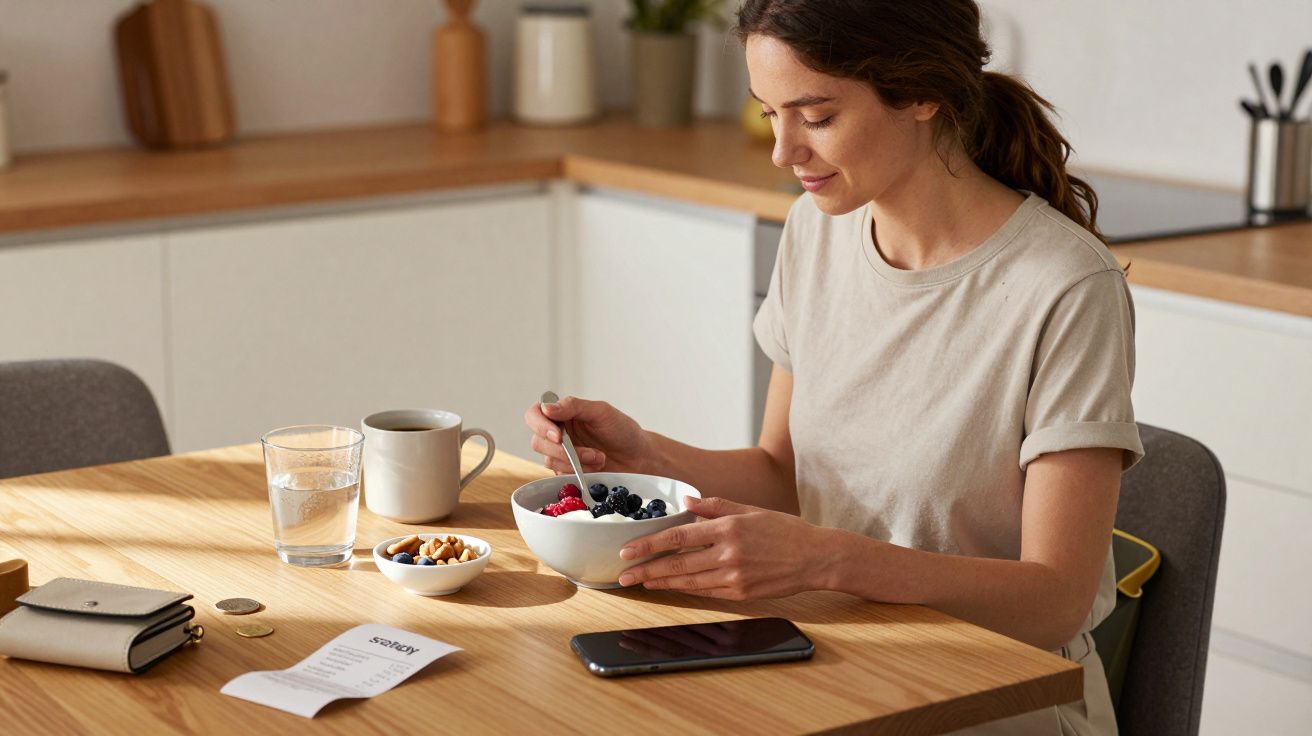
You see the same pattern in different homes: a “healthy” yoghurt eaten standing up, a pastry grabbed on the way to the station, a coffee that becomes the meal because it’s the easiest promise to keep.
What changed in breakfast habits (the parts no one posts)
1) We’re eating later - or not calling it breakfast at all
People delay the first meal until mid-morning, then pretend it’s just a snack. It’s often not lighter; it’s just unplanned. That delay usually happens for one of two reasons: you weren’t hungry because you ate late, or you weren’t calm enough to register hunger.
Later eating can be fine. The problem is when it’s driven by chaos rather than choice, and the first thing you eat is whatever’s loudest and fastest.
2) Protein became the new religion
Egg bites, high-protein pots, shakes, bars. Not because everyone suddenly loves nutrition science, but because protein is a reliable way to reduce late‑morning cravings and stop the “I can’t think” dip.
The downside is subtle: when breakfast turns into a macro target, it can lose pleasure. You end up with meals that are efficient but joyless-easy to skip, easy to resent.
3) Hot breakfast declined because kitchens became workplaces
If your first meeting is at 09:00 and your laptop is already open, the hob starts to feel like a luxury. Even people who work from home often eat more like commuters: cold, portable, minimal washing up.
This is why “breakfast foods” have expanded. Soup at 10:30. Leftovers at 08:15. A handful of cereal at noon. The boundaries dissolved.
4) Breakfast moved into the out-of-home economy
The rise isn’t just cafés. It’s meal deals, forecourt coffee, bakery chains, supermarket pastries, delivery options that didn’t exist a few years ago. Buying breakfast feels like buying time.
But purchased breakfast often comes with hidden costs: higher sugar, lower fibre, and the creeping sense that mornings are something you have to outsource.
Why it matters this year (more than it used to)
When routines are unstable, breakfast stops being “the most important meal of the day” and becomes the most diagnostic one. It tells you what your nervous system is doing.
- If you can’t eat, you might be overstimulated or under-slept.
- If you crave only sweet, you might be chasing quick calm.
- If you’re hungry by 10:30 every day, your breakfast may be too small, too low in protein/fibre, or too delayed.
- If you’re constantly “starting Monday again”, breakfast is often where that loop begins.
There’s also a money angle that bites harder in 2025: small daily purchases add up fast. A £4 coffee and a £3 pastry isn’t a treat if it happens five times a week. It becomes a bill you don’t remember agreeing to.
And then there’s focus. The mid-morning slump is often blamed on work, weather, motivation-anything except the first two hours of fuel and hydration. Breakfast doesn’t solve your inbox, but it can stop your brain from fighting your body while you try.
A simple way to reset breakfast without making it a project
Forget perfection. Aim for steady. Think: something with protein, something with fibre, and a plan you can repeat when you’re tired.
Try a three-step morning script: Prep, Pair, Protect.
Prep one element the night before (overnight oats, boiled eggs, chopped fruit). Pair it with a “no-thought” option (toast, yoghurt, a banana). Protect ten minutes from your phone so your body gets a chance to notice hunger before the internet does.
If you want a shortlist you can actually use:
- If you wake up not hungry: have water first, then something small but structured (yoghurt + fruit, toast + peanut butter).
- If you crash mid-morning: add protein and fibre (eggs + wholemeal toast; oats + seeds; yoghurt + nuts).
- If you buy breakfast daily: keep a “backup breakfast” at work (porridge sachets, nuts, fruit) and use buying as a choice, not a default.
Breakfast doesn’t need to be impressive. It needs to be predictable enough to support you on your least organised days.
The quiet upgrade: make breakfast visible again
Most of the damage comes from mindless eating: eating while replying, eating while rushing, eating while standing. You don’t need a candlelit table. You need a pause long enough to feel, “I’ve started my day”.
Even two minutes seated changes the signal you send to your body: we’re safe, we’re fed, we can think.
A quick guide to what to change (based on your morning)
| Your morning pattern | What to change | Why it helps |
|---|---|---|
| No appetite until late | Water + small planned snack | Reduces reactive grabbing later |
| Hungry again by 10:30 | Add protein/fibre | Smooths energy and cravings |
| Always buying on the go | Keep a backup option | Saves money and reduces sugar spikes |
FAQ:
- Is skipping breakfast bad now? Not automatically. It’s only a problem if you’re skipping because you’re stressed, then overeating later or relying on caffeine and sugar to function.
- What’s the easiest “good enough” breakfast? Yoghurt with fruit and a handful of nuts, or porridge with milk and seeds. Minimal prep, decent protein and fibre.
- Why do I feel nauseous in the morning? Common causes include stress, poor sleep, late heavy dinners, or too much caffeine on an empty stomach. If it’s frequent or severe, speak to a clinician.
- Is a coffee a breakfast? It can be, but it often behaves like a debt: you feel better briefly, then hunger and jitters hit harder. Pair it with something small and you’ll notice the difference.
- How do I stop buying breakfast every day? Don’t rely on willpower at 08:30. Set up a default you can reach for (at home or at work), then treat café breakfast as an intentional choice.





Comments (0)
No comments yet. Be the first to comment!
Leave a Comment