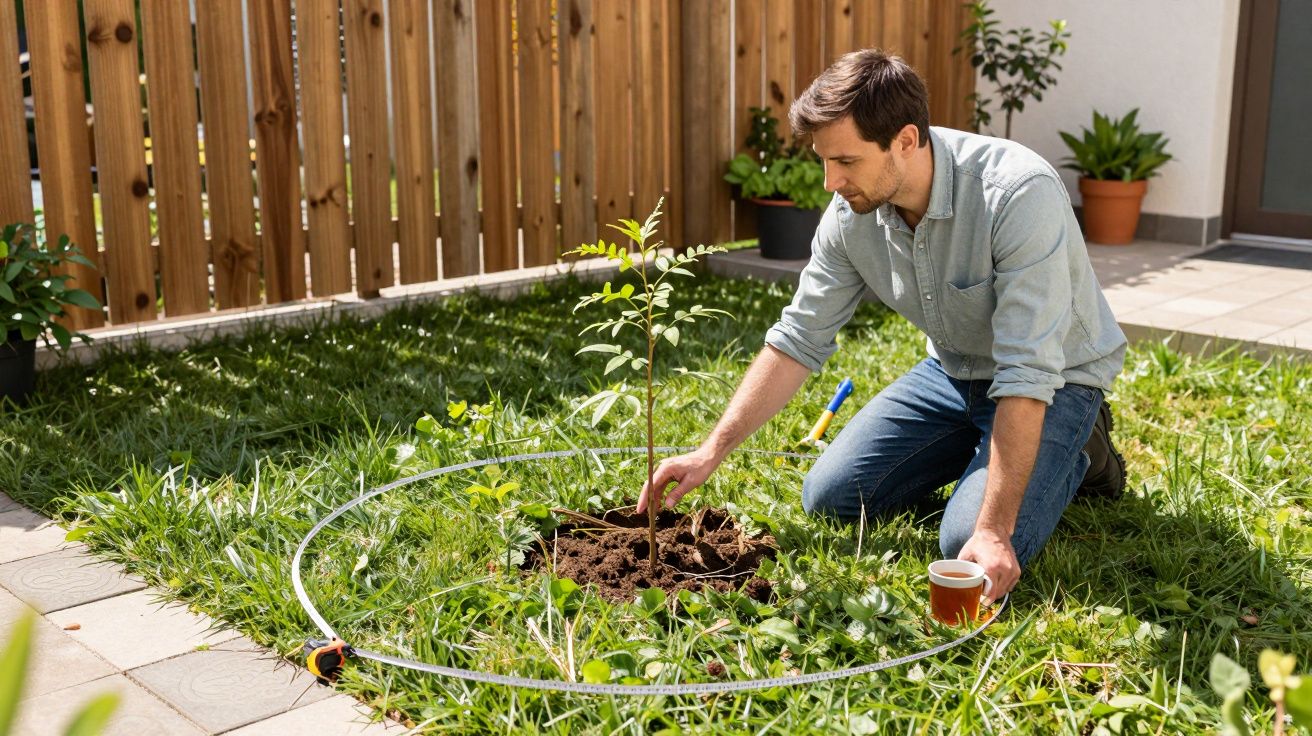
You stand in the garden with a spade, a mug of tea, and that bright, optimistic urge to “just get it in the ground”. Trees look so forgiving at this stage, and landscape design makes it tempting to place them where they look best today. The trouble is that one quiet decision - planting to “fit” the current space - can cap a tree’s future growth long before you notice anything is wrong.
It rarely fails dramatically. It just turns into a slow compromise: a canopy that never quite develops, roots that keep hitting obstacles, and a tree that needs more pruning, more watering, and more apologies to neighbours than you planned for.
The placement mistake that doesn’t show up for years
Most people don’t plant too close because they want trouble. They plant too close because the sapling is small, the garden feels tight, and the reference point in your mind is the shape you can see, not the shape you’re buying into.
What quietly limits future growth is treating a tree like a “feature” rather than a living structure with a long reach. When you tuck it near a fence for privacy, into a corner for symmetry, or beside the patio to “frame” the seating, you’re often placing it where the mature canopy and the mature root zone can’t fully exist. The tree adapts by growing less, not better.
And you can’t prune your way out of that without consequences. Repeated crown reduction, thinning, and lifting becomes a permanent maintenance loop, and the tree’s energy budget goes into recovery rather than healthy extension.
Why “close enough” is rarely close enough
A mature tree doesn’t just occupy the air you can see. It occupies soil, light, and moisture - and it competes for all three. When you plant close to hard boundaries, the tree meets resistance in predictable places, then responds in predictable ways.
Here’s what tends to happen:
- Roots hit compacted soil, foundations, or paving sub-bases and start circling or concentrating where they can grow, rather than spreading evenly.
- Canopies get one-sided when the tree is shaded by buildings or clipped away from paths and roofs, leading to lopsided weight and weak unions.
- Water becomes a constant issue because hard surfaces shed rain away from the root area, and tight planting pockets dry out fast in summer.
- You end up “shaping” the tree annually, which reduces leaf area - the very engine the tree uses to build strength and resilience.
None of this looks urgent at year two or three. It shows up at year eight, when the tree should be hitting its stride and instead feels like it’s stuck.
A simple way to judge space before you dig
The quickest mental shift is to stop thinking about where the trunk goes, and start thinking about where the edges go - canopy edge and root edge.
A practical rule for many garden trees: imagine the crown at maturity as a circle, then assume the roots want at least that footprint, often more. If that circle overlaps a building, a boundary you can’t negotiate, or a heavily used path you won’t reroute, you’re not planning a tree - you’re planning future conflict.
Try this low-tech check:
- Find the tree’s expected mature spread (from the label, nursery info, or a reputable source).
- Halve it to get the radius.
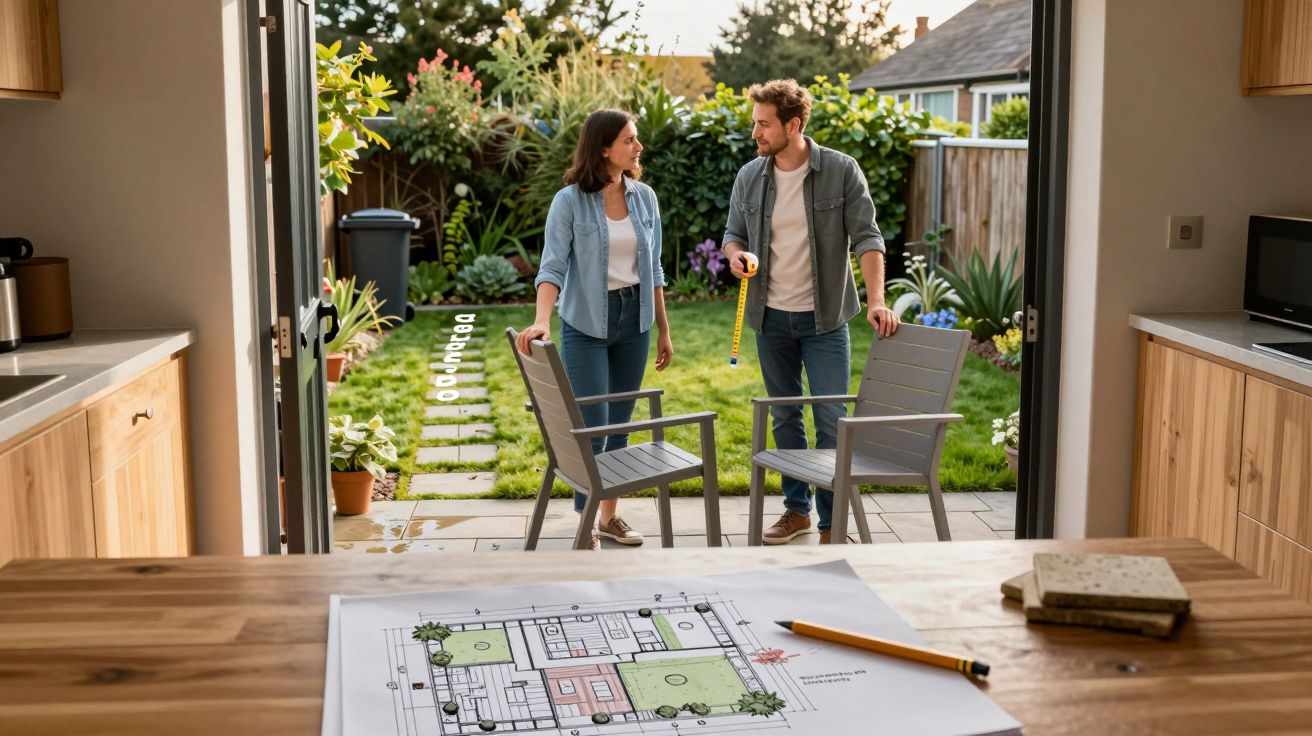
- Stand where you want to plant and pace that radius in every direction.
- Notice what the circle hits: walls, drains, fences, parked cars, the neighbour’s greenhouse.
If the circle lands on “things that must stay”, the placement is the problem, not the species.
The two spots that most often cause a slow squeeze
1) Right beside a fence “for privacy”
It works - for a while. Then the canopy grows into the boundary, you prune it back, and the tree spends its life trying to replace what you remove. Meanwhile, the neighbour shades it or trims their side, and you get a thin, awkward form that never becomes the generous screen you imagined.
If privacy is the goal, it’s often kinder to: - plant further in with a smaller tree that can keep its natural shape, or - use a mixed hedge for the boundary and reserve the tree as a separate specimen.
2) Too close to paving and patios “for shade”
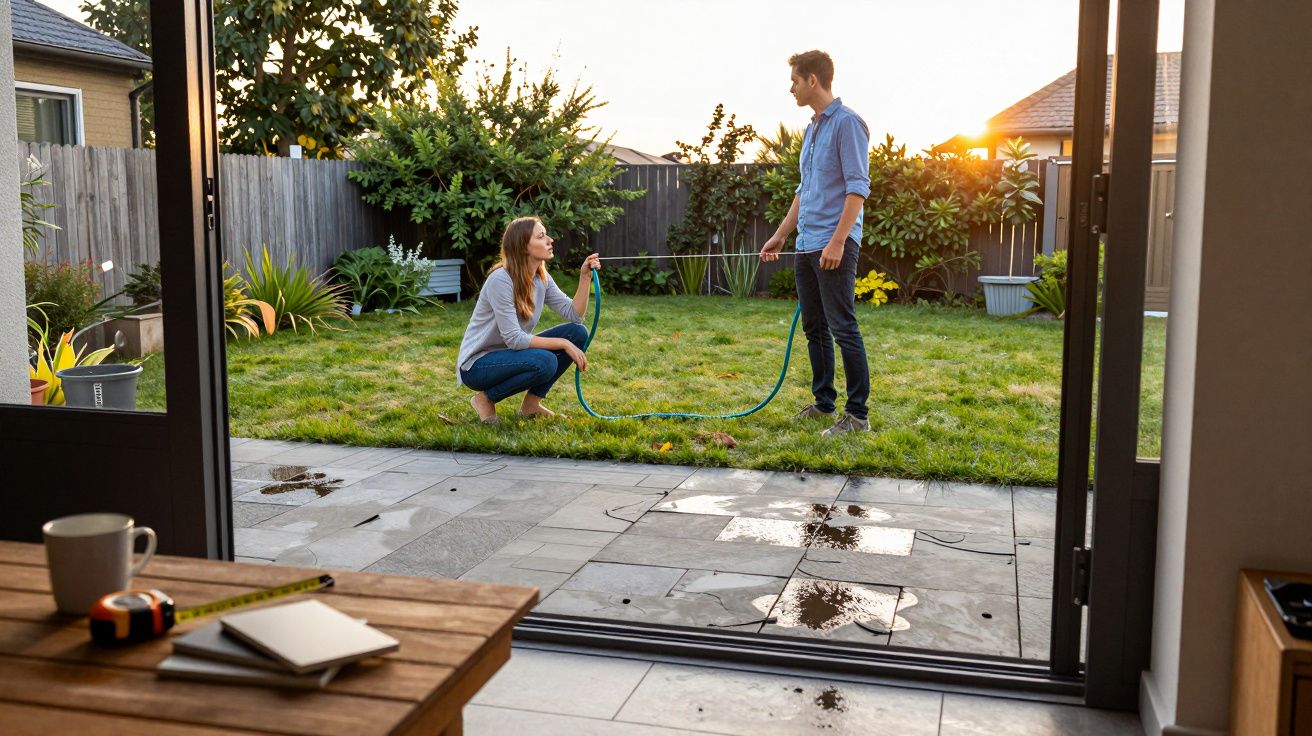
Shade is wonderful; roots under a stressed paved edge are not. Heat reflects off hard surfaces, rainfall runs away from the planting area, and you’re left compensating with watering while the tree tries to survive in a hot, dry pocket.
This is where landscape design can help most: create a permeable zone around the tree (gravel, mulch, planting beds) and keep the hard edge far enough away that the tree isn’t forced into a narrow soil slot.
What to do if you’ve already planted in the “wrong” place
There’s a moment most gardeners recognise: the tree is established enough to feel real, but young enough that you still have choices. That window is precious.
Options that actually help:
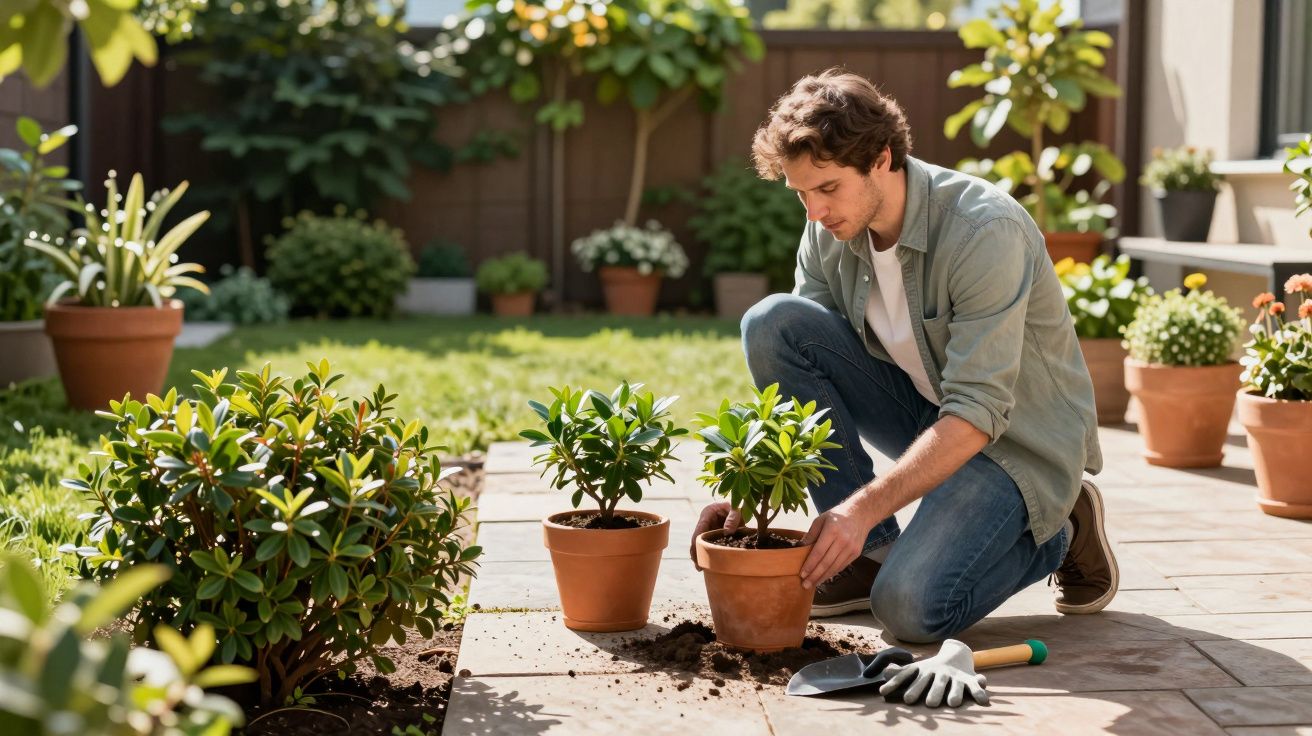
- Move it early rather than “wait and see”. Transplanting is far more successful when the tree is small and the root ball is manageable.
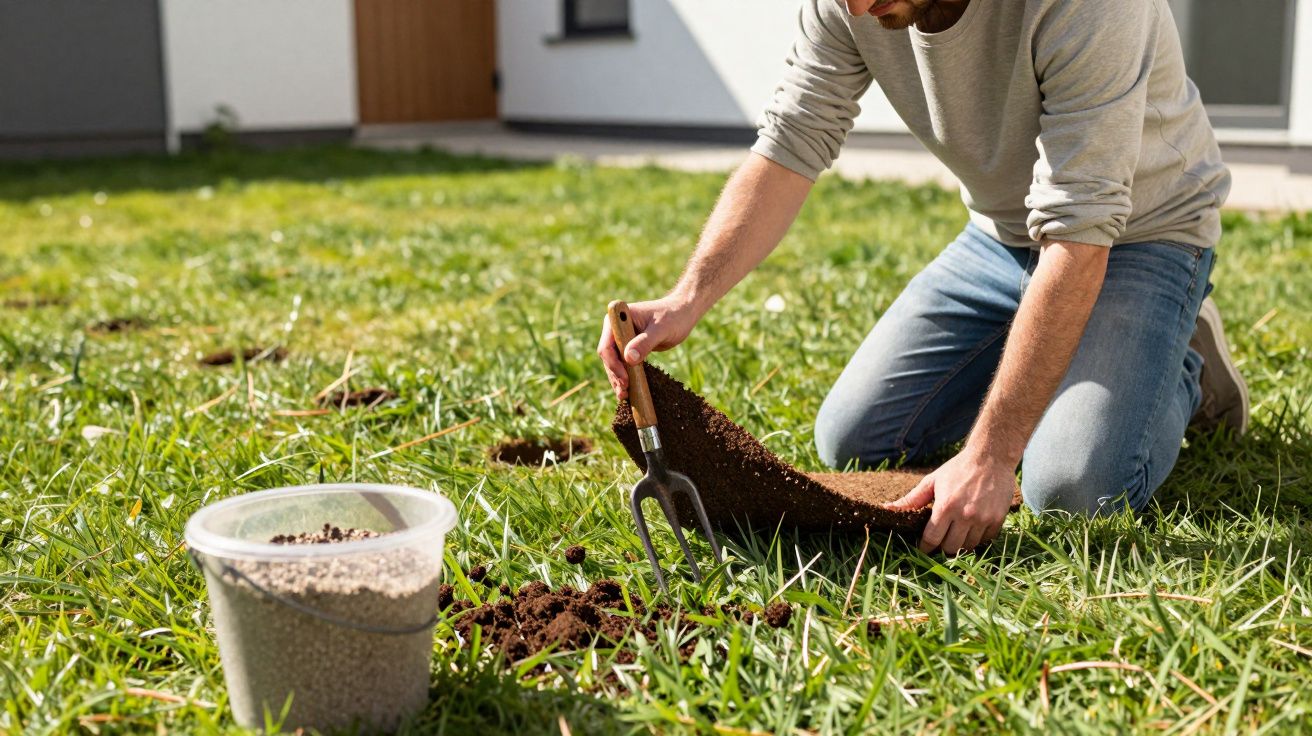
- Adjust the surrounding ground. If the issue is a tight, dry pocket, expanding the bed and removing competing turf can make a noticeable difference.
- Commit to a smaller ultimate tree next time. If you’re working in a small garden, choose a species/cultivar with a realistic mature size, not a hopeful one.
- Use formative pruning, not repeated reduction. Light, early structural pruning can guide a strong shape; heavy annual size control is where trees start paying long-term health costs.
If you’re unsure, an arborist can usually tell you in minutes whether the tree is being set up to fail, simply by looking at distances, soil condition, and what the canopy is already doing.
The calmer way to think about it: plan for the tree you want in ten years
A well-placed tree feels almost effortless later on. It shades where you want shade, clears the roof without constant cutting, and grows with a symmetry that looks “designed” even when you’ve done very little.
The best landscape design trick isn’t a clever border or a dramatic focal point. It’s leaving the tree enough room to become itself - because a tree that can fully grow is usually the one that asks the least from you.
| Quiet placement issue | What it causes | Better approach |
|---|---|---|
| Planted to “fit the corner” | One-sided crown, ongoing trimming | Centre it or choose a smaller tree |
| Tight ring of paving or turf | Dry roots, slow growth | Wider bed, mulch, permeable surfaces |
| Too near boundaries | Canopy conflict and reductions | Plant further in; use hedging for edges |
FAQ:
- Is it ever OK to plant a tree close to a fence? Yes, if it’s a genuinely small-maturing tree and you’re happy for it to be a managed specimen. For most medium and large trees, it becomes a lifetime pruning commitment.
- How far from a house should I plant? It depends on species, mature size, soil type, and the building. As a starting point, use the tree’s mature crown radius as a minimum planning guide, then get species-specific advice for anything large.
- Will pruning keep a big tree “small” safely? You can reduce size, but repeated heavy reductions stress the tree and increase maintenance. It’s usually better to match species to space than to rely on long-term restriction.
- What’s the biggest early sign a tree is poorly placed? A canopy that’s already being clipped away from one side, or a tree that dries out quickly despite decent watering. Early asymmetry is often the first hint of future limitation.

Comments (0)
No comments yet. Be the first to comment!
Leave a Comment