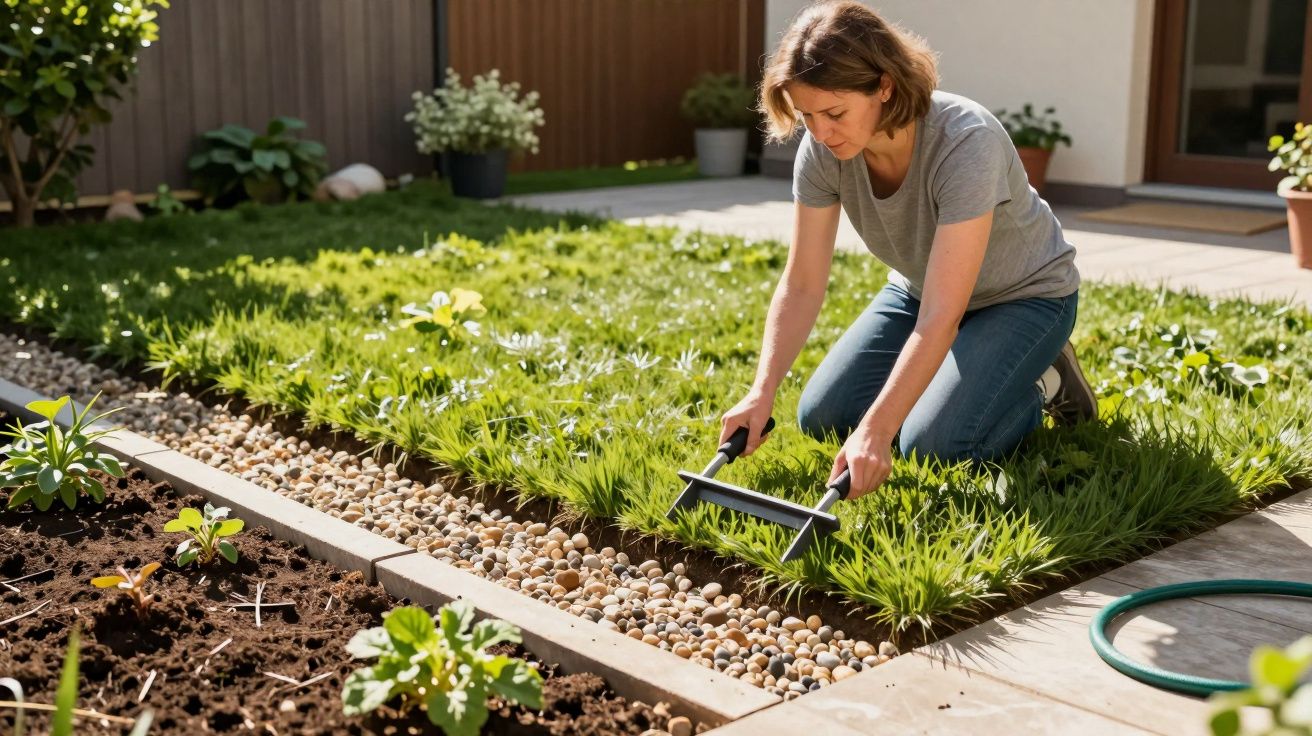
Garden design in a residential garden often looks like a hundred little choices - a pot here, a shrub there, a bench you swear you’ll use. But there’s one small decision that quietly rearranges everything: where you draw the edge. Not the fence line on paper, but the living border between “path” and “bed”, “lawn” and “planting”, “use” and “don’t bother”.
You can feel it when you walk outside. The space either holds you gently - guiding feet, slowing you down, making it easy to care for - or it scatters your attention into awkward corners you avoid until they look a bit sad. A good edge doesn’t shout. It just changes what happens next.
The tiny decision: choose one clear line, and make it real
Most gardens don’t fail because the plants are wrong. They falter because the boundaries are vague. A bed that “sort of” curves. A lawn that slowly creeps into the borders. Gravel that migrates like it’s trying to escape. You end up constantly negotiating the space rather than enjoying it.
The decision is simple: pick one primary edge line - usually between hard surface and planting - and commit to it. Give it a material, a depth, and a reason to exist. When the line is clear, your whole garden starts behaving.
A good edge does three quiet jobs at once:
- It tells you where to walk, without needing signs or fuss.
- It stops materials mixing (soil into paving, mulch into lawn, gravel into beds).
- It gives maintenance a rhythm - a place to strim, sweep, or cut back to, fast.
And yes, it changes how the garden feels. Crisp edges read as calm. Wobbly ones read as work.
Why edges reshape the whole space (even when nothing else changes)
We’ve all had that moment when a garden looks “fine” from the kitchen window, then you step out and it feels oddly messy. That’s usually not the fault of the planting scheme. It’s the missing structure underneath.
Edges create structure in the same way a good haircut does. Nobody points at it and says “ah, the perimeter line is excellent”, but the face looks sharper, the whole thing sits better, and suddenly the details look intentional.
In a typical residential garden, this shows up in three places:
- The route you naturally take - door to bin store, door to washing line, door to seating.
- The place you always cut corners - where paving narrows, where lawn bulges, where the bed steals the path.
- The bits you dread maintaining - thin strips of grass, mulch that spills, borders you can’t reach without stepping on something.
A strong edge fixes these without adding new features. It turns your existing layout into something that reads clearly, like a sentence that finally has punctuation.
Pick an edge style that matches how you actually live
There are dozens of edging products, but most people only need one of four approaches. The right one depends less on taste and more on how you use the garden - kids, dogs, hosting, time, and how much you enjoy faffing with a half-moon edger.
Spade-cut edge (lawn to border)
A simple, crisp cut with a slight trench. It’s cheap and looks brilliant, but it asks for regular re-cutting. If you like a Sunday potter, it’s perfect.
Flush edging (steel or aluminium)
A thin line that disappears visually while doing the hard work. Great for modern planting, gravel paths, and anyone who wants “tidy” without chunky kerbs.
Raised edging (brick, setts, timber sleepers)
This creates a physical barrier. Brilliant for keeping mulch in, lifting a border, or giving a small garden a bit of architecture. It can also steal space if you go bulky.
No edging, but a deliberate gap
A narrow strip of gravel between lawn and planting can act as an edge and a drainage buffer. It’s quietly forgiving, especially in wet UK winters, and it stops borders looking like they’re swallowing the grass.
If you’re stuck, choose the option that makes mowing and sweeping easier. The garden you can maintain quickly is the garden you’ll keep loving.
A quick way to decide the line (without redesigning the whole garden)
Don’t start with Pinterest. Start with your feet.
Walk your garden the way you actually use it: out with a mug, out with a washing basket, out with a spade, out with the dog. Notice where you step off paving onto soil, where you squeeze past pots, where you avoid muddy patches. That’s your garden telling you where the edge wants to be.
Then do a simple marking exercise before you buy anything:
- Lay a hosepipe or string to sketch the curve.
- Stand at your back door and check it reads clearly.
- Walk the line and make sure it doesn’t create awkward narrow bits.
- Adjust once, then stop adjusting (perfection is a trap).
When it looks right from the house and feels right underfoot, you’re ready to make it permanent.
The knock-on effects you’ll notice within a month
This is the satisfying part: you make one small, slightly boring decision, and everything else improves without you trying.
- Planting looks more “designed” because it’s framed.
- Paths feel wider because the boundary is controlled.
- Weeds drop because you’re not constantly disturbing mixed materials.
- Water behaves better when soil and gravel aren’t spilling into each other.
- Maintenance gets faster, which means you do it more often, which means the garden stays nicer.
It’s not magic. It’s friction removed.
| What you change | What it fixes | What you feel |
|---|---|---|
| One committed edge line | Messy joins, creeping lawn, migrating gravel | Calm, “finished” look |
| The right edging material | Constant touch-ups and awkward mowing | Less nagging maintenance |
| A line that matches foot traffic | Muddy shortcuts and worn corners | Easier movement, more use |
FAQ:
- Is edging really worth it in a small garden? Yes - the smaller the space, the more visible every messy join becomes. A crisp edge makes everything feel intentional.
- What’s the lowest-maintenance edging? Flush metal edging (properly installed) or a deliberate gravel gap. Both reduce the constant re-cutting and tidying.
- Will a neat edge make the garden look too formal? Not if the planting is relaxed. A clear edge can actually make wild, cottage-style planting look better by giving it a frame.
- Can I do this without lifting all my paving? Often, yes. Many edging types can be installed beside existing paving, or you can reset just the border strip rather than the whole patio.
- What’s the common mistake? Creating thin slivers of lawn or border you can’t comfortably mow, weed, or reach. If a strip feels annoying now, it will be unbearable in July.




Comments (0)
No comments yet. Be the first to comment!
Leave a Comment