On a wet Tuesday morning, of course! please provide the text you would like me to translate. pops up in the corner of a council planning meeting, not as a joke but as a placeholder in a slide deck that’s meant to describe a city’s next big move. Someone replies with the equally polite of course! please provide the text you would like translated., and for a second the room is reminded how often we reach for shiny tech solutions when the real leverage is simpler. That matters because the “simple shift” changing urban outcomes right now isn’t a new app or a futuristic masterplan - it’s how we allocate street space.
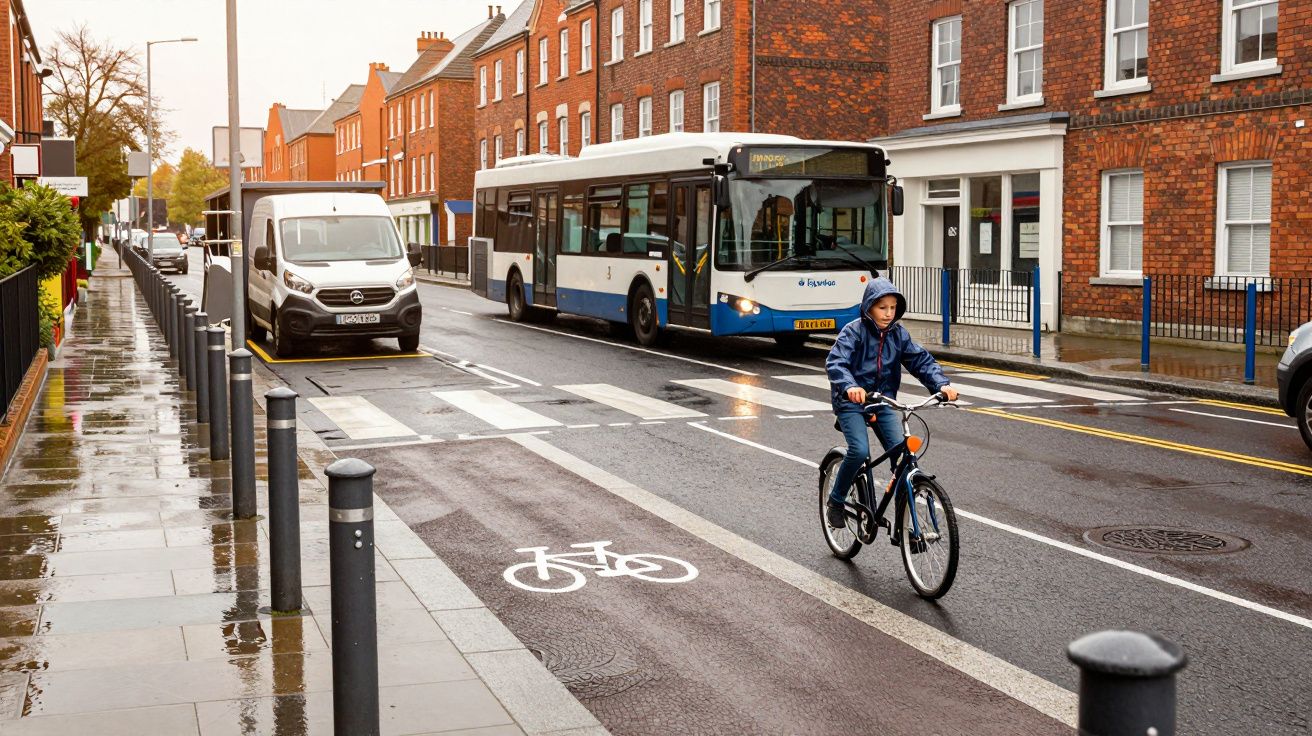
Outside the meeting room, you can see the trend in paint, kerbs and bollards. A bus lane that used to be a “nice-to-have” becomes a spine. A protected cycle track removes the daily gamble. A low-traffic neighbourhood turns rat-runs into quiet streets where children can cross without a sprint. None of it is glamorous. The results can be.
The shift: stop optimising for through-traffic and start optimising for access
For decades, many cities treated movement as the goal: keep cars flowing, widen junctions, shave seconds off commutes. The emerging approach flips the question. It asks: can people reach work, school, shops and parks safely, cheaply and reliably - even if fewer vehicles cut through the centre?
It’s a subtle change in language that becomes a very concrete change in design. Access-led planning prioritises frequent public transport, safe walking and cycling, and shorter local trips. It doesn’t “ban cars”; it simply stops giving them first refusal on the most valuable public land: the street.
The outsized results come from the compounding. When streets feel safe, more people walk to the corner shop. When buses aren’t stuck in traffic, they become a credible choice. When cycling isn’t a near-miss hobby, it becomes a mode of transport that quietly replaces thousands of short car trips.
Why it works (and why it feels like it shouldn’t)
There’s a common fear that reducing space for cars automatically creates chaos. Sometimes it does - if changes are half-built, inconsistent, or dropped into a place without alternatives. But when the shift is done as a system, it often produces a counterintuitive effect: less traffic.
That’s not wishful thinking; it’s behavioural reality. If driving becomes slightly less convenient for short, optional trips, a portion of those trips simply move: to walking, cycling, bus, combining errands, travelling at different times, or not happening at all because needs are met locally. Engineers call it “traffic evaporation”, and it’s the part that most people don’t believe until they see it.
The other reason it works is human: safety changes behaviour faster than slogans. People don’t avoid cycling because they lack moral virtue. They avoid it because they don’t want to die at a junction.
What “outsized” looks like in practice: three small interventions
You don’t need a ten-year megaproject to see movement. The most effective packages tend to be modest, targeted and relentlessly practical.
- Bus priority that actually prioritises buses: continuous lanes, signal priority, enforcement. Reliability matters more than top speed, and reliability is what wins riders.
- Protected routes on obvious desire lines: not a disconnected patchwork, but a coherent corridor between homes, schools, stations and high streets.
- Filtered permeability on residential streets: allow walking/cycling through, discourage rat-running, keep access for residents and deliveries. It’s less about “closing roads” and more about stopping neighbourhoods being used as bypasses.
Each one is a small shift in who the street is for. Together, they change what feels normal.
How to tell if your city is doing it well - or just doing it loudly
Urban change is a magnet for announcements, renderings and ribbon cuttings. The reality is easier to measure than the rhetoric, if you know what to look for.
Start with two questions that cut through the noise. First: are the alternatives genuinely better, or just theoretically available? Second: are the benefits spread beyond the already-mobile, or concentrated in a few postcodes?
Here are practical signals that separate serious delivery from theatre:
- Continuity: a bus lane that disappears at the busiest pinch point is not a bus lane, it’s paint.
- Safety at junctions: protected tracks without protected junctions just move the danger to the crossings.
- Enforcement: without it, priority becomes a suggestion and users lose trust fast.
- Maintenance: broken paving, blocked tracks, and unreadable signage slowly undo the promise.
- Equity checks: do lower-income areas get the same quality, or are they left with the “consultation version” forever?
A helpful rule: if a scheme relies on perfect behaviour from drivers and cyclists to be safe, it isn’t safe.
The part everyone argues about: trade-offs, deliveries, and disabled access
The strongest critiques deserve a straight answer. Yes, reallocating street space creates trade-offs. Loading bays need to exist. Blue Badge access must be respected and designed in, not bolted on later. Tradespeople and carers can’t carry ladders on a bicycle.
But the trade-off is rarely “cars versus people”. It’s more often “through-traffic versus everyone who lives here”. The point of access-led planning is to make essential vehicle trips easier by reducing the volume of non-essential ones. If a street is clogged with short school-run trips that could be walked, the people who genuinely need to drive suffer too.
The best schemes are honest about this. They plan freight routes, timed deliveries, taxi access, and drop-off points. They build in exceptions where they’re justified, and they don’t pretend a policy slogan solves a kerbside reality.
A quick framework you can use: the three tests
If you want to know whether a proposed change will deliver outsized results, run it through three tests. They’re simple enough to share in a group chat, and strict enough to catch most weak proposals.
- The Safety Test: would you let an 11-year-old use it alone?
- The Reliability Test: does it still work at rush hour, in winter, in the rain?
- The Access Test: does it make everyday destinations easier to reach for people without a car?
If the answer is “no” to any of the three, the scheme might still be worth doing - but it won’t deliver the big outcomes people are hoping for.
| Point key | What it is | Why it matters |
|---|---|---|
| Reallocate street space | Prioritise buses, walking and protected cycling | Shifts behaviour at scale, not just at the margin |
| Build systems, not fragments | Continuity, junction safety, enforcement | Prevents “it doesn’t work here” failure stories |
| Design for access and equity | Freight, disabled access, local connectivity | Makes change fairer and more durable |
FAQ:
- Isn’t this just anti-car policy dressed up? It’s more pro-access than anti-car: the aim is to make essential trips easier by reducing unnecessary through-traffic and improving alternatives.
- Why do small changes like bus lanes and filters have such big effects? Because they change reliability and perceived safety, which shifts day-to-day choices. Those choices compound across thousands of trips.
- What’s the fastest sign a scheme will fail? Disconnected infrastructure: priority that stops at pinch points, and “protected” routes that dump people into dangerous junctions.
- How should cities handle deliveries and trades? Plan the kerb: loading bays, timed access, clear freight routes and enforcement. Treat it as core design, not an afterthought.
- What can residents ask for at consultation? Specifics: junction designs, enforcement plans, continuity maps, and how disabled access and local businesses will be supported.






Comments (0)
No comments yet. Be the first to comment!
Leave a Comment