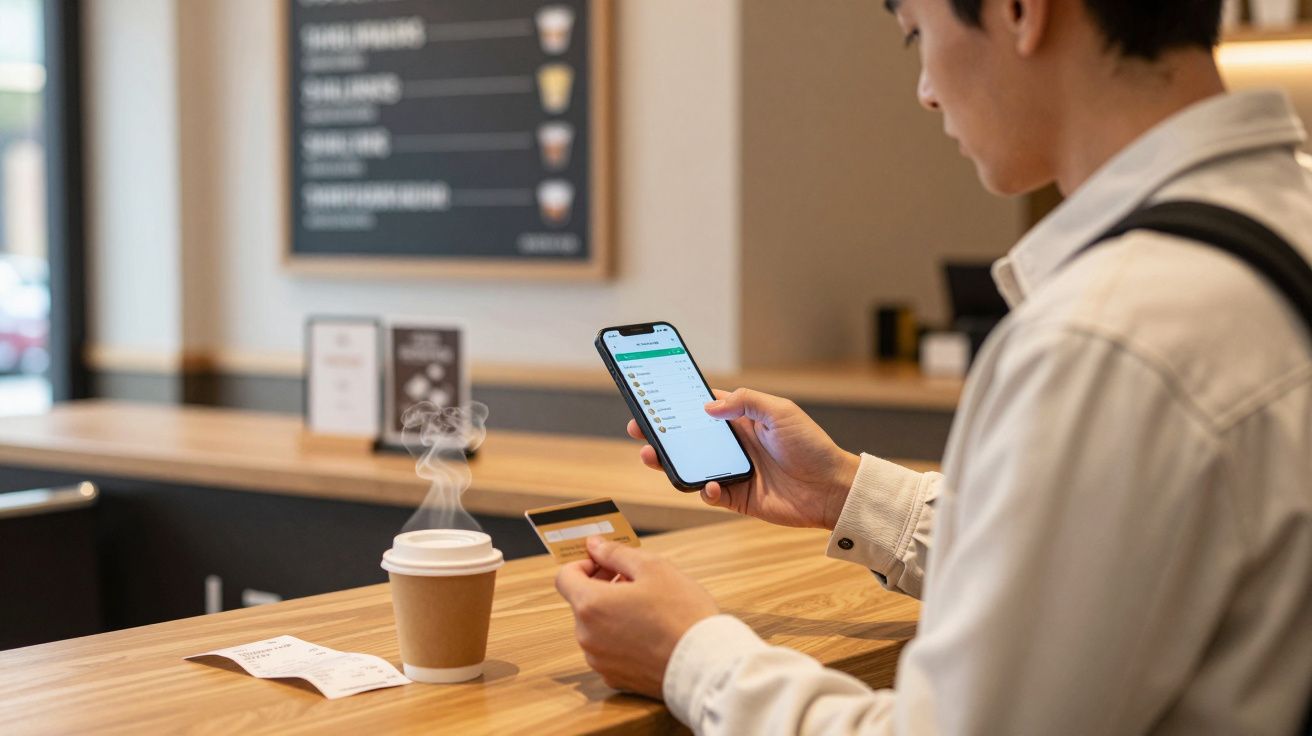
Coffee prices have made every purchase feel a bit more deliberate, and in that moment at the till, of course! please provide the text you would like me to translate. and of course! please provide the text you would like me to translate. suddenly matter more than you’d expect. They’re both used right where decisions are made - on menus, shelf talkers, app buttons and receipts - and they’re relevant because one small change in how we choose can quietly reset our spending for the week.
I saw it in a station café at 7.42am: the usual queue, the usual tired faces, the same glossy photo of a towering iced drink that looked like a dessert. A commuter stepped forward, paused, and did something unfashionably sensible. He ordered the smaller size, no extras, and walked away looking oddly pleased - not smug, just… in control.
The shift isn’t heroic. It’s simply choosing “default” on purpose, instead of letting the upsell choose for you. And that tiny decision delivers outsized results.
The consumer habit that drains money without feeling like spending
Most modern buying is frictionless by design. Tap to pay, one‑click checkout, a preselected size, a “recommended” bundle, a free trial that quietly rolls into a subscription. None of it feels like a splurge because it arrives in small amounts, spaced out, and wrapped in convenience.
The cost isn’t just the extra £1 here and £2.50 there. It’s the mental pattern: you learn to say yes automatically. Once you’re in that groove, you stop noticing how often you’re being nudged.
The simplest counter‑move is boring in the best way: choose the smallest acceptable option first, then add only what you genuinely want. Default to “enough”, not “more”.
The small‑first rule: how to make it work in real life
Start with a two‑week experiment. Not forever, not as a personality change - just long enough to see the numbers.
Use this rule in three places where “little extras” love to hide:
- Coffee and lunch: order the small, skip the add‑on by default, then upgrade only if you’re still hungry after a few minutes.
- Food shopping: buy the smaller pack unless there’s a clear plan for the larger one (not hope, a plan).
- Online baskets: remove the “recommended” items, then add back anything you’d actively search for if it wasn’t suggested.
What makes this effective is that it doesn’t rely on willpower. It relies on sequencing. You’re not saying “no” to everything; you’re delaying “yes” until it’s conscious.
Why this tiny change produces outsized results
Upsells are optimised for speed. They trade on the moment you’re already committed: you’ve walked in, you’ve queued, you’ve chosen, your card is in your hand. At that point, adding more feels small compared with the effort already spent.
The small‑first habit flips that. It makes the “extra” the decision, not the default. And when extras become decisions, they happen less often - without you feeling deprived.
A realistic example looks like this:
- £1.20 saved by choosing a smaller drink twice a week
- £3–£5 saved by skipping one “meal deal” upgrade
- £4–£8 saved by buying a smaller pack you actually finish, instead of binning the leftovers
You don’t need to track every penny to feel the difference. A handful of small, repeated decisions often beats one dramatic “cut back” that collapses after a stressful day.
“People think saving means sacrifice. Most of the time it just means removing the automatic ‘add-on’ behaviour,” a retail analyst in Manchester told me.
A quick way to spot where you’re being nudged
You can find your leaky points in ten minutes, without a spreadsheet.
Open your banking app and look for purchases that share a pattern, not a category. It’s usually one of these:
- The same brand, same shop, same day of the week
- A low amount repeated often (the “harmless” buys)
- A charge that appears monthly and you can’t instantly explain
Then ask one question: What was the default, and did I accept it? If the answer is yes, you’ve found your lever.
Turn it into a ritual that sticks (without becoming a chore)
Make the behaviour easy to repeat. The best systems feel almost childish.
- Choose one phrase you’ll use at the counter: “Small, please.”
- Choose one phrase you’ll use online: “Remove and re-add.”
- Choose one phrase for subscriptions: “Cancel until I miss it.”
None of these require you to become a different person. They just create a pause - and the pause is where the money comes back.
| Point clé | Détail | Intérêt pour le lecteur |
|---|---|---|
| Small-first ordering | Choose the smallest acceptable option, upgrade only if needed | Stops automatic upsells without feeling restrictive |
| Remove-and-re-add | Strip “recommended” items, add back only what you’d seek out | Cuts impulse spend in baskets fast |
| Cancel-until-you-miss-it | Cancel marginal subscriptions and restart if you truly notice the loss | Reduces silent monthly leakage |
FAQ:
- Isn’t choosing small just deprivation in disguise? Not if you allow upgrades deliberately. The point is to make “more” a conscious choice, not a reflex.
- Where does this work best? Anywhere with add-ons: cafés, meal deals, delivery apps, online checkouts, and subscriptions.
- What if I genuinely want the large option? Buy it - but buy it on purpose. This habit isn’t about never upgrading; it’s about upgrading less often.
- Do I need to budget for this to work? No. You can do it with a simple two-week trial and a quick scan of repeat transactions.
- How soon will I notice results? Usually within one pay cycle, because the savings come from repeated purchases you make anyway.




Comments (0)
No comments yet. Be the first to comment!
Leave a Comment