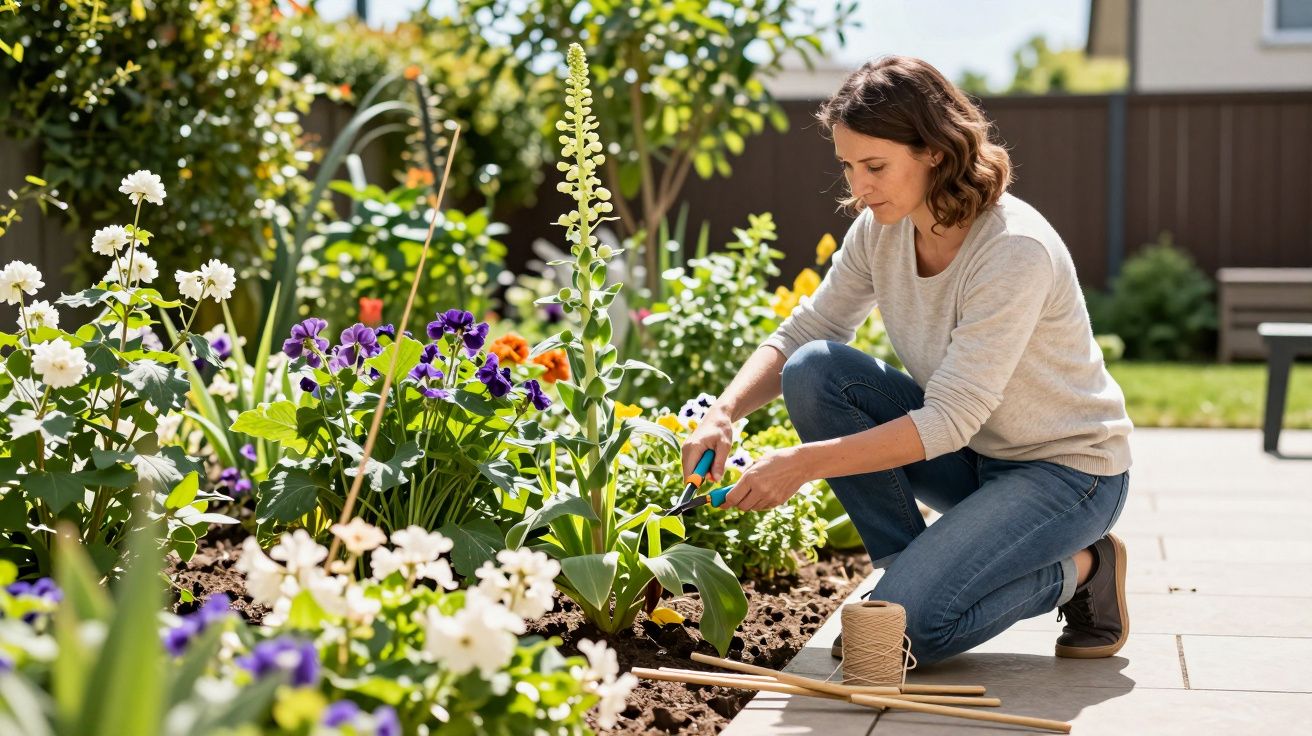
The moment garden maintenance slips into the seasonal context, you start to see which parts of your garden are genuinely “growing” and which parts are just getting longer. That’s why one quiet habit matters more than the flashy jobs: not what you plant, but what you remove at the right time. Done consistently, it decides the shape of your shrubs, the strength of your perennials, and the way your borders hold together in five years’ time.
It usually happens on an ordinary afternoon. You go out meaning to water, notice a plant flopping, and realise half the bed is leaning on the other half like a tired crowd on a late train. You can stake it, you can ignore it, or you can do the one thing that builds structure without anyone noticing.
The habit that makes gardens look “intentional” by next year
It’s pinching out and cutting back-early, little, and often-while plants are still soft. Not the big autumn chop. Not the spring clean-up theatre. The small, seasonal trims that redirect energy before stems become woody and habits set.
Most people wait until something looks messy, then react. The gardeners whose borders always look calm do the opposite: they intervene while everything still looks fine, so it never gets to the messy stage in the first place. It’s not perfectionism; it’s steering.
Think of it less like “pruning” and more like choosing where the plant’s future framework will be. Every time you cut above a pair of leaves (a node), you’re asking for side shoots. Side shoots mean more stems. More stems mean a fuller plant that stands up without pleading for string.
Why timing matters more than bravery
The seasonal context is the secret. A cut in late spring or early summer tells a plant, “Branch now.” The same cut done too late can leave soft growth that won’t harden before cold weather, or it can rob you of flowers you were counting on.
A few quick examples most gardens have somewhere:
- Hardy perennials (salvias, catmint, asters): a light cut-back after the first flush often gives a tidier second wave and stops the “sprawl ring” around the crown.
- Border stalwarts (phlox, heleniums, rudbeckia): the classic “Chelsea chop” (late May to mid-June) reduces height and staking, and spreads flowering over a longer window.
- Shrubs that flower on new wood (many buddlejas): earlier shaping can produce a sturdier, less top-heavy framework than one dramatic hack later on.
None of this is complicated, but it is time-sensitive. Miss the window and you’ll still have a garden-just one that leans, gaps, and demands support when summer gets loud.
The “two-minute cut” that saves you hours of staking
Here’s what the habit looks like when it’s realistic, not aspirational. You’re not doing a grand day of pruning. You’re doing tiny passes, repeatedly.
- Walk the border with secateurs once a week during active growth.
- Snip a third of the long, eager stems on likely floppers (especially in richer soil).
- Cut just above a leaf pair, aiming for a tidy outline rather than a perfect shape.
- Step back. If you can see the cut from the path, you’ve probably taken too much in one go.
The goal is a plant with more, shorter stems-its own internal scaffolding. When you do this, staking becomes a rare backup rather than a seasonal project. And your garden starts to look “designed” in that oddly effortless way that is, in fact, effort-just spread out.
The common mistake: waiting for “after flowering” as a rule
“Cut it back after it flowers” is advice that sounds safe, and sometimes is. But it can also turn into procrastination disguised as tradition.
Some plants respond best to being nudged early, before they commit to one tall stem. Others genuinely need you to wait. The trick is to stop treating the whole garden like one plant.
A simple way to decide:
- If it flops every year and you always stake it: cut some stems early next season.
- If it flowers once and you’d hate to lose it (many spring shrubs): don’t touch until you’re sure when it sets buds.
- If it flowers for ages and then looks tired: a mid-season shear often brings it back to life.
And if you’re unsure, test it. Chop only a section. The garden will show you the answer without you gambling the whole display.
What changes when you commit to this for one full season
The first year, it feels like you’re taking away potential. You’ll worry you’ve reduced height, delayed flowers, or ruined the “natural” look. Then July arrives and you realise the border is standing up on its own.
The second year is where the quiet payoff lands. Plants remember. Shrubs thicken where you asked them to thicken. Perennials bulk up at the base instead of racing upwards. The garden starts to hold its shape through wind and rain because you built a framework, not a performance.
It’s the same odd comfort as any good household routine: small, unglamorous actions that prevent big, annoying problems later. You don’t get applause for a border that doesn’t collapse. You just get to enjoy it.
A quick anchor list (so you actually do it)
- Pick one recurring moment: Sunday evening, post-coffee, whatever fits.
- Start with the known offenders: anything you’ve staked two years running.
- Don’t chase perfection-aim for “slightly sturdier than last week”.
- Keep cuts modest: you can always cut more; you can’t glue stems back on.
| Quiet habit | When to do it | What it changes |
|---|---|---|
| Pinch and light cut-backs | Late spring to mid-summer | More branching, less flopping |
| Partial “Chelsea chop” | Late May to mid-June | Shorter plants, longer flowering |
| Mid-season shear (some perennials) | After first flush | Tidier shape, second bloom |
FAQ:
- What if I’m scared of cutting off flowers? Cut only a third of the stems, or only one section of the plant. You’ll keep plenty of bloom while still building structure.
- Is this just for cottage-garden perennials? No. It helps many shrubs and even some herbs; anywhere you want thickness and stability rather than lanky height.
- When is it “too late” to cut back? If you’re heading into late summer and new growth won’t have time to harden before cold weather, switch to tidying and leave shaping for the right season.
- Do I need fancy tools? A sharp pair of secateurs is enough. Clean blades matter more than brand names.
- Will this reduce wildlife value? Done lightly and in stages, it can increase it-more branching often means more flowers over time, and a denser garden gives better cover.





Comments (0)
No comments yet. Be the first to comment!
Leave a Comment