Lush turf is meant to be the quick win that makes a residential property look “finished” in a weekend. Yet lawn installation keeps failing in the same dull, expensive way across UK gardens, from new builds to Victorian terraces. The frustrating part is it often isn’t the grass at all-it’s what’s (not) happening underneath it.
I learned this watching a neighbour lay perfect-looking rolls, water them faithfully, then call it “bad turf” two months later when the whole thing lifted like a rug. The grass hadn’t died of neglect. It had never properly joined the soil.
The mistake: turf laid on a hard, sealed base
The repeat offender is simple: turf goes down on compacted ground-builder’s subsoil, rubble-laced fill, or a polished, over-raked surface-then gets pressed in and watered from above. From the top it looks tidy. Below, it’s like trying to root into a patio.
When the base is hard, the roots stay trapped in the turf’s thin layer. Water pools, then runs off. In dry spells the turf dries fast; in wet spells it stays spongy and weak. A few weeks later you can pull up a corner and see it clearly: white roots circling, barely any anchoring into the ground.
You’ll often spot the symptoms before you see the cause. The lawn looks okay from a distance, then starts to thin in patches, especially on sunny edges or where people walk.
Why it keeps happening (especially on new residential property plots)
Newer residential property gardens are notorious for this because the “soil” is often a skim over construction-grade ground. Even older gardens get the same treatment when people strip out paving or dig foundations and then backfill quickly.
There’s also a very British urge to make it neat. People rake until it’s smooth as flour, then step all over it, then roll it flat for good measure. The surface ends up sealed. Roots hate sealed.
And turf is forgiving-briefly. It stays green long enough to convince you it worked, then the bill arrives when the weather turns.
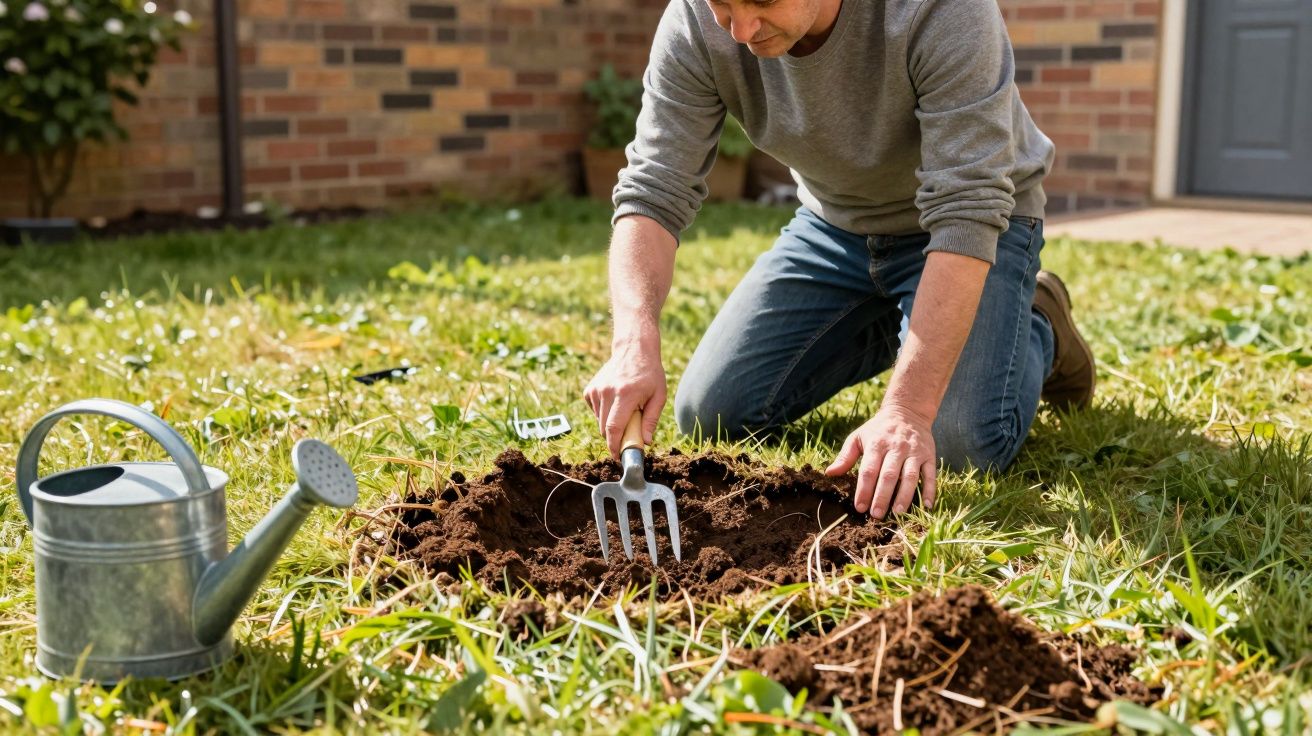
If you can slide a spade in only with bodyweight and swearing, roots can’t do much better.
The fix: prepare the soil so roots can bite immediately
You don’t need fancy kit. You need a base that’s open, deep enough, and not full of rubbish.
A practical pre-lay checklist
- Dig and loosen: Aim for 10–15cm of loosened soil across the whole area. If it’s heavy clay, break it up rather than polishing it.
- Remove builders’ debris: Stones, mortar chunks, plastic, compacted gravel bands-anything that creates dry pockets or perched water.
- Add topsoil where needed: If you’ve only got thin, poor soil, bring in quality screened topsoil and blend the top layer so there’s no sharp boundary.
- Level without sealing: Rake to level, then lightly firm with your feet. Avoid over-rolling; you want a stable surface, not a concrete skin.
- Water the base lightly: Damp soil helps turf settle and encourages immediate root movement (not mud-just evenly moist).
If you’re unsure whether the ground is too hard, do one test: push a garden fork in. If you can’t get the tines down without jumping on it, the soil needs loosening before any lawn installation.
Laying day: the small details that stop the “carpet lift”
Once the base is right, the laying is straightforward, but a few habits matter more than people think.
- Stagger the joints like bricks, so lines don’t run across the lawn.
- Butt edges tightly without overlapping. Gaps dry out; overlaps rot.
- Press turf into contact with the soil using your hands and feet as you go. The goal is contact everywhere, not flattening the life out of it.
- Topdress fine gaps with a little soil rather than leaving air pockets.
Then water properly. Not a polite sprinkle. A thorough soak that reaches the soil beneath, because you’re trying to pull roots down, not keep them comfortable up top.
The two-week watering rule most people miss
For the first 10–14 days, you’re not “watering grass”. You’re helping it knit. That means keeping the turf and the soil immediately beneath it consistently moist.
A simple routine works in most UK conditions:
- Water well right after laying.
- For the first week, check daily: lift a corner and feel the soil underneath. If it’s dry, water.
- In week two, reduce frequency but water deeper, encouraging roots to chase moisture.
If you only wet the surface, the turf stays dependent and shallow-rooted, and the first warm spell exposes it.
If it’s already laid: quick rescue steps
If your lawn has that spongy feel or lifts at the edges, you may still save it if it’s early days.
- Spike it: Use a garden fork to make holes every 10–15cm, rocking slightly to open channels.
- Brush in a sandy topdressing: A mix of sharp sand and topsoil helps keep holes open and improves contact.
- Water deeper, less often: Encourage roots down rather than pampering the top.
- Avoid heavy foot traffic: New turf under stress tears at the weak join.
If you can roll back sections like a mat and the soil underneath is rock-hard, that’s your sign. You’re fighting the base, not the grass.
The takeaway that saves money (and weekends)
Most turf “failures” are really soil failures. Lawn installation works when roots can move from turf into earth within days, not weeks. Get the base open and honest, and the lawn stops being a fragile green blanket and starts behaving like a garden should: anchored, resilient, and hard to kill.
FAQ:
- Is rolling turf always a bad idea? Not always, but heavy rolling on soft or wet ground can seal the surface and reduce soil–turf contact. Light firming with feet is usually enough.
- How can I tell if turf has rooted in? Try lifting a corner after 10–14 days. If it resists and you see roots entering the soil below, it’s knitting in. If it peels up easily, contact or moisture has been off.
- Do I need topsoil for every lawn installation? Not every time, but many residential property plots have too little usable soil. If you’re laying turf on thin, compacted subsoil, adding and blending topsoil makes a big difference.
- What’s the most common watering mistake? Frequent light sprinkling. It keeps the surface green but doesn’t wet the soil beneath, so roots stay shallow and the turf dries out fast in sun or wind.



Comments (0)
No comments yet. Be the first to comment!
Leave a Comment