You see it the moment you step onto a freshly finished street: bright green, ruler-straight edges, and not a crumb of soil out of place. In new development after new development, lawn laying is treated like the final cosmetic sweep - a quick roll of instant “garden” that photographs well and sells faster. It’s relevant because that same habit is why so many brand-new lawns fail in the first season, and why homeowners end up redoing work they thought they’d already paid for.
I watched a crew do it at pace: scrape, level, roll, water, done. No one looked stressed. The turf looked perfect by lunch. By August it was patchy, spongy in places, and cracked in others - not because turf is fragile, but because the ground underneath was never set up to let it live.
The repeating habit: laying grass like it’s carpet
New-build turf often goes down on a surface that’s been battered by heavy machinery, then skimmed with a thin layer of topsoil to make it “look right”. It’s a tidy shortcut: fast to finish, clean to hand over, and easy to mow for the first viewing. The problem is that grass roots don’t care what it looks like on day one; they care what’s happening in the first 50–150mm of soil.
Compaction is the quiet villain. When the ground is tight and glazed, water sits on top or runs off, roots stay shallow, and the lawn becomes dependent on frequent watering. Add a warm spring and the turf never really bonds to the soil below, so it lifts, dries, and dies back in neat, frustrating patches.
The habit repeats because it “works” just long enough. A rolled-out lawn can look great for weeks with regular watering, even if it’s sitting on poor ground. Then the developer’s gone, the hosepipe ban chatter starts, and the lawn shows you what it was laid on.
What a new-build lawn actually needs (and rarely gets)
A lasting lawn isn’t about the roll of turf; it’s about contact, depth, and drainage. Good turf takes quickly when the soil beneath is loose enough for roots to explore, firm enough to support foot traffic, and level enough that you’re not watering puddles.
Here’s the simple test: after rain, does the lawn stay squelchy for hours, or does it dry evenly? If it squelches, you don’t have a “turf problem”. You have a soil structure problem.
What’s missing most often:
- Decompaction: soil loosened to a spade’s depth, not just raked.
- Enough decent topsoil: not a skim to hide rubble and clay.
- Proper consolidation: firmed by foot and board so it’s stable, not lumpy.
- A realistic watering plan: frequent and light at first, then deeper and less often.
If you inherit turf that was laid fast, you can still turn it around. You just have to stop treating the surface and start helping the roots.
The “one-season fix” homeowners can do without ripping it all up
Think of it as relief work: create pathways for water and air, then encourage the grass to use them. You’re not trying to make it perfect in a weekend. You’re trying to make it survive summer without constant panic-watering.
Step 1: Check if the turf is actually anchored
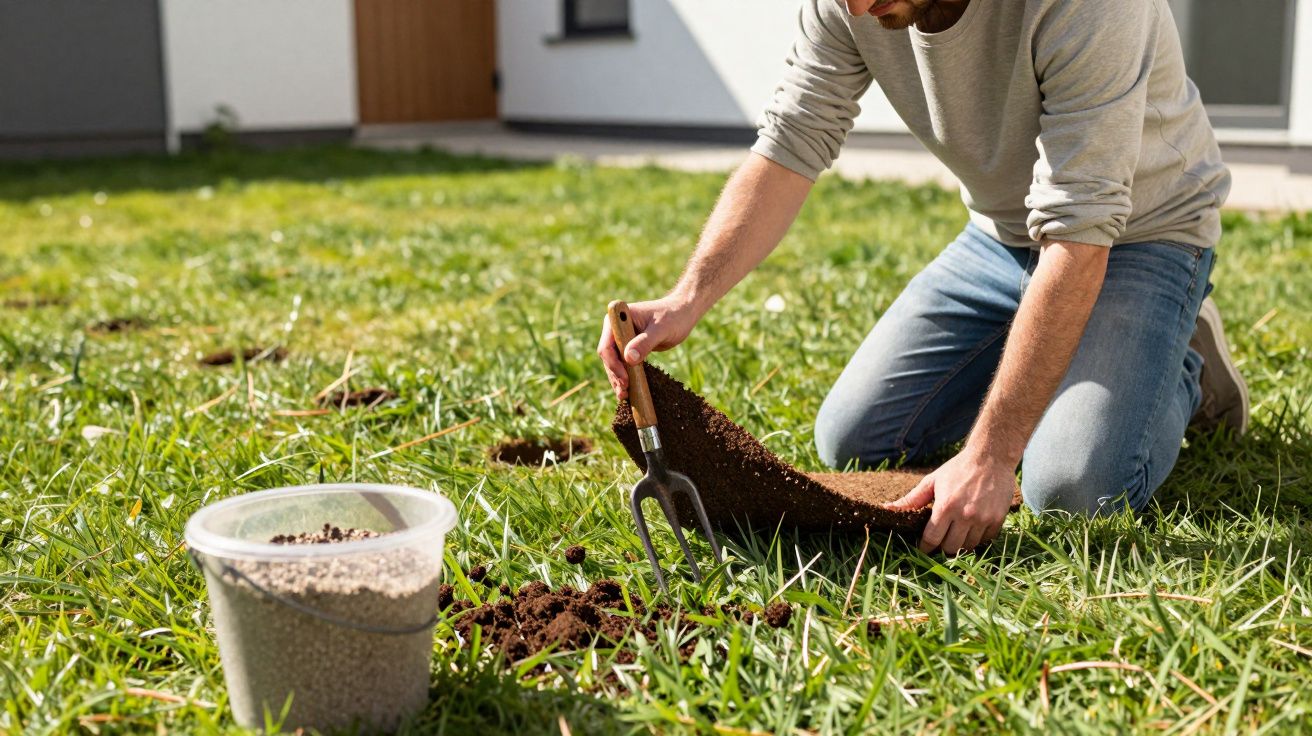
Pick a corner and tug gently. If it lifts like a rug, the roots haven’t knitted in. That usually means either the soil was too dry at laying, too compacted, or both.
Water deeply, then stop fussing for a day. When the turf is slightly damp (not soggy), move to the next steps.
Step 2: Aerate like you mean it
A fork is fine; a hollow-tine aerator is better. Push holes 75–100mm deep, every 10–15cm, focusing on paths, the centre strip, and any area that puddles. The goal is to break the sealed layer so water can travel down instead of sideways.
Then brush in a dry topdressing to keep the holes open:
- 70% sharp sand + 30% screened topsoil (good all-rounder)
- Add a handful of compost per square metre if the soil is lifeless and pale
Don’t smother the grass. You’re filling channels, not burying blades.
Step 3: Feed lightly, at the right time
New-build lawns are often hungry because the “topsoil” layer is thin and low in organic matter. Use a spring/summer lawn feed during active growth, but avoid dumping high-nitrogen fertiliser during hot, dry spells - it pushes soft growth that needs more water.
Step 4: Change the watering pattern (this is where most people lose it)
The repeating mistake is little-and-often watering, which keeps roots lazy. For the first two weeks after any repair work, keep it evenly damp. After that, transition to fewer, deeper waterings so the roots chase moisture down through your aeration holes.
A practical rhythm:
- Week 1–2: light watering most days if dry and breezy
- Week 3 onwards: deeper watering 1–2 times a week, depending on weather and soil
If you see the lawn drying in stripes, that’s usually uneven soil depth or compaction, not “bad turf”.
If you’re about to accept a lawn on a new development, look for these tells
You don’t need to be a landscaper to spot a rushed job. Walk it slowly. Feel it underfoot. Watch what rain does.
Red flags that often point to the repeating habit:
- The surface feels spongy or shifts slightly when you turn
- Water sits in shallow dishes after a shower
- The lawn is green but mows poorly, scalping high spots and missing low ones
- You can find stones, brick bits, or rubble just under the turf edges
- There’s a tidy “finish”, but the soil line at borders shows only a thin top layer
Ask what the turf was laid on, how deep the topsoil is, and whether the ground was decompacted after construction traffic. If you get vague answers, assume you’ll need to aerate and topdress within the first year.
Keep it good with tiny habits (not heroic weekends)
New lawns don’t need constant intervention; they need a few smart routines that stop them slipping back into shallow-rooted dependence. Mow higher than you think for the first season, especially in summer. Taller grass shades the soil, holds moisture, and builds a deeper root system.
And try not to baby it into weakness. Deep watering, occasional aeration, and letting it grow a touch longer during hot spells does more than any “miracle” seed shake or quick-fix spray.
| Habit to swap | Do this instead | Why it works |
|---|---|---|
| Watering little-and-often | Water deeply, then leave it | Trains deeper roots, less scorch |
| Chasing stripes with more feed | Aerate + topdress first | Fixes soil, not just colour |
| Mowing very short for “neatness” | Raise the mower height | More drought tolerance, fewer bare patches |
FAQ:
- How soon after turf is laid can I walk on it? Light foot traffic after 2–3 weeks is usually fine if it’s rooted. If corners still lift, keep off and focus on watering and contact.
- Can I fix a compacted new-build lawn without removing the turf? Often, yes. Fork aeration plus topdressing and a better watering pattern can transform it over a season, especially if the turf is otherwise healthy.
- Why does my new lawn go brown even when I water it? Shallow roots and compacted soil can mean water never reaches where it’s needed (or runs off). Aeration and deeper, less frequent watering are usually the turning point.
- Is it worth adding more topsoil on top of the turf? Not as a thick layer. A light topdress brushed in after aeration helps; dumping soil on top can smother the grass and create more problems than it solves.
- When should I overseed patchy areas on a new development lawn? Early autumn is best in the UK. The soil is warm, rainfall is more reliable, and seedlings establish without peak summer stress.




Comments (0)
No comments yet. Be the first to comment!
Leave a Comment