You can spend a small fortune on landscaping and still get ambushed by seasonal context. One minute the path looks set for life, the next it’s heaving, greening over, or shedding grit into the hallway like it’s doing it on purpose. It matters because the “permanent” choice is often the one you’ll live with in wet boots, low winter light, and that first hot week when everything expands.
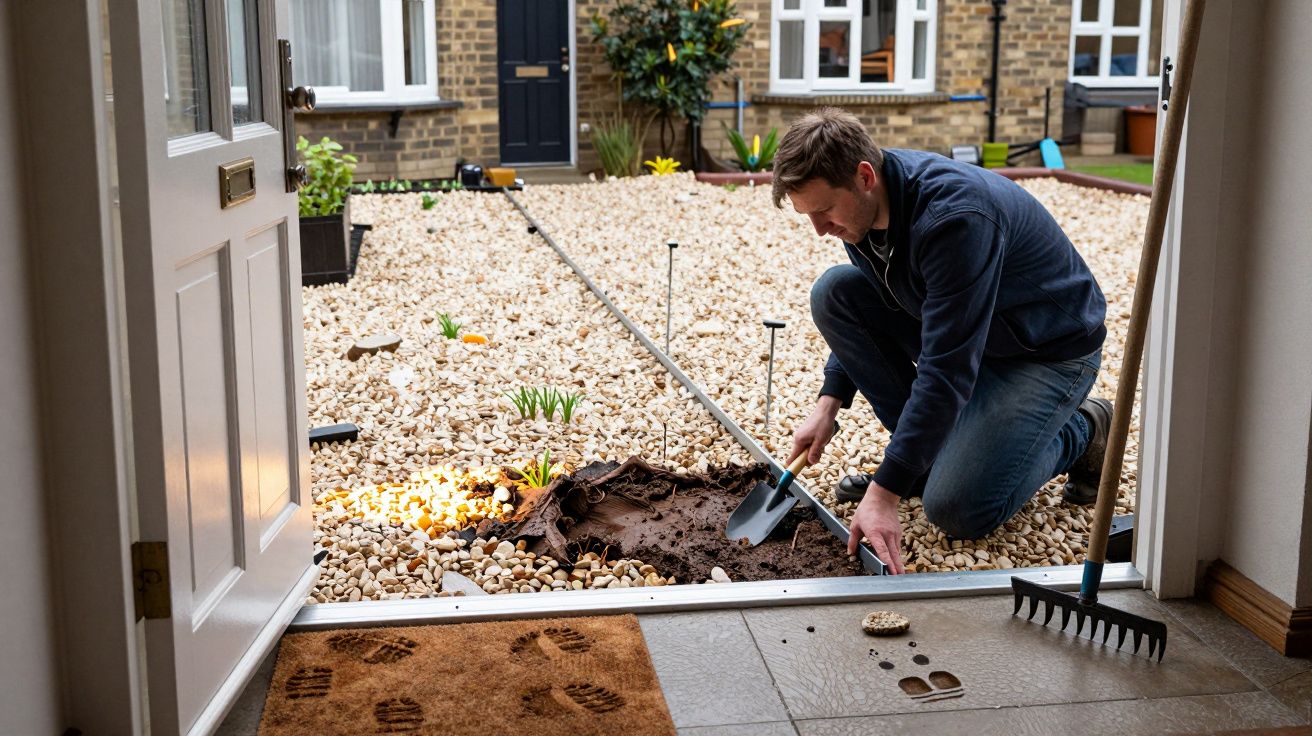
I first noticed it in a neat front garden in Leeds: pale gravel, crisp edging, the sort of finish that photographs like a brochure. By February it was pocked with muddy craters where tyres had turned, and by April there were tiny seedlings everywhere, as if the stones had suddenly decided to grow their own opinions. The homeowner wasn’t neglectful. They’d just bought into the promise that a surface can be “set and forget”.
The choice that looks fixed - and the weather that disagrees
Gravel is the classic. It reads as calm, tidy, and final: spread it, rake it, done. But the seasons treat it like a loose conversation, not a contract.
In winter, water finds the weak points first. If the sub-base isn’t right, the stones migrate into soft spots, and every step becomes a tiny reshuffle. In summer, dust and pollen settle between pieces, making a fine compost that weeds adore. The surface that looked like a clean sheet in March becomes a speckled, living thing by June.
There’s a similar story with bark mulch, especially on borders you want to “finish” quickly. It looks rich and deliberate for a month, then the seasonal context takes its cut: wind thins it, rain mats it, fungi arrive, and by autumn you’re topping up again, wondering why your “low-maintenance” choice has a subscription fee.
Why it happens (it’s not you, it’s the system)
Outdoor surfaces fail quietly because they’re not just surfaces. They’re drainage, biology, and physics pretending to be décor.
Gravel shifts because it has no internal lock. Freeze–thaw cycles push and pull the ground beneath; heavy rain moves fines; footfall and tyres act like a slow conveyor belt. Meanwhile, the air drops nutrients: leaf dust, soil splash, pollen, a bit of roadside grime. Weeds don’t need much-just a damp pocket and a few crumbs of organic matter.
Mulch breaks down because that’s its job. It’s meant to feed soil, regulate moisture, and protect roots. But if you place it like a permanent carpet, you’ll be surprised when it behaves like a compost ingredient.
A tidy garden in April can be a very different organism by October. That shift is the headline you don’t see on the bag.
“Most ‘maintenance-free’ landscaping isn’t maintenance-free. It’s maintenance that’s been delayed until the season changes.” - Priya Malhotra, garden designer
How to tell if your “permanent” surface will wobble by next season
Before you rip anything out, do a quick audit that’s more honest than the sales pitch. You’re looking for small signs that the seasons already have leverage.
- Puddles that linger after rain (drainage and compaction issues).
- Stones creeping onto paving or into borders (no edge restraint, weak sub-base).
- Green film or moss in shaded areas (light and airflow, not just “dirt”).
- Weeds that appear in clusters (organic pockets, torn membrane, soil splash zones).
- Ruts where wheels turn (gravel depth and sub-base thickness are off).
If you can see last season’s behaviour, you can predict the next one. Gardens repeat themselves.
The fix is boring - and it works
The best adjustments aren’t dramatic. They’re structural, and they respect the seasonal context rather than fighting it with constant spot-cleaning.
If you’re committed to gravel
- Install proper edging (steel, aluminium, setts, or treated timber) so the stones have a boundary that doesn’t drift.
- Check depth: around 30–40mm of gravel on top is common for paths; too shallow exposes the membrane, too deep feels like wading.
- Use the right size: 10–14mm tends to knit underfoot better than very large stones, while still draining.
- Upgrade the sub-base in high-traffic areas (Type 1 MOT or similar compacted base), especially where cars turn.
- Accept seasonal raking as part of the deal: ten minutes little-and-often beats one angry weekend.
A membrane can help, but it’s not a force field. Airborne organic matter still lands on top, and weeds can root in that layer like they’re potting themselves in place.
If you’re using bark mulch for the “finished” look
- Top up on a schedule (often annually, sometimes twice a year in exposed gardens).
- Keep it off stems and trunks to avoid rot and pest hiding spots.
- Lay it thick enough to work (roughly 5–8cm), but don’t bury crowns.
- Use edging or a shallow trench so it stays where you put it after heavy rain.
Mulch is brilliant when you treat it as a renewable layer. It’s frustrating when you expect it to stay photogenic indefinitely.
A calmer way to choose: design for the year, not the photo
If you want something that truly holds its shape through the seasons, you’re usually looking at surfaces that lock together: setts, well-laid paving, resin-bound aggregate (done properly), or bound gravel systems with grids. They cost more upfront, but they behave more like a structure than a scatter.
The middle path is often the sweet spot: keep gravel where it can move without ruining your day (ornamental strips, low-traffic areas) and use a stable route where you actually walk in winter darkness. People rarely regret making the route to the bin or the car boring and solid.
Here’s a quick way to decide: stand at your door on a wet evening and imagine the worst week of February. The “permanent” choice is the one you don’t have to think about then.
| What you want | What often works | What to watch in seasonal context |
|---|---|---|
| Low-maintenance path | Paving or setts on a proper base | Algae in shade, jointing loss after freeze–thaw |
| Soft, natural look | Gravel with strong edging + good sub-base | Migration, weeds in windblown organic layer |
| Healthier borders | Bark mulch used as a renewable layer | Breakdown, wind scatter, topping-up needs |
FAQ:
- Is gravel ever truly low-maintenance? It can be low-drama if it has proper edging, the right depth, and a compacted sub-base. It still needs occasional raking and weeding because organic matter will always settle on top.
- Do weed membranes stop weeds completely? They reduce weeds coming up from below, but they don’t stop seeds landing and rooting in the debris that collects above the membrane.
- When should I top up mulch? Often in spring, and again in autumn if it’s broken down or washed thin. If you can see soil through it, it’s usually time.
- What’s the biggest mistake with “permanent” garden surfaces? Designing for a dry, bright day. Test your choices against shade, heavy rain, leaf fall, and freeze–thaw cycles-the seasons your garden will actually live through.




Comments (0)
No comments yet. Be the first to comment!
Leave a Comment