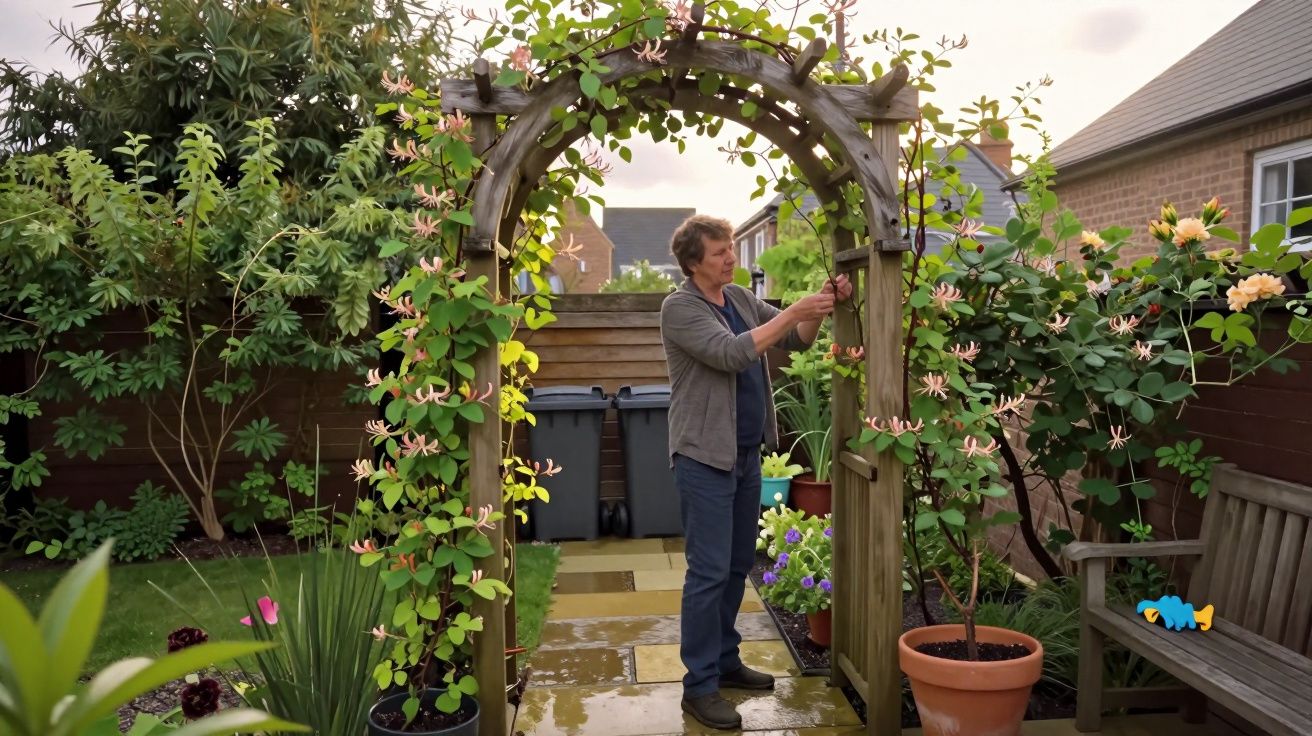
At first glance, garden elements can feel like pure ornament - the sort of thing you add at the end, once the planting is done. But in landscape design, the smartest features are the ones that earn their keep: they guide movement, lend privacy, and make a small plot feel deliberate rather than cluttered. One structure does all of that while still looking like “just a pretty thing”.
I noticed it in a neighbour’s back garden on a damp Manchester afternoon. From the patio it read like a decorative arch, softened by climbers and a string of lights. Walk a few steps closer and you realised it was doing a job: shaping the route, screening the bins, and making the whole space feel calmer.
The structure: a garden arch that behaves like a wall
A garden arch (or arbor) is sold as romance - roses, jasmine, a little cottage scene. The functional version is closer to a doorway without a room: it creates a threshold, tells your eye where to go, and gives height where most borders stay low.
Used well, it fixes a common garden problem. Many UK gardens are long rectangles with everything happening at ground level: paving, lawn, beds. An arch adds a vertical “pause” that breaks up the view and makes the layout feel intentional, even when the planting is still young.
Why it works (and why it doesn’t feel fussy)
The trick is that the arch offers structure without the heaviness of a fence panel. Light passes through, air still moves, and you can keep your garden feeling open while still gaining definition.
It helps in three practical ways:
- Creates a route. Place it where you naturally cut across the lawn, and it turns a worn path into a designed walkway.
- Screens awkward views. Bins, compost bays, side returns and shed corners become “behind the arch”, not the first thing you see.
- Supports planting you actually want. Climbers bring scent and nectar at nose height, not lost at ankle level.
If you’ve ever stood on the patio and felt like your eyes don’t know where to land, this is the gentle fix. It’s not more stuff; it’s a clear signal.
The placement rule that makes it look “meant”
Most arches look decorative-but-pointless because they’re parked randomly in the middle of grass. Give it a purpose and it suddenly reads as architecture.
Try one of these placements:
- Over the path you already take (patio to lawn, lawn to shed, back door to side gate).
- At the start of a new zone (dining area to “garden” area, lawn to veg beds).
- Framing a focal point (a bench, a bird bath, a pot, even the best part of a border).
A good test is to stand at your most-used viewpoint (usually the kitchen sink or patio doors). If the arch helps organise what you see - rather than interrupt it - you’re there.
Choosing one that will actually do the job
Pretty arches fail when they wobble, rust, or pinch the path. A functional arch needs to be boring in the right ways: stable, sized properly, and easy to plant around.
Look for:
- Width: at least 90 cm clear space if it’s over a path you’ll use with a wheelbarrow.
- Height: 2.1–2.4 m avoids the “duck your head” feeling once foliage thickens.
- Fixing: spikes for soft ground, bolt-down feet for paving, and ideally bracing if it’s in a windy spot.
- Material: pressure-treated timber for warmth; powder-coated steel for slimmer lines; avoid thin tube metal if you want heavy climbers.
If you’re training something vigorous (wisteria, climbing rose, grapevine), buy sturdier than you think. The plant will win.
The plant pairing that keeps it tidy
An arch turns messy fast if you choose a climber that sprawls and then ignore it. The calm version is about matching plant to maintenance, and giving it a second layer so it looks good for more than one month.
Reliable pairings:
- Climbing rose + clematis: rose gives structure, clematis fills gaps and extends the season.
- Honeysuckle: scent, wildlife value, and forgiving pruning.
- Evergreen clematis (armandii): instant screening, but give it space and a strong frame.
A small habit matters more than a perfect plant list: tie in new growth every couple of weeks through spring and early summer. An arch looks designed when the stems follow its shape, not when they’re flung at it.
A simple guide to “decorative” vs “functional” arches
| If you want… | Choose… | Avoid… |
|---|---|---|
| A walkway threshold | Wide span, stable feet, clear sides | Narrow arch in the middle of lawn |
| Privacy without fencing | Trellis sides or a paired climber | Solid panels that block light |
| Low-maintenance greenery | Honeysuckle or a manageable rose | Wisteria on a flimsy frame |
Small mistakes that make it feel like an afterthought
Most are easy to fix, and none require ripping the garden up.
- Putting it too close to a wall so it becomes a pinch point.
- Forgetting the base planting, leaving it “floating” on bare ground.
- Choosing a climber that peaks for two weeks, then looks tired for ten months.
- Letting growth spill across the opening, so the arch stops being a doorway and starts being a snag.
The goal is a structure that looks decorative from the house, then quietly improves how the garden works when you’re in it.
FAQ:
- Do I need a path under a garden arch? Not always, but it should sit on a route you genuinely use. Even a simple line of stepping stones makes it read as purposeful.
- Will an arch make a small garden feel smaller? If it’s placed across the width of the garden, it can. Place it along the length (creating depth) and keep it visually light so the eye can pass through.
- What’s the quickest plant to cover it? Honeysuckle is fast and forgiving. For instant coverage, you can combine a climber with seasonal sweet peas while the main plant establishes.
- How do I stop climbers damaging it? Start with a strong frame, then prune annually and tie growth in. The damage usually comes from weight and wind-sail, not the stems themselves.





Comments (0)
No comments yet. Be the first to comment!
Leave a Comment