
Garden refurbishment looks like the sort of project you can map out on a Sunday with a tape measure and a strong coffee. Then the reality of project-based work kicks in: you uncover a wonky drain, the soil behaves differently than you expected, and the “simple plan” starts quietly rewriting itself. Knowing which step tends to change halfway through saves money, stress, and that sinking feeling when a delivery arrives for a design you no longer want.
Most people blame their indecision, but it’s rarely that. The garden gives you new information mid-build, and the smart move is to listen.
The step that flips: the layout
It’s usually the layout-the actual shape and placement of things-that changes halfway through. Not the cute extras (lights, pots, cushions), but the bones: where the patio ends, where the path bends, how wide the beds need to be, whether the lawn stays at all.
You start with a neat sketch. Then you mark it out with string, or you watch a digger carve out levels, and suddenly you can feel the distances in your body. That’s when the original plan either clicks… or doesn’t.
A garden plan is a theory. Pegs in the ground are evidence.
Why layout changes are so common
A garden looks smaller on paper and bigger when it’s empty, then smaller again once materials arrive. A 1.2-metre path sounds generous until two people try to pass with a watering can and a wheelbarrow. A “small” patio can swallow the whole view if it sits too high or too near the back door.
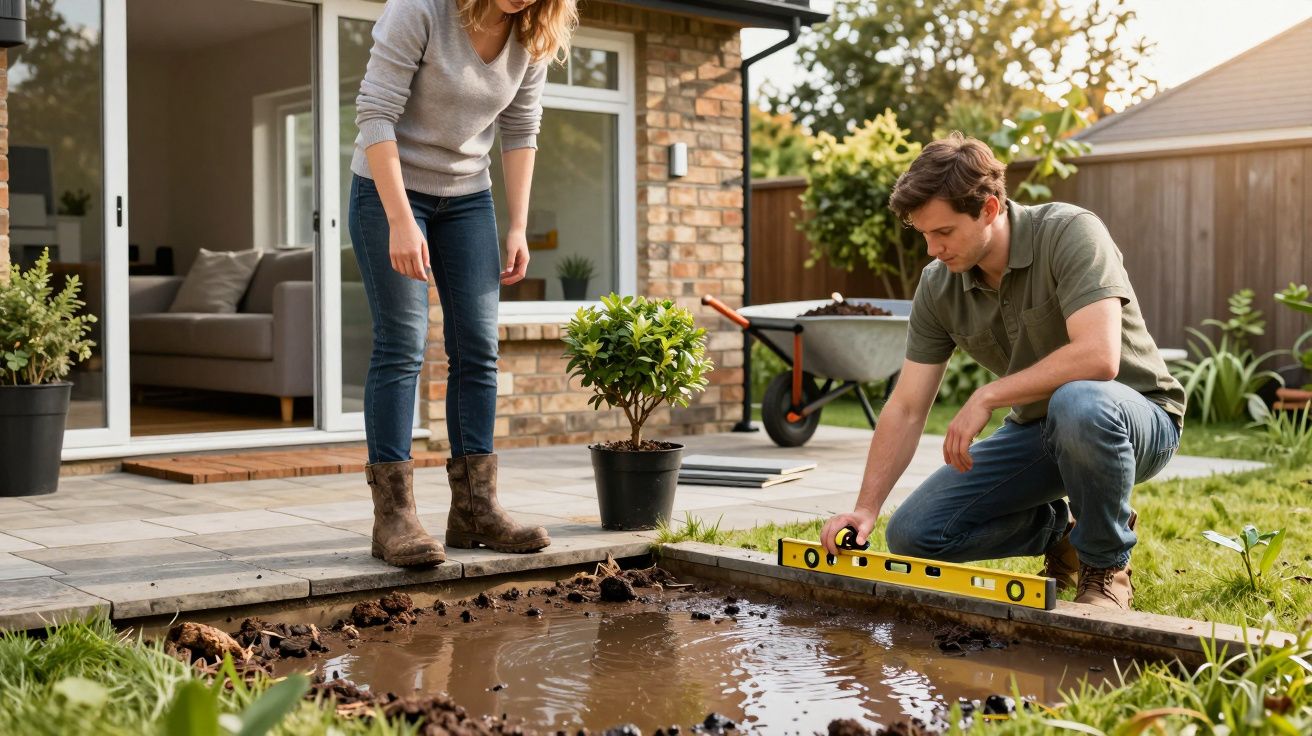
The other culprit is levels. Many refurbishments begin with “We’ll just relay the paving,” and end with “We’re basically doing civil engineering now.” The moment you address drainage, retaining edges, or a slope that sends water towards the house, the layout has to adapt.
The mid-project triggers nobody budgets for
The change rarely happens because you saw a prettier photo online. It happens because something on site forces a decision you couldn’t make properly earlier.
Common triggers include:
- Drainage reality: puddling, clay soil, or a surprise soakaway that needs protecting.
- Levels and thresholds: you notice the step out from the kitchen is awkward, or a patio height threatens damp.
- Sun and shade truth: that “sunny corner” is only sunny for an hour once the fence casts its shadow.
- Services you didn’t map: cables, pipe runs, inspection covers, or the neighbour’s shared drain.
- Access and storage: where bins go, where bikes live, how you’ll bring compost through without wrecking borders.
Once those show up, the layout changes aren’t “nice-to-haves”. They become the difference between a garden you use and a garden you work around.
The good news: changing it can be the upgrade
There’s a moment in many refurbishments when you’re standing outside, looking at a half-dug space, thinking you’ve made a mistake. That’s often the moment you’re finally seeing the garden honestly.
A layout change can improve:
- Flow (routes that match how you actually walk)
- Comfort (seating where the wind doesn’t funnel)
- Maintenance (beds you can reach without stepping on them)
- Longevity (materials and edging that won’t shift after one winter)
The goal isn’t to avoid change. It’s to make the change before you lock in the expensive bits.
A simple way to “test” the layout before you commit
If you do one thing early, do this. Mark the main shapes out full-size and live with them briefly.
- Use spray paint, sand, pegs and string, or even a garden hose for curves.
- Put out chairs where you think seating will go.
- Walk the paths carrying something awkward (laundry basket, watering can, a bag of compost).
- Stand at the kitchen sink and look out. Then repeat from the back door at night.
Give it a few days if you can. The point is to catch the “obvious in real life” problems while they’re still cheap to fix.
The halfway-through decision list (keep it boring, keep it useful)
When the layout starts wobbling, don’t redesign the whole garden in a panic. Run a short checklist that keeps decisions grounded.
- What can’t move? (drains, trees staying, manholes, boundaries)
- What must be right? (patio height, main path width, bin access)
- What’s flexible? (bed depths, lawn size, curve vs straight)
- What’s the weather doing? (where water sits after rain, where it bakes)
- What will you hate maintaining? (gravel everywhere, narrow awkward strips)
This is the unglamorous bit of garden design, but it’s the bit that stops you spending twice.
How to talk to your contractor when the plan shifts
Layout changes can feel like a personal failure, so people either apologise too much or freeze. Neither helps. Treat it like any other piece of project-based work: clarify scope, cost, and knock-on effects.
A calm script that works:
- Name the issue: “Now we’ve marked it out, the patio feels too deep and the path too tight.”
- Offer a clear option: “Can we reduce the patio by half a metre and widen the path to 1.2?”
- Ask for the consequences: “What does that change in materials, labour, and drainage?”
The best tradespeople expect a degree of adjustment once a garden is opened up. What they need is a decision that’s specific enough to price and build.
The one rule that prevents the painful kind of change
Don’t pour concrete or lay full beds until you’re happy with the layout at full scale. Once bases go in, changes become demolition, not tweaking.
If you’re itching to “get going”, channel that energy into the parts that survive redesigns: clearing, soil improvement, and getting drainage decisions made early. The pretty finishes are safer once the bones stop moving.
FAQ:
- Is it normal to change the plan mid garden refurbishment? Yes. Once levels, drainage, and real-life proportions become visible, layout adjustments are common and often sensible.
- What layout change gives the best return? Widening main routes and right-sizing the patio usually improves day-to-day use more than adding features.
- How do I avoid costly rework? Mark everything out full-size, check patio height and drainage early, and delay permanent bases until the layout feels right.





Comments (0)
No comments yet. Be the first to comment!
Leave a Comment