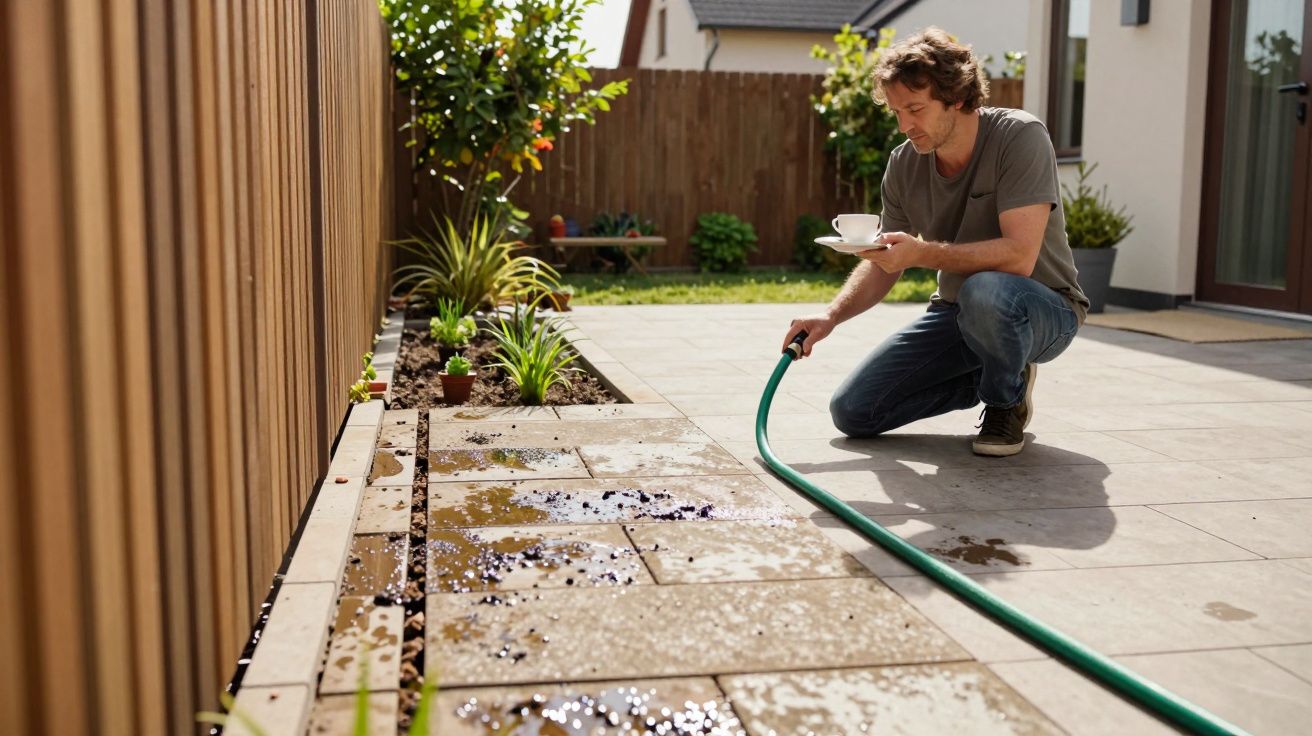
You place garden paths the way you place furniture: where you already walk. In garden design, it feels sensible to run a path tight along the fence or push it right up against the house so the lawn stays “neat”. Then you live with it for a season, and the whole thing starts to feel slightly off - not wrong exactly, just strangely tense.
I noticed it at a neighbour’s back gate, tray in hand, trying not to spill tea. The paving hugged the boundary like it was shy of the garden, and the border plants leaned over it as if to reclaim the space. We all do this at first: we draw lines where the edges are, because edges feel safe.
The placement that seems obvious (and why it gets weird)
The common instinct is to run a path on the perimeter. It keeps the centre open, it simplifies mowing, and it feels like a tidy corridor from A to B. On paper, it’s efficient.
In real life, that same efficiency can make the garden feel like it’s been flattened into a route. You walk it like a hallway, not a place. Your eye follows the boundary, not the planting, and the “destination” becomes the only thing that matters.
There’s also a quiet practical issue: edges are where gardens misbehave. Fences cast shade. Gutters drip. Neighbours’ trees steal light. The perimeter is often the coldest, dampest, most root-filled strip you have - and then you put your main walking surface there and wonder why it grows slippery, green, and a bit miserable by November.
What changes when you pull a path away from the edge
Shift the path even 30–60cm off the boundary and something loosens. You create a thin band of planting behind it, which immediately makes the route feel embedded rather than pasted on. The garden stops reading as “lawn with a track” and starts reading as layers.
That thin band does more work than you’d think. It softens fences, catches light, and gives you somewhere to put plants that look good up close - herbs, low grasses, scent near your knees, things you’d never bother with if the path was hard against timber.
It also changes how you move. A path that isn’t stuck to the edge invites a slight curve, a choice, a pause. It makes the walk feel like part of the garden rather than a service lane skirting around it.
A quick rethink you can do without re-laying everything
You don’t have to pick up paving tomorrow. Often the fix is a gentle reframe: narrow what feels too dominant, widen what feels pinched, and give the path a reason to be where it is.
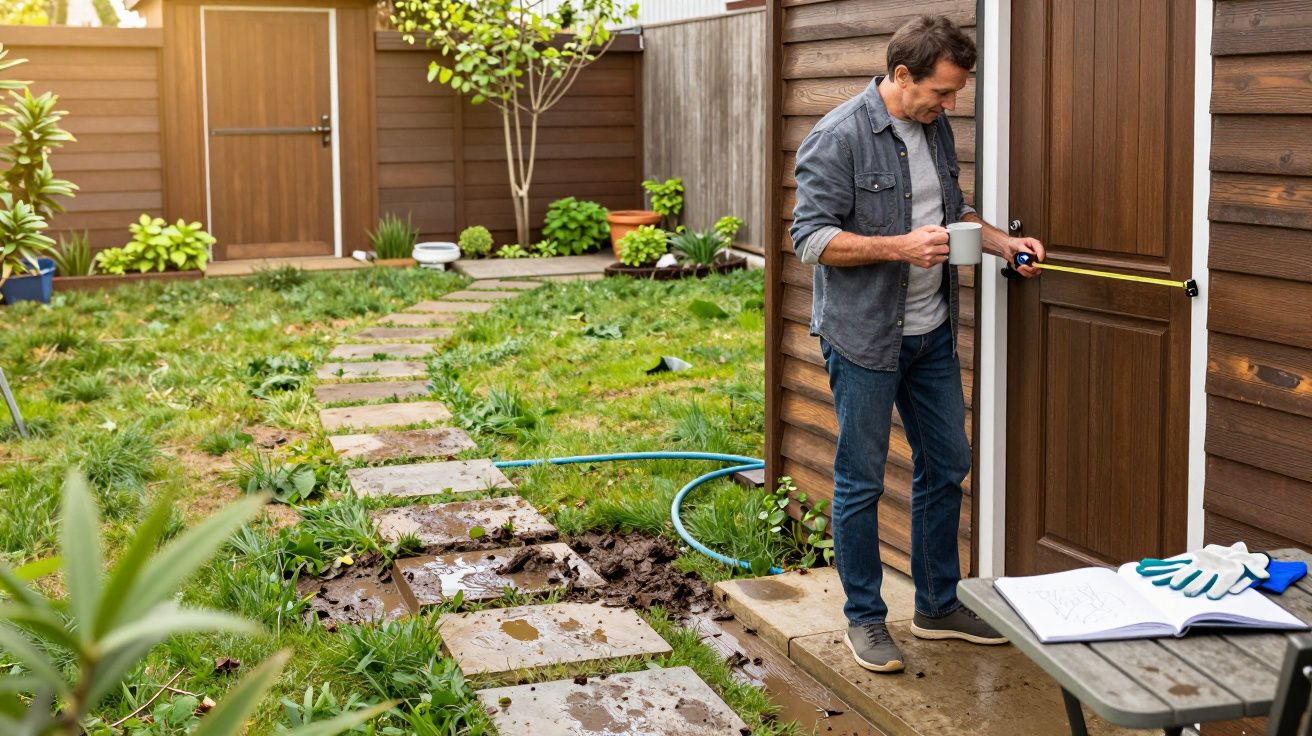
Try this on a weekend with pegs, a hosepipe, or a bag of sand:
- Walk your current route a few times, slowly, carrying something awkward (watering can, laundry basket, a tray). Notice where you naturally drift.
- Mark a “new line” that’s slightly away from the boundary at the spots that feel tight or gloomy.
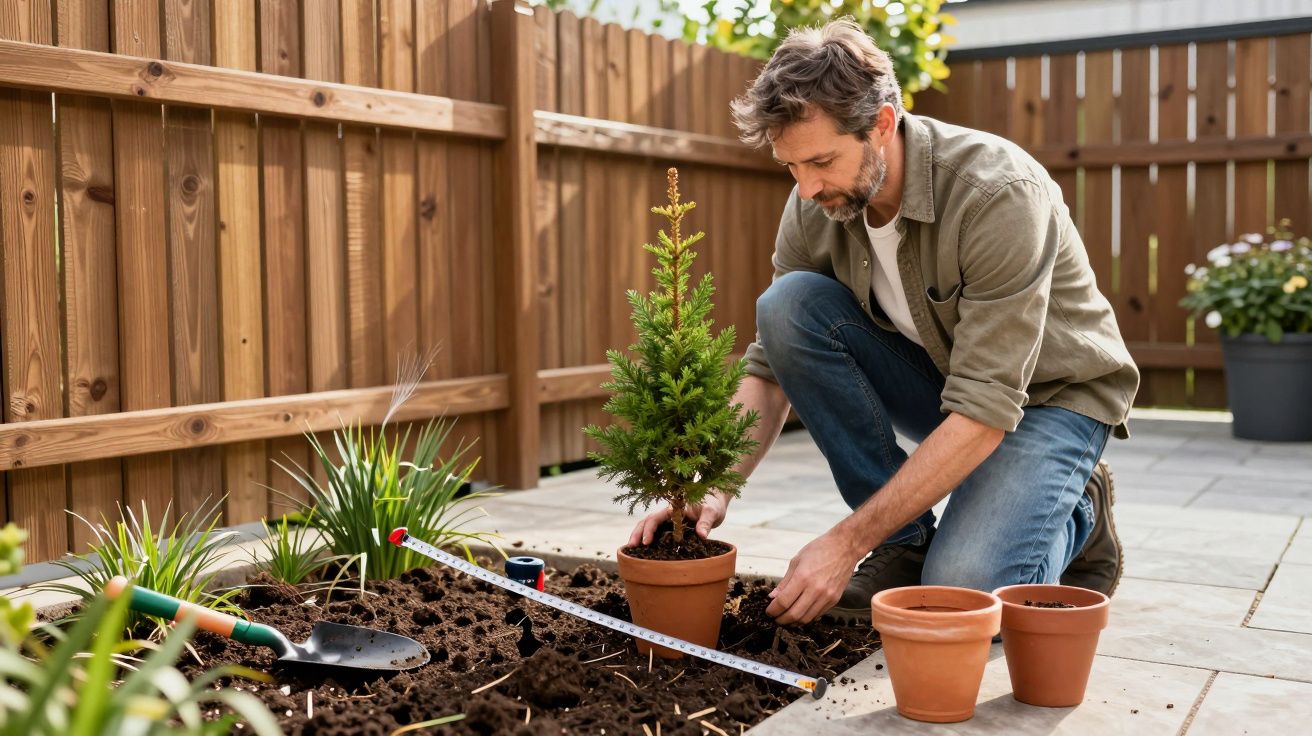
- Imagine a planting strip behind it: could it take bulbs, ferns, or a trellis? Would it hide bins, a shed wall, or a tired fence panel?
- Look from inside the house. Does the path lead your eye to something you actually want to see?
If you can’t move the hard surface, you can still fake the effect. Add a narrow bed between path and fence in the most visible section, or run a low edging line that suggests the path has its own border and isn’t merely “leftover space”.
The “desire line” isn’t the whole truth
There’s a fashionable idea that paths should simply follow desire lines - the routes we naturally take. It’s a good starting point, but gardens aren’t train stations. Sometimes you want to slow people down, or pull them towards scent, shade, or a view that only works from one angle.
A useful compromise is to let the first third be direct (so it feels easy), and let the middle soften into a curve (so it feels lived-in). The end should arrive with intention: a seat, a pot, a water butt hidden by planting, a small tree that acts like a punctuation mark.
If your current path runs tight to the house wall, consider the opposite problem: it can make the garden feel like it starts too far away. A small offset - just enough space for a narrow bed - gives you a threshold. That transition is often what makes a garden feel “designed” rather than merely accessed.
A simple checklist for path placement that keeps working
You’re aiming for a route that’s practical, yes, but also generous to the garden around it.
- Light: avoid the perpetually damp strip if you can; if you can’t, choose surfaces with grip and plan for moss.
- Width: wide enough for two people to pass in the pinch points, or at least for you to carry things without brushing plants.
- Edges: give the path a planted edge somewhere, even if it’s only in the key sightline from the kitchen.
- View: make the path point at something worth pointing at.
- Maintenance: don’t place your main route where leaves and fence debris naturally collect unless you enjoy sweeping.
Here’s a compact way to think about it:
| Placement choice | What it signals | Common side effect |
|---|---|---|
| Tight to fence | “This is just a route” | Damp, slippery edges; flat feel |
| Slightly pulled in | “This is part of the garden” | Layering, softness, better views |
| Central/direct | “Fast access matters” | Can split space; needs strong planting |
The small mental shift that makes it click
Instead of asking, “Where do I walk?” try, “Where should the garden meet me?” That question nudges you away from treating the path like plumbing and towards treating it like a frame.
The funny thing is that the most “natural” placement is often the one you only find after living there - once you realise the edge isn’t neutral space. It’s a mood. Put the path there and the garden learns to feel like the outside of itself.
FAQ:
- Should a garden path always curve? No. Straight paths feel crisp and calm when they’re short, purposeful, and end in something intentional. Curves help when you’re trying to create softness or slow the pace through planting.
- How far from a fence should a path sit? Even 30cm can be enough to squeeze in bulbs or low planting; 60cm–1m is more flexible for shrubs or climbers. The goal is a visible “buffer” that stops the path feeling glued to the boundary.
- What if I need the path on the edge for access? Keep it, but improve the microclimate: increase sun where possible, choose grippier materials, and add a planted section where it matters most visually (often near the house or the seating area).
- Is a narrow path always a mistake? Not if it’s a secondary route. For the main run to bins, gate, or shed, narrow paths become annoying fast when you’re carrying things or walking two abreast.
- What’s the quickest way to test a new layout? Use a hosepipe or sand to mark a new line, then live with it for a week. Your feet will tell you what your sketch didn’t.



Comments (0)
No comments yet. Be the first to comment!
Leave a Comment