Garden maintenance can feel like a weekend sport: set the timer, blast through the jobs, tick the boxes, reward yourself with a cup of tea. Routine maintenance is meant to keep things healthy with minimal effort, and that’s why “doing it all in one go” sounds so sensible. The problem is that gardens don’t run on our schedules, and efficiency can quietly turn into stress for plants, soil, and wildlife.
I learnt this the hard way watching a neighbour power-wash a patio, mow stripes into a lawn, shear every shrub into cubes, then “finish” by clearing every leaf and dead stem as if mess itself was the enemy. By Monday it looked immaculate. By the next month, it looked tired.
The maintenance routine that feels clever: one big tidy, every week
Batching jobs works in an office. In a garden, it can backfire because each task has knock-on effects, and doing them all together stacks the impact.
A typical “efficient” routine goes like this:
- Mow short and often, then edge sharply.
- Cut everything back on the same day “to keep on top of it”.
- Blow or rake up every leaf, every time.
- Jet-wash hard surfaces whenever they look green.
- Feed and water on a fixed schedule, regardless of weather.
None of these are automatically wrong. The issue is the rhythm: it’s maintenance done to the calendar, not to the conditions.
Why it isn’t always efficient (even when it looks it)
Start with mowing. Cutting too low and too frequently forces grass to live off its reserves, weakens roots, and invites moss and weeds that love bare, stressed ground. You end up mowing more, feeding more, and wondering why the lawn still looks thin.
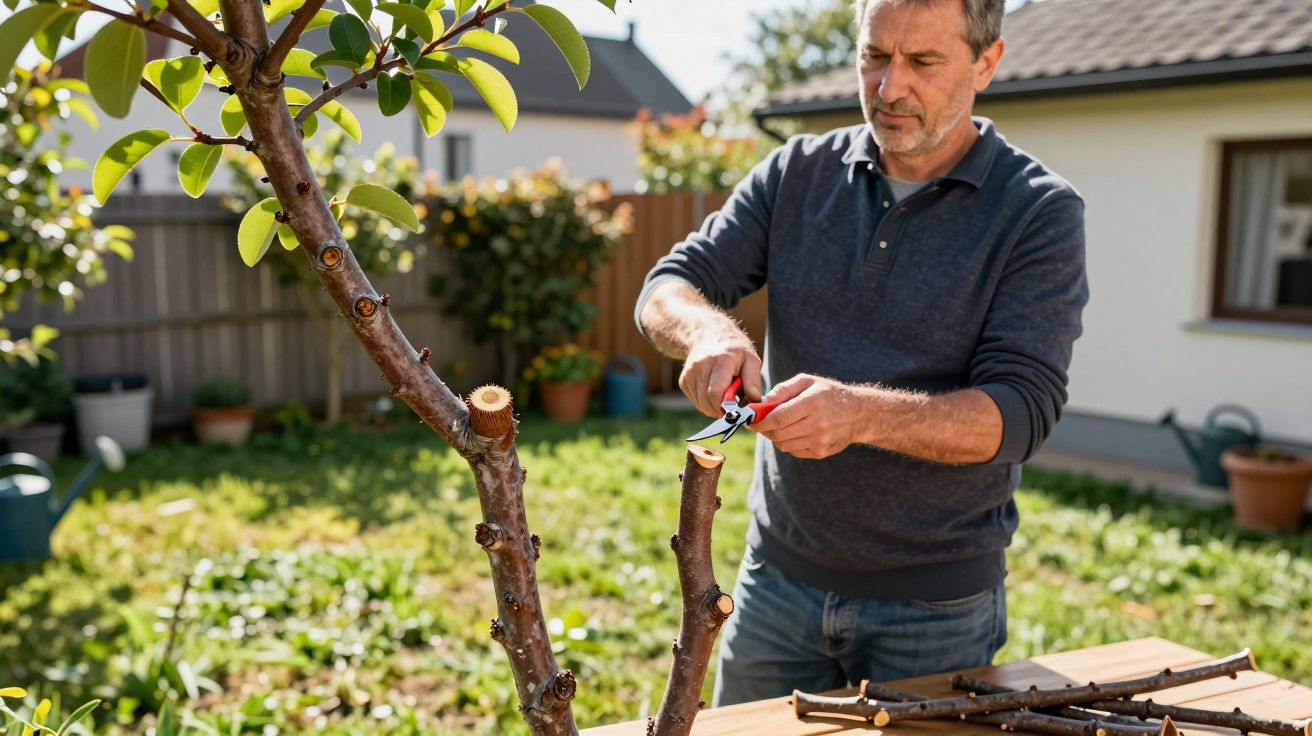
Then there’s the “one-day prune”. A heavy, across-the-board cut can remove flower buds, shelter, and fruiting wood in one swoop. Birds lose cover, pollinators lose late blooms, and some shrubs respond by shooting back with soft, sappy growth that needs more pruning later. It’s the garden equivalent of crash dieting: dramatic, and oddly more work over time.
Leaf clearing is the sneakiest one. A spotless bed looks cared for, but constant removal strips the soil surface of its natural mulch, exposes worms and beetles, and reduces the slow trickle of organic matter that keeps borders resilient. You’re exporting fertility, then buying it back in bags.
The hidden costs: soil, pests, and your own time
The “all-in-one tidy” often creates the very problems it’s trying to prevent.
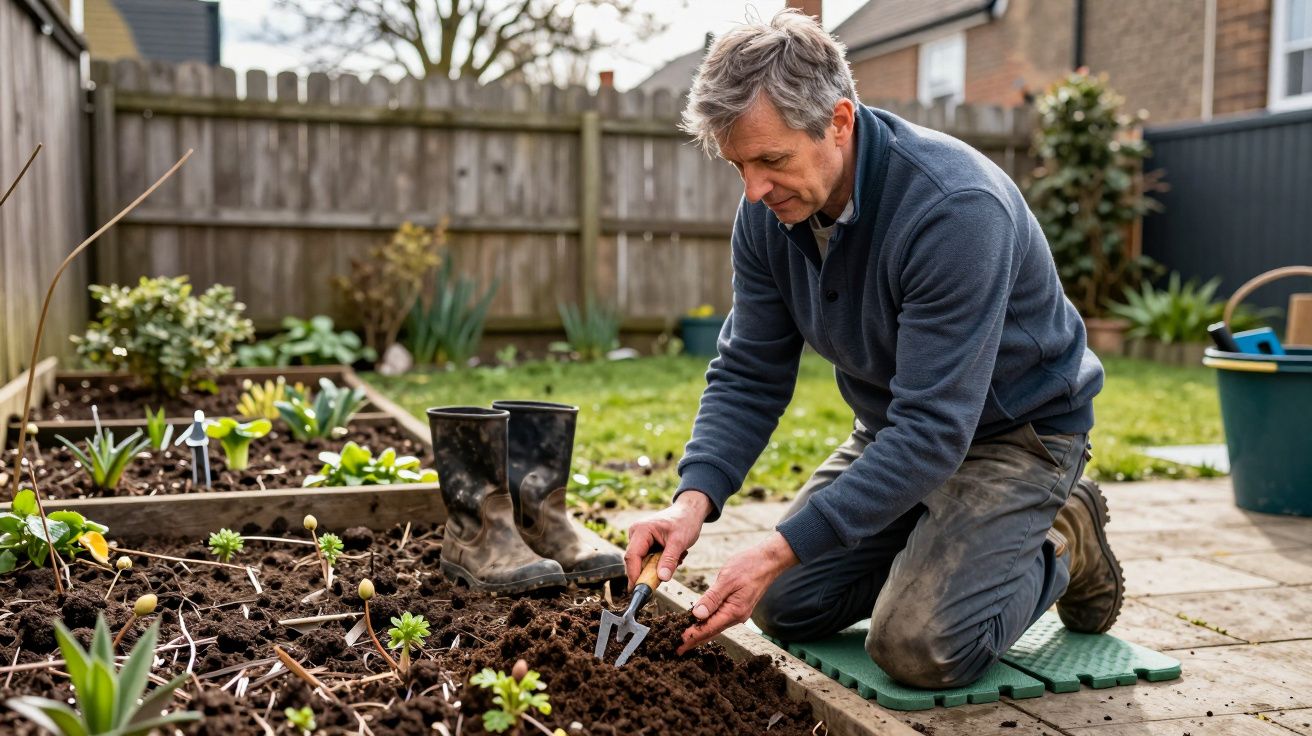
When you repeatedly disturb the soil surface-scraping, raking, blowing, hoeing to look neat-you dry it out faster and break up the crumb structure that helps it hold water. Plants then need more watering, which feels like more maintenance, which leads to more soil disturbance. It’s a loop.
It can also nudge pests into the spotlight. A garden with no leaf litter, no rough corners, and no seed heads has fewer places for beneficial insects to overwinter. Aphids don’t need much; ladybirds and lacewings need habitat. When the helpers disappear, you start “having to” spray or intervene, and the routine grows.
And jet-washing? It’s satisfying, but it’s rarely the shortcut it promises. You blast out jointing sand, open tiny pits in softer stone, and create the perfect damp grooves for algae to return. Many people end up washing more often because they started washing in the first place.
A better version: condition-based maintenance, not calendar-based maintenance
The alternative isn’t neglect. It’s lighter, more targeted, and often kinder.
Think in checks, not chores:
- Look first. Walk the garden and note what’s actually changing this week: growth spurts, dry soil, pest hotspots, plants flopping after rain.
- Do the small thing that prevents the bigger thing. Tie in a stem before it snaps; deadhead a pot before it seeds everywhere; spot-weed before it roots deep.
- Leave “good mess” alone. A thin layer of leaves under shrubs, hollow stems in a back border, seed heads on perennials until late winter.
A surprisingly effective rule is to keep one “tidy zone” (by the door, the path, the seating area) and allow the less visible edges to be more natural. You still get the psychological lift of neatness without stripping the whole garden bare.
The simple swaps that keep it looking cared-for without the damage
If you want a routine that genuinely saves time, swap intensity for timing.
- Mow higher in summer (and less often in drought). Taller grass shades its own roots and stays greener with fewer inputs.
- Prune in response to the plant, not your diary. Light trims at the right moment beat one hard cut that triggers months of regrowth.
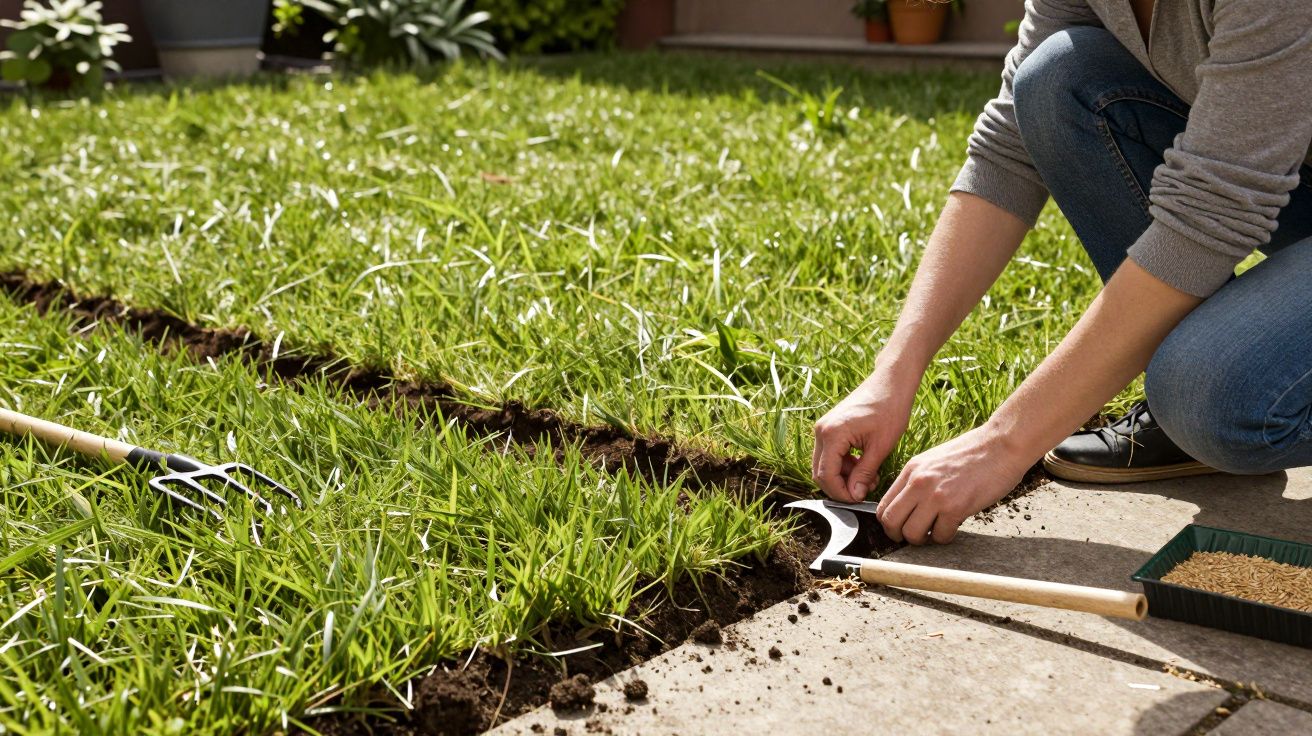
- Use a spring rake and patience on lawns instead of relentless scarifying. Let the grass thicken before you attack moss.
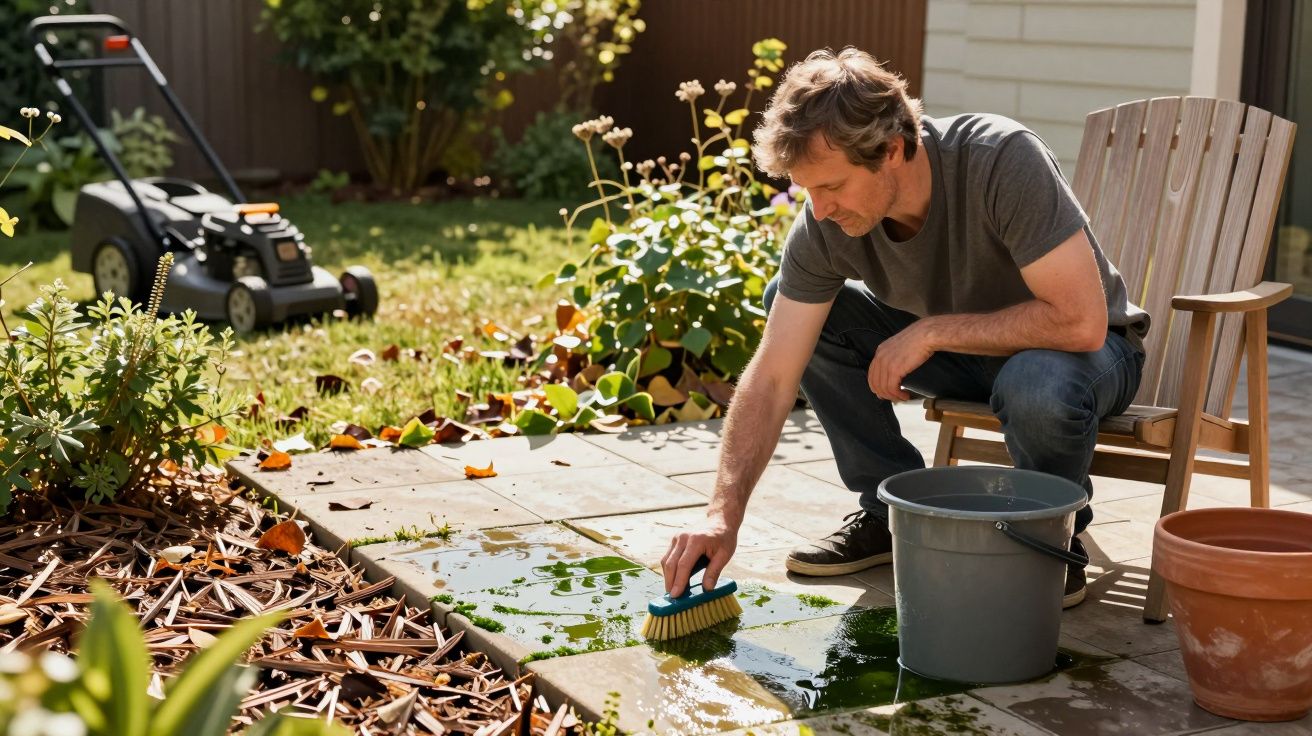
- Clean hard surfaces gently first. A stiff brush, hot water, and improved drainage solve many “green patio” problems without collateral damage.
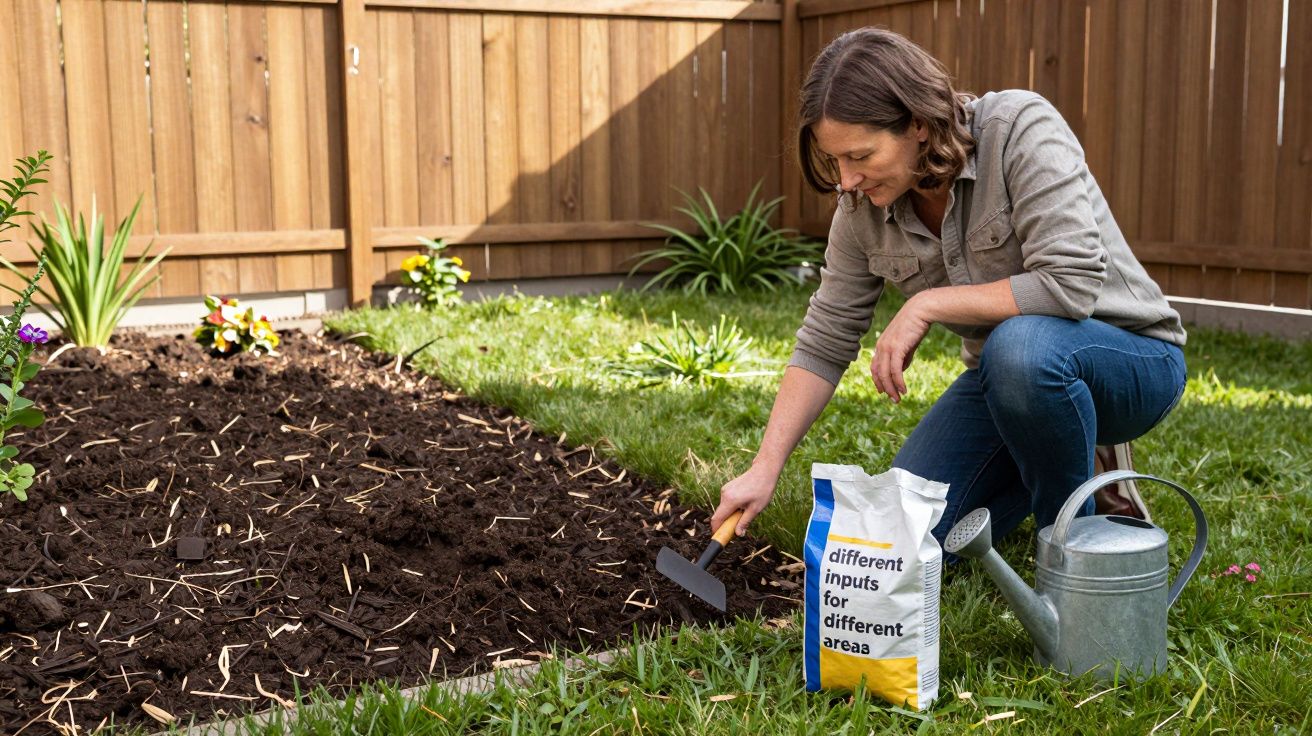
- Mulch once, then disturb less. A 5–7 cm mulch in spring (compost, leaf mould, well-rotted manure) reduces weeds and watering far better than weekly scraping.
A gardener in Cornwall once put it to me like this:
“The fastest garden is the one you stop restarting.”
He wasn’t talking about giving up. He meant letting soil settle, letting predators build up, and letting plants finish their cycles before you tidy them away.
| Habit that feels efficient | What it can cause | Better move |
|---|---|---|
| One big weekly cutback | Lost flowers, weak regrowth | Smaller, timed trims |
| Clearing every leaf | Drier soil, fewer beneficials | Leave some as mulch |
| Jet-washing often | Faster regrowth of algae, surface wear | Brush + address shade/drainage |
FAQ:
- Isn’t routine maintenance the whole point of a low-effort garden? Yes, but the best routine responds to weather and growth rather than forcing every job into the same weekly slot.
- Do I really need to leave leaf litter? You don’t have to leave it everywhere. Leaving some under shrubs and in borders improves soil and supports wildlife, while paths and seating areas can stay clear.
- What’s the quickest win if I’m short on time? Mulch well once or twice a year and mow a touch higher. Those two changes reduce weeding and watering more than most people expect.
- When is jet-washing appropriate? When you’re preparing a surface for repair or resealing, or when safety is an issue. For routine cleaning, brushing is often enough and causes less damage.
- How do I keep it looking tidy without constant work? Keep the “tidy zone” neat, edge beds cleanly, and let the wilder areas do their job quietly in the background.


Comments (0)
No comments yet. Be the first to comment!
Leave a Comment