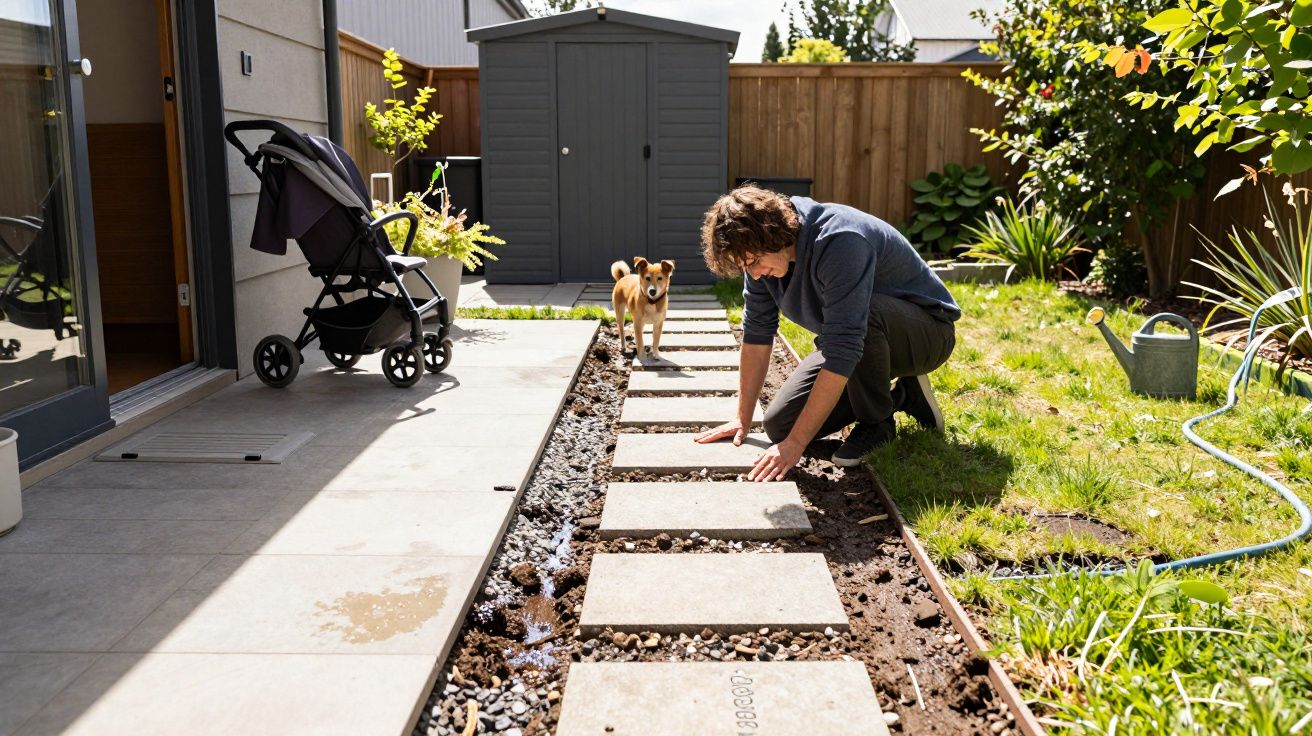
The garden layout looked perfect on paper, and honestly it behaved that way for a whole season in our residential garden. Beds were square, paths were straight, and every plant had a place; it made weekend maintenance feel almost automatic. Then life changed slightly - a new dog, a pushchair in and out, a neighbour popping round more often - and the “finished” plan started to feel strangely unfinished.
The surprise wasn’t that the garden got messier. It was that a layout designed for one pattern of use can start fighting you the moment the pattern shifts, even if the plants are thriving.
The moment a “complete” plan stops working
Most layouts are drawn around a single, tidy idea of how you’ll move: step out, water, weed, harvest, sit. In reality, a residential garden is more like a hallway with weather in it: people cut through, pause, carry things, change direction, take shortcuts.
You’ll notice it first in the ground, not in the design. A crisp bark path becomes a thin strip. The corner by the tap turns muddy. The space that was “just ornamental” becomes the place you leave a scooter, then a bag of compost, then a pot you swear you’ll plant up later.
The garden hasn’t failed. The assumptions have.
Why usage changes hit layouts harder than seasons do
Weather changes are expected, so gardens come with coping mechanisms: mulch, drainage, shade, pruning. Usage changes are sneakier, because they feel temporary at first.
A few common triggers turn up again and again:
- A child arrives (or becomes a toddler with speed and opinions).
- A pet enters the picture, and suddenly every soft border is a racetrack.
- Mobility changes: a sore knee, a recovering ankle, a parent visiting more often.
- You start growing more food, and “a little herb bed” becomes a mini production line.
- Work patterns shift, and the garden needs to function in ten-minute bursts, not leisurely afternoons.
A layout can survive all of these - but only if it’s designed to flex. Most “finished” ones are designed to look resolved, not to adapt.
The hidden pressure points: where gardens wear out first
If you want to know whether your garden layout will cope with a new phase of life, look at three places: entrances, corners, and anything that requires a decision.
Entrances become traffic funnels
The route from back door to shed, bin area, washing line, or side gate always wins. If your path doesn’t follow the route people actually take, people will teach the garden a new one.
That’s when you get the classic problems: compacted soil along bed edges, plants clipped by shoulders and bags, and a lawn that develops a permanent diagonal scar.
Corners become storage (even when you hate clutter)
A corner is a promise. It’s where things can sit “for now” without being in the way, which means it’s where things will sit until you forget what “for now” meant.
If the corner was planted densely, it becomes annoying. If it was left open for “airiness”, it becomes a dumping spot. Either way, it’s telling you the garden needs a proper utility zone, not a guilty one.
Decision points create friction
Any place where you have to choose between two narrow routes, step over edging, or squeeze past a spiky plant is a place you will avoid when you’re tired, in a rush, or carrying something.
Designers talk about flow; everyday life talks about “I can’t be bothered with that”.
The fix is rarely a full redesign (and almost never starts with plants)
The temptation is to blame the planting: “We need fewer shrubs,” or “That border is too big.” Often the real issue is circulation and access - the unglamorous parts that make the garden feel easy.
A small round of changes usually gives the biggest relief:
- Widen the main route by 20–30 cm, even if it steals from a bed. The psychological difference is enormous.
- Make one path the “work path” (bins, compost, tap, shed) and let it be plain, tough, and easy to clean.
- Move the tap access (or add a simple hose connection) so watering doesn’t require weaving through planting.
- Create a deliberate “drop zone”: a gravel square, a bench with space beside it, or a small paved pad.
You’re not making the garden less beautiful. You’re making it honest about how it’s used.
A simple test: design for the worst five minutes, not the best hour
If you only ever picture the garden at its most peaceful - coffee in hand, sun out, nobody rushing - you’ll design for a version of life that rarely shows up on a Tuesday.
Try this instead. Imagine:
- It’s raining.
- You’re carrying something awkward.
- You need to get to the bin or shed quickly.
- Someone else is coming the opposite direction.
- You don’t want to step on wet soil.
Walk that route in your head. The places where you hesitate are the places your layout is asking too much of you.
The layouts that age well have one shared trait
They build in a little “slack”. Not empty space for the sake of emptiness, but usable margin: paths that can take a wheelbarrow, thresholds that don’t bottleneck, beds that aren’t so tight you can’t reach the middle without stepping in.
That slack is what turns a residential garden from a display into a tool you can live with. It’s also why some gardens look slightly unfinished when they’re new - and feel brilliant five years later.
A quick reset checklist (before you move anything heavy)
You can learn a lot in one weekend without spending much or ripping anything out.
- Watch where feet naturally go for a week, and mark it with pegs or chalk.
- Notice where you keep putting things “temporarily”.
- Time one common job (watering, hanging washing, taking out rubbish). The friction points show up fast.
- Fix the surface first: add stepping stones, top up gravel, or firm up a muddy edge before you replant.
- Only then adjust planting to suit the new routes, not the other way round.
Most gardens don’t need more structure. They need structure in the places your life has already chosen.
FAQ:
- Is it normal for a garden layout to stop working after a few years? Yes. As routines change, the routes and “need zones” shift, and a layout that was perfect for one phase can become awkward in the next.
- What’s the fastest change that makes a big difference? Widening or simplifying the main path from door to shed/bin area. Removing just one pinch point often makes the whole garden feel calmer.
- Do I have to redesign the whole garden to adapt it? Rarely. Most fixes are small: a tougher surface, a clearer utility corner, or moving one bed edge back to create breathing room.
- How do I stop people cutting across the lawn? Either accept the desire line and make it a path, or put an obvious alternative in the right place (wider, drier, easier) so the shortcut loses its appeal.






Comments (0)
No comments yet. Be the first to comment!
Leave a Comment