It’s easy to fall in love with a garden layout that looks “finished” on day one, especially when you’re trying to make an established garden feel tidy and intentional. The catch is that one common choice can quietly lock your beds, paths and planting into place, making future changes far harder than they need to be.
It rarely feels like a mistake at the time. It feels like progress: crisp edges, clean lines, fewer weeds, less mowing. Then a tree matures, your needs change, and the garden stops flexing with you.
The quiet trap: hard-edged, fixed boundaries everywhere
The layout choice that limits future changes is simple: too many permanent, hard boundaries-brick-edged beds, mortared paving, raised planters with retaining walls, kerbs set in concrete, and geometric paths that slice the plot into small, rigid compartments.
At first, it photographs beautifully. It also turns every later tweak into demolition, skip hire, and awkward levels. When you can’t nudge an edge by 30cm without breaking something, you stop experimenting-and the garden starts dictating to you.
The goal isn’t to avoid hard landscaping. It’s to avoid making every decision permanent before you’ve lived with it.
Why it bites hardest in a UK garden
UK gardens change fast once planting settles. One wet winter can shift drainage patterns. A hot summer can scorch a sunny border you thought was “part shade”. Kids grow, dogs arrive, mobility changes, and suddenly that narrow stepping-stone route isn’t charming-it’s a pinch point.
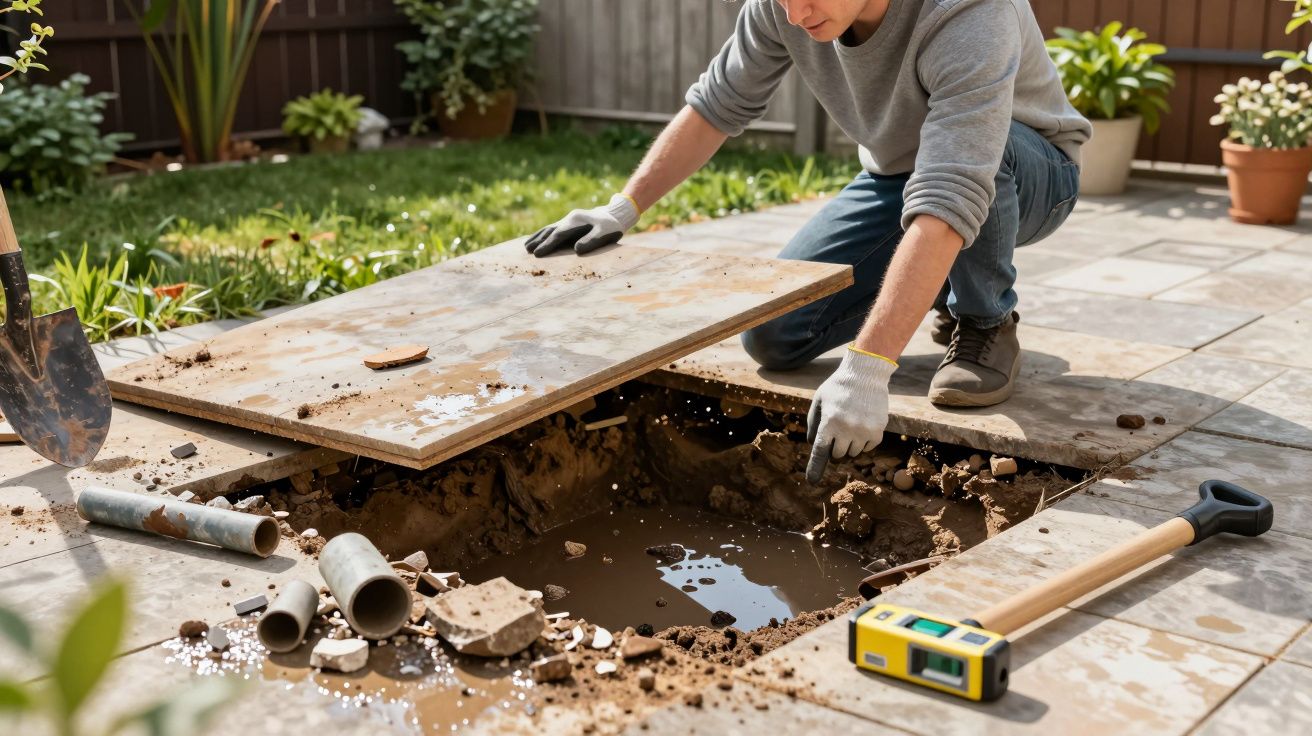
In an established garden, the underground reality matters too. You’ve got roots, old rubble, unknown pipes, and compacted soil. Permanent edges and fully fixed levels make it harder to respond when you discover those surprises.
The signs you’re already boxed in
You don’t need a surveyor to spot it. A few small frustrations tend to show up first, then they stack.
- You avoid moving plants because the bed shape won’t accommodate the new spacing.
- Water always collects in the same dip, but the path can’t be re-graded without lifting half the garden.
- You want a bigger seating area, but every adjacent bed is a raised, walled unit.
- You need a wider route for barrows or accessibility, yet the path is pinned between kerbs.
- The garden feels “busy” because there are too many little rooms, each with a hard outline.
The annoying part is that these are not planting problems. They’re layout problems wearing a plant costume.
What hard boundaries really cost (and it’s not just money)
Permanent edges add cost twice: once to install, then again when you inevitably want to change something. But the bigger cost is lost adaptability.
Hard, tight geometry assumes the garden will behave like a floor plan. Plants don’t. Shrubs swell, grasses seed, trees cast shade, and your “perfect” border depth often turns out to be either stingy or excessive.
There’s also a maintenance tax. Crisp edges demand crisp upkeep: sweeping joints, pulling weeds out of cracks, re-pointing, re-levelling. Over time, you’re maintaining the lines as much as the garden.
A more flexible approach: build for revision, not just for reveal
Think like you’re making a kitchen you can reconfigure, not a showroom. You still want structure-just structure that can move.
Three layout moves that keep your options open
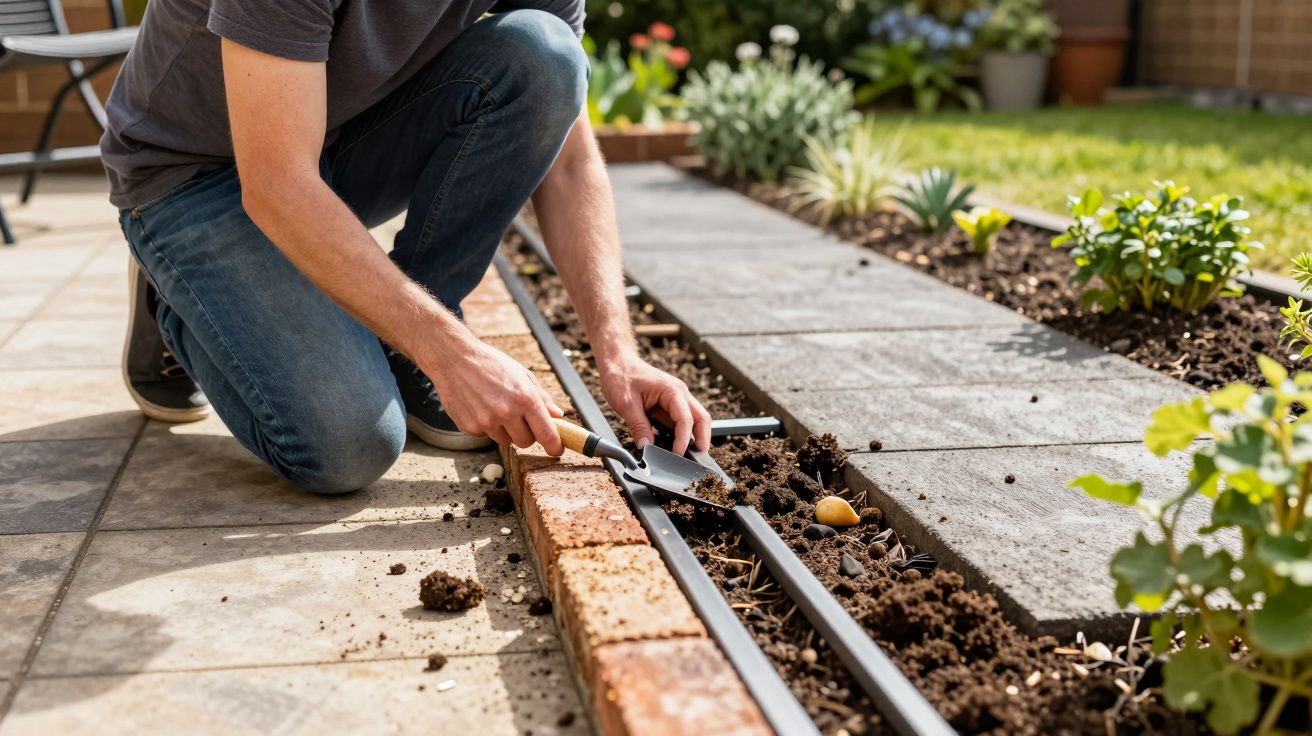
- Use “soft” edges in secondary areas. Steel edging pinned into the ground, a shallow trench edge, or a simple mow line can look sharp without being irreversible.
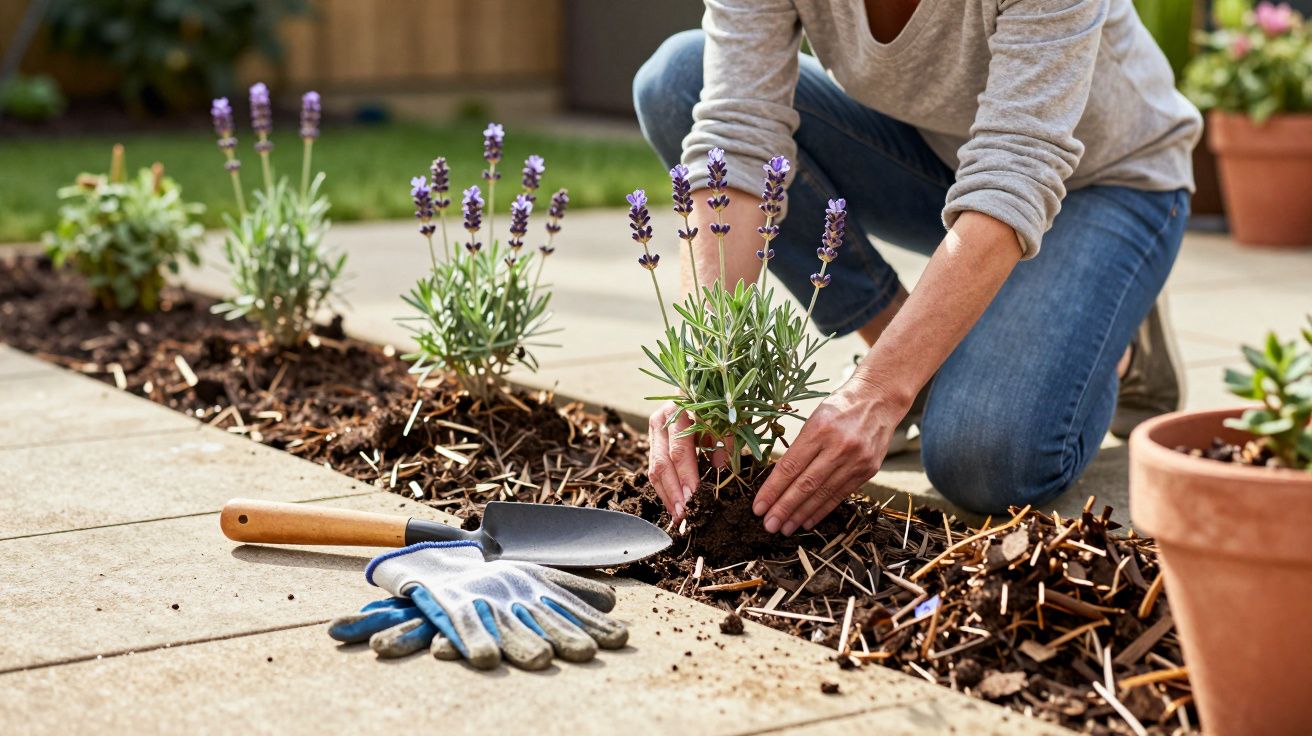
- Limit permanent paving to true need-to-have routes. Build the main path properly; keep secondary routes as gravel, bark, or stepping stones you can shift.
- Design in expand-and-shrink zones. Leave a border that can steal 30–60cm for a future path widening, compost bay, or bike storage without wrecking everything else.
If you’re unsure, make it easy to change. Certainty comes after a couple of seasons, not after a weekend of hard landscaping.
Materials that behave differently when you change your mind
| Element | More flexible choice | Why it helps later |
|---|---|---|
| Bed edging | Pinned steel or trench edge | Can be lifted and redrawn |
| Paths | Gravel on a solid sub-base | Re-routed without breaking slabs |
| Raised areas | Timber sleepers (non-mortared) | Can be re-stacked or removed |
This doesn’t mean “cheap and temporary”. It means reversible where reversibility matters.
If you already have a fixed layout: a low-drama way to regain freedom
You don’t need to rip everything out. Start by identifying one place where change would deliver real comfort-often a route, a seating area, or a border that’s too narrow to thrive.
- Pick one edge to “soften” first, ideally a secondary bed line that doesn’t affect levels.
- Widen one bed rather than reshaping five. Bigger planting pockets usually look calmer and are easier to manage.
- Where you have mortared paving, consider lifting only the outer run and replacing it with gravel or planting to create a movable margin.
- If drainage is the driver, fix the fall and water management first. Layout changes are easier once water stops fighting you.
A garden can look intentional without being locked. The most liveable gardens aren’t the ones with the hardest lines-they’re the ones that can evolve without a rebuild.
Small questions to ask before you commit to a “finished” look
Run these before you set anything in concrete, literally or figuratively:
- Will I want this bed deeper when the plants mature?
- Can I widen this route later without redoing the whole surface?
- Where will water go in winter, not just in July?
- If I change how I use the garden, what would I move first-and can I?
If your honest answers involve breakers and skip hire, that’s your warning light.
FAQ:
- Is hard landscaping always a bad idea? No. It’s essential for main routes, seating stability, and level changes. The problem is making every line permanent before you know how the garden will be used.
- What’s a good “minimum permanent” rule of thumb? Permanently build the path you must walk in all weathers (door to shed, bins, washing line). Keep everything else as adaptable as you can.
- Can a flexible layout still look crisp? Yes. Steel edging, clean gravel lines, and well-shaped planting can look as sharp as brick-without the demolition cost later.




Comments (0)
No comments yet. Be the first to comment!
Leave a Comment