The day you change fences, you think you’re just moving a line. A few metres here, a new gate there, and suddenly your property layout feels “tidier” - more private, more controlled, more yours. Then the knock comes from next door, or the postie starts trying the wrong entrance, and you realise: this isn’t only about boundaries. It’s about how people, water, light and even stress move through your home.
Most of us only notice fence placement when it goes wrong. A gate that funnels everyone past the kitchen window. A panel that blocks the one patch of afternoon sun. A corner that becomes a permanent puddle. You don’t need a huge plot for it to matter; small changes can quietly rewrite how your garden works.
The invisible job fences do (before they “look nice”)
A fence isn’t just a visual stop sign. It’s a windbreak, a privacy filter, a traffic system, and-depending on height and gaps-a way of telling rain and leaves where to settle. In other words, you’re not only boxing in space; you’re shaping behaviour.
That’s why the “obvious” placement can be the least practical one. Straight along the boundary line might be correct on paper, but if it pinches the path to the bins, shades the veg bed, or forces you into an awkward gate position, you’ll feel it every day. The garden doesn’t care what the deeds say; it cares how you live.
The placement trap: building for the line, not for the way you move
Here’s the classic scenario. You put the fence exactly where you think it should go, then discover you’ve created a narrow corridor between fence and wall that collects rubbish, goes slimy in winter, and is too tight to wheel anything through without swearing.
The other trap is the “privacy panic”. You want to block a sightline from a neighbour’s upstairs window, so you push the fence as far out as possible and make it tall. Sometimes that works. Often it creates a shaded strip where nothing grows, or a wind eddy that knocks over pots and funnels leaves into one miserable corner.
A calmer way to think about it is this: design the route first, then place the fence to support it. Where do you actually walk? Where do you need a straight run for a mower? Where do you want people to arrive-front door, side gate, back patio-without drifting past bedrooms or muddying the lawn?
The “gate maths” no one does until they hate their garden
Fence placement changes your gate, and your gate changes your whole week. If the entrance is in the wrong place, every normal task becomes a small inconvenience you repeat hundreds of times: wheelie bins, bikes, prams, deliveries, garden waste.
Before you set posts, do a quick reality check. Stand where the gate would be and pretend you’re carrying the awkward stuff.
- Can you bring a bin through without turning it sideways?
- Can you open it one-handed while holding bags?
- Does it swing into a path people actually use, or block the driveway?
- Will you be stepping straight onto a muddy patch in winter?
If you’re already thinking, “We’ll just get used to it,” you probably won’t. You’ll just complain about it forever.
Light, wind, and the microclimate you accidentally create
In the UK, gardens are basically a negotiation with light and damp. A fence that’s a foot higher or a metre closer to the house can be the difference between a patio that dries by lunchtime and one that stays green and slippery until April.
Solid fencing can also create odd wind behaviour. A fully closed run can deflect gusts downwards and around the ends, turning one seating area into a draught tunnel while another corner becomes a leaf trap. Slightly “leaky” fencing-gaps, trellis top, slatted panels-often breaks the wind more gently, rather than whipping it into new problems.
If you’ve ever wondered why one bed thrives and the other sulks, look up. Fence lines control shade patterns more than we admit, especially in smaller plots where everything is close together.
Drainage and runoff: the boring bit that becomes your problem fast
Fences don’t cause rain, but they can absolutely decide where it ends up. If you place a fence tight to a wall or compress a strip of ground during installation, you can create a channel that holds water. Add a bit of clay soil and a winter of foot traffic, and you’ve made a puddle that never quite leaves.
Also: think about where the water goes when it hits hard surfaces. If your property layout includes a patio, shed base, or path running into the fence line, you might be directing runoff into a corner with nowhere to drain. That’s when panels rot at the bottom, posts loosen, and you start paying twice-once for the fence, and again for the fix.
A small preventative step is leaving sensible clearance where you can, and avoiding creating dead-end “gutters” between fence and hard landscaping.
The neighbour factor: why placement can create conflict (even if you’re right)
Most fence disputes aren’t really about millimetres. They’re about feeling surprised, boxed in, overlooked, or blamed for something like drainage or access. And fence placement is the bit everyone notices because it’s physical and permanent.
If you’re changing a line, adding height, or moving a gate, it’s worth a quiet conversation first-especially in terraced and semi-detached areas where gardens function like shared ecosystems. You don’t need permission to do everything, but you do need to live next to people afterwards.
A practical approach is to agree on the “daily life” questions rather than the legal ones:
- Will either of you lose access for maintenance?
- Will water be pushed onto the other side?
- Will a new fence create shade over a seating area or greenhouse?
- Who will maintain which side, and how?
It’s amazing how much smoother things go when you talk about bins and ladders instead of boundaries.
A simple placement check before you dig anything
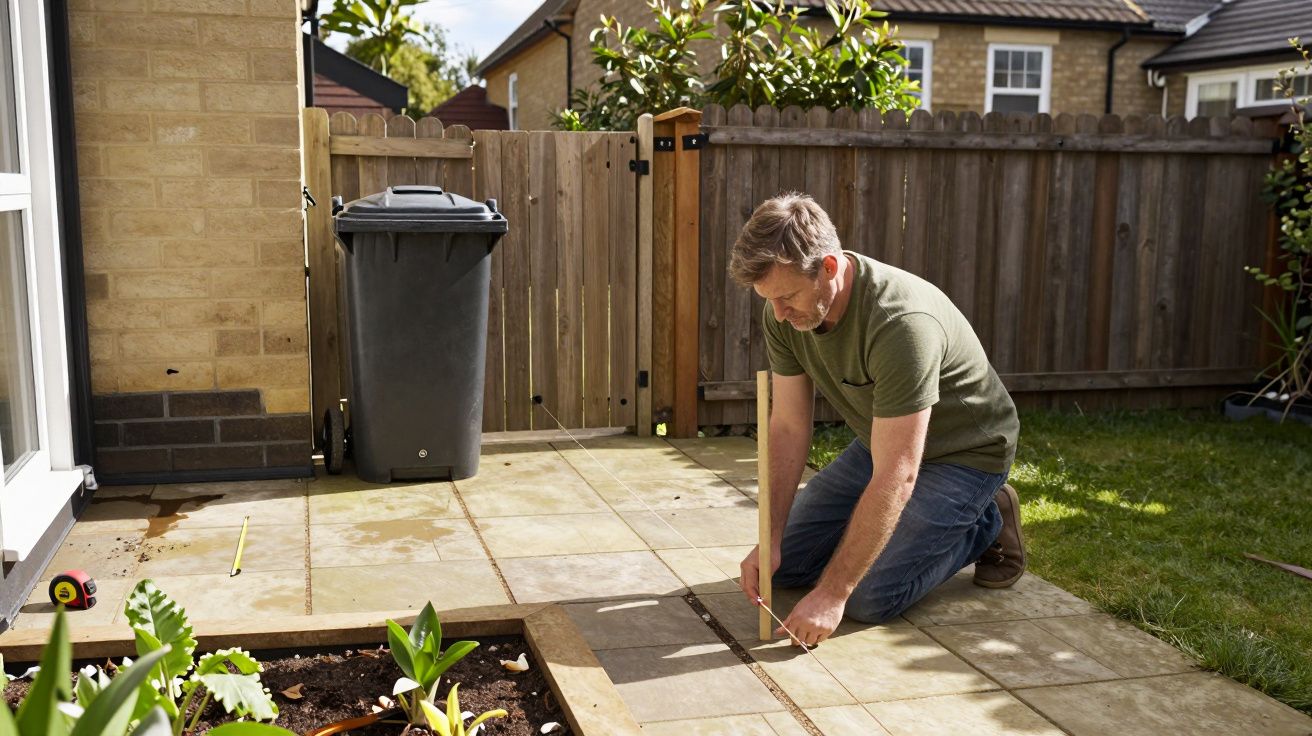
You don’t need a landscape designer to avoid the common mistakes. You just need to test the fence line the way you’d test furniture in a room: with tape, pegs, and a bit of pretending.
- Mark the proposed line with string or spray paint.
- Walk the routes you use most: to the bins, shed, clothesline, side gate.
- Stand in the places you sit and look at sightlines (and shade).
- Picture winter: where will it stay damp, where will moss form, where will mud build up?
- Adjust before the first post goes in-because after that, everything becomes “too much effort” to change.
Do this once, properly, and you’ll save yourself years of small annoyances disguised as “just the garden being the garden”.
The quiet payoff: a fence that makes the whole plot work better
Good fence placement doesn’t shout. It just makes the garden feel easier. You stop taking the long way round. The patio dries quicker. The gate is where it should have been all along. Privacy improves without turning the space into a shaded box.
And that’s the thing people rarely say out loud: the best fences don’t only draw a boundary. They make the rest of your property layout behave-more practical, more comfortable, and far less likely to irritate you every time you step outside.
FAQ:
- How close can I put a fence to my house wall? Close is possible, but avoid creating a narrow, damp channel you can’t clean or maintain. Leave enough clearance for airflow, access, and to stop water and debris collecting along the base.
- Is a taller fence always better for privacy? Not necessarily. Height can increase shade and wind turbulence. Sometimes a slightly lower fence with a trellis top or planting gives privacy with fewer side effects.
- Should the gate go where the old one was? Only if it still matches how you use the space. If your routines have changed-bins moved, bikes added, patio used more-moving the gate can be the single most helpful “fence decision” you make.
- Can fence placement affect drainage? Yes. Installation can compact soil and create runoff channels, and hard surfaces can direct water towards fence lines. Think about where rain will go in winter, not just how it looks in summer.
- Do I need to talk to my neighbour before changing a fence line? If you’re altering the line, height, or access, it’s wise. Many problems are practical (shade, maintenance access, water) and easier to solve before posts are set in concrete.



Comments (0)
No comments yet. Be the first to comment!
Leave a Comment