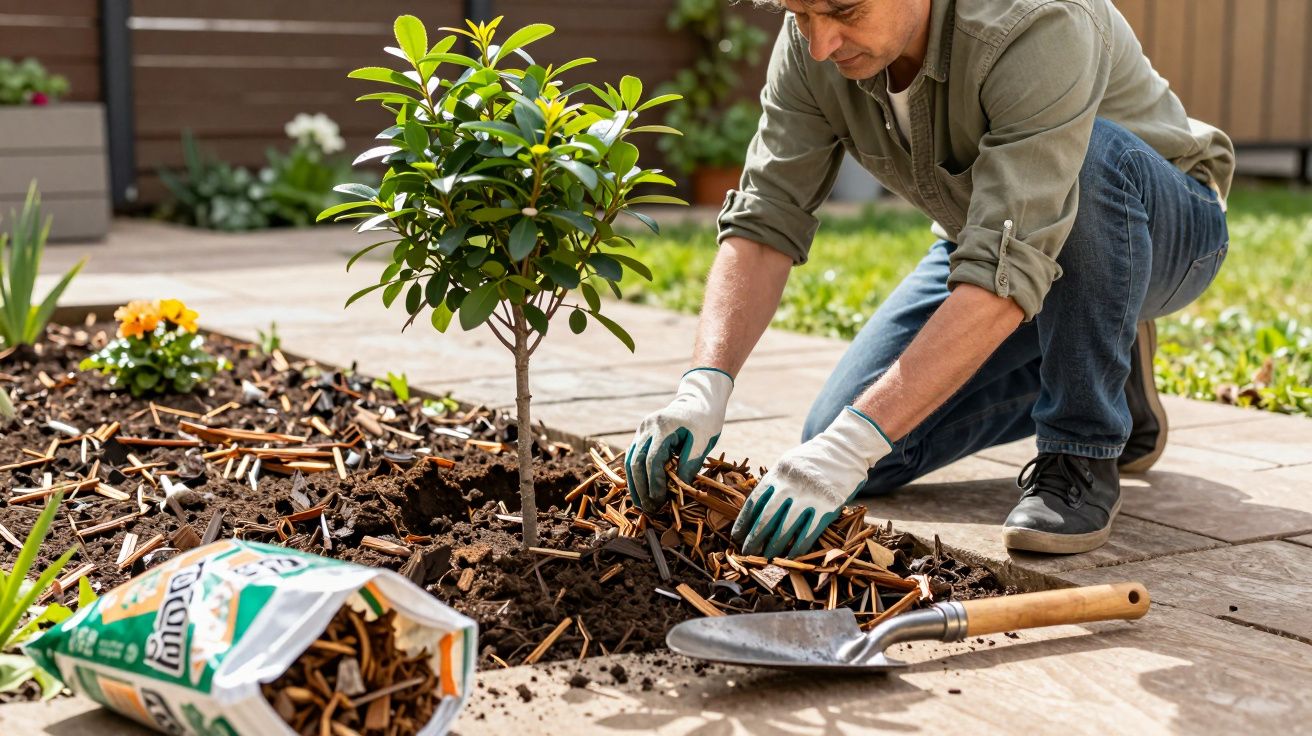
Mulch looks like a simple surface tidy-up, but the way you use it quietly rewrites what your soil becomes over the next few seasons. Spread in the right place and thickness, it builds a garden that holds moisture, feeds life, and stays workable; spread carelessly, it can smother, sour, or even rot what you were trying to protect. The difference isn’t brand or colour. It’s method.
Most people notice mulch on day one: the bed looks finished, weeds seem to pause, watering feels easier. The long-term story is slower and more structural. You’re not just “covering” the ground-you’re deciding how air, water, roots, worms, and fungi will share the same few inches of earth.
The hidden job mulch does: it manages traffic between air and soil
Think of a garden bed as a busy border crossing. Water needs to get in, oxygen needs to get down, carbon needs to cycle, and roots need to breathe. Mulch is the gatekeeper, and it sets the rules.
A thin, refreshed layer behaves like a porous roof: it slows evaporation, cushions rainfall, and keeps the surface from sealing into a crust. A thick, compacted layer behaves more like a lid. That can be useful in short bursts (weed suppression), but it can also tip the balance towards anaerobic, sour conditions-especially in heavy clay or shaded, damp beds.
You don’t need to become a soil scientist to feel the outcome. Beds that are mulched well become springy, dark, and easy to fork. Beds that are mulched “hard” often feel slick on top, dry underneath, and oddly lifeless when you finally dig.
The two big mistakes that change a garden’s future shape
1) Mulch piled against stems and trunks (the slow rot you don’t notice at first)
It’s tempting to bank mulch around plants like you’re tucking them in. But mulch touching bark holds moisture where many plants don’t want it, inviting rot and pests. Trees and shrubs can decline slowly, then suddenly, and the cause often looks like “mysterious stress” rather than the cosy mound you made months earlier.
Leave a visible collar of bare soil around woody stems. You’re not being neat; you’re keeping the plant’s breathing space open.
2) Too thick, too fast (the “blanket” that stops the bed from cycling)
More mulch isn’t automatically better. When you lay it on in a heavy mat-especially fine material like shredded bark or fresh grass clippings-you can reduce airflow and slow the normal breakdown that feeds the soil. In the short term it suppresses weeds. In the longer term it can create a layer that sheds water and breaks down unevenly, leaving you with a bed that feels sealed.
A good rule in most borders is “enough to cover, not enough to compress”. Top up little and often rather than doing one huge dump and forgetting it.
The basic formula: choose the role, then choose the mulch
Before you pick a bag, decide what you’re trying to change over time. Mulch can act like food, like armour, or like a moisture regulator. One material can do more than one job, but it helps to be honest about the main aim.
A quick guide to common mulches (and what they do to structure)
| Mulch type | Best long-term effect | Watch-outs |
|---|---|---|
| Compost / well-rotted manure | Builds crumb structure; feeds soil life | Keep off stems; can bring weed seeds if poor quality |
| Woodchip / bark | Protects surface; supports fungal networks | Can dry out the top layer; avoid mixing in deeply |
| Leaf mould | Improves moisture-holding; gentle feeding | Slow to make; can blow around when dry |
The “structure” part is key. Compost and leaf mould tend to improve aggregation-the clumping that makes soil both drain and hold water. Woodier mulches lean more towards surface protection and fungal activity, which can be brilliant under shrubs and trees but less ideal for hungry annuals if you’re relying on mulch alone for fertility.
Put your garden on a 3-step mulch routine (that doesn’t backfire)
Start with what you can actually repeat. Long-term results come from consistency, not one heroic weekend.
- Prepare the surface once, properly. Weed, water if the ground is dry, and loosen only what needs loosening. Mulch on dust-dry soil often turns into a dry cap.
- Lay an even layer, then stop. Aim for a thickness that covers the soil but still looks airy. Fluff it as you spread; don’t stamp it down.
- Maintain the edges. Pull mulch back from stems, crowns, and the base of woody plants. Re-check after heavy rain and wind, because mulch creeps.
If you do only one “professional” thing, do the edge work. Gardens fail at the plant collar long before they fail in the middle of the bed.
A living example: two gardens, same mulch, different futures
Garden A mulches every spring with a modest layer of compost, then lightly tops up with leaf mould in autumn. The soil stays covered, worms stay active, and each year the bed needs less digging. Weeds still appear, but they pull easily because the surface stays friable.
Garden B gets a thick bark mulch dump every year, pushed right up to everything because it looks tidy. The surface looks immaculate for months, but rainfall starts to bead and run off. Underneath, the soil dries in pockets, and plants begin to look thirsty even when the bed “looks” mulched. A couple of shrubs develop dieback near the base, and the gardener blames weather, feeding, then varieties-until someone pulls the mulch back and finds the bark sitting wet against the stems.
Same material. Different method. Different structure.
The quiet principle that keeps mulch working year after year
Mulch works best when it behaves like a habit the garden can live with, not an event it has to survive. Keep it visible, breathable, and away from the plant’s neck. Refresh before the layer collapses into a mat, and match the mulch to the planting style-woodier for woody plantings, more compost-led for veg and hungry borders.
“The headline is weed suppression. The real story is what you’re training the soil to become.”
- Keep mulch off bark and crowns.
- Build layers over time rather than dumping one deep layer.
- Use compost-like mulches when you want soil to change shape and fertility, not just appearance.
- Check after heavy rain: if water is running off, your mulch is too dense or too thick.
FAQ:
- How often should I mulch to improve soil structure? Usually once or twice a year in lighter layers works better than one very thick application. Top up when you can see bare patches or when last season’s mulch has collapsed into a thin film.
- Can I mulch straight onto clay soil? Yes, and it can help a lot, but keep the layer breathable and avoid compacting it. Compost and leaf mould are often more helpful on clay than very fine, dense bark.
- Is it OK to dig mulch into the soil? Generally, no for woody mulches-leave them on top so they break down naturally. Compost can be lightly incorporated if you’re reworking a bed, but regular top-dressing is usually enough.
- Why does my mulched bed still look dry underneath? A thick or compacted layer can shed water, especially shredded bark. Rake it lightly to open it up, water slowly, and reduce thickness next time.
- Does mulch attract slugs? It can provide shelter, particularly in damp gardens. Keep mulch back from vulnerable seedlings, avoid piling it against plants, and use targeted controls rather than removing mulch altogether.





Comments (0)
No comments yet. Be the first to comment!
Leave a Comment