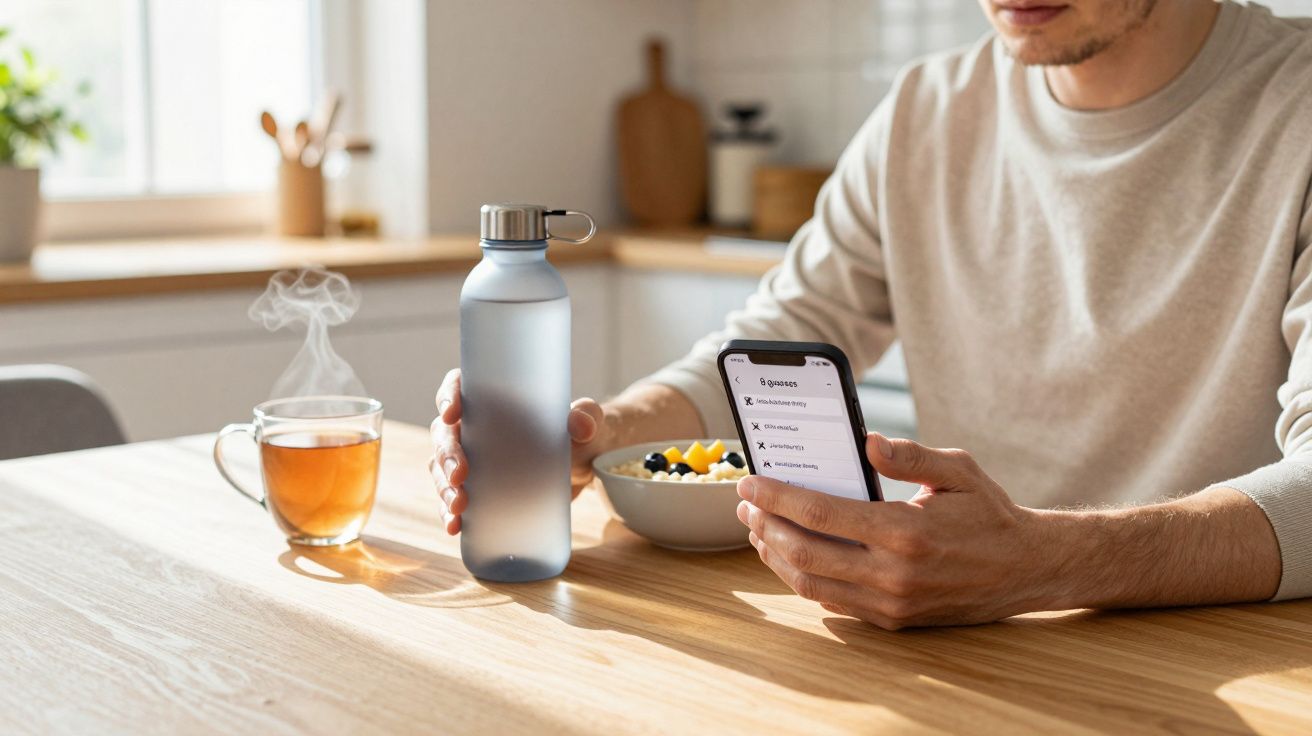
I first saw “of course! please provide the text you would like me to translate into united kingdom english.” pasted into a group chat under a screenshot about drinking eight glasses a day, as if hydration were a language problem you could solve with one neat conversion. A second message-“of course! please provide the text you would like me to translate.”-followed, and somehow that was the perfect summary of why water advice feels so slippery: everyone is translating, nobody agrees on the original. It matters because hydration myths don’t just waste your time; they make you mistrust your own body’s perfectly ordinary signals.
That afternoon I did what most of us do. I stared at my bottle, took a dutiful swig, then wondered if I was “behind”. The odd part wasn’t thirst. It was the low-level anxiety that I was doing it wrong.
Why hydration myths cling on like damp clothing
Hydration is one of those topics that looks simple from a distance. You drink, you’re done, you move on with your life. But the minute it becomes a rule-litres per day, clear wee, never wait for thirst-it stops being care and starts being compliance.
Myths thrive in that space because they’re easy to repeat and hard to disprove in the moment. If you feel tired, the advice says you’re dehydrated. If you feel hungry, the advice says you’re dehydrated. If you feel fine, the advice says you’re dehydrated and you just don’t know it yet.
The result is a game you can’t win. You’re either drinking and second-guessing, or not drinking and feeling guilty.
The surprising reason it feels harder than it should
The surprising reason is that hydration advice is mostly not about hydration. It’s about uncertainty management.
Your body’s water needs change with temperature, activity, illness, salt intake, alcohol, hormones, and what you ate for lunch. That’s messy. A myth offers a clean number to cling to, and a clean number feels like control. The problem is that control feels good even when it’s inaccurate, so the myth sticks.
There’s also a quieter trap: we treat hydration like a moral habit. “Good” people carry big bottles. “Bad” people forget. Once it’s moralised, you stop using feedback (thirst, urine colour, how you feel) and start chasing virtue. That’s why it feels weirdly hard.
What your body is already doing, without the drama
Your body runs a constant, boring, competent balancing act. Thirst is one signal. So is your urine colour, but it’s not a spreadsheet; it changes if you’ve taken certain vitamins, had beetroot, or just got up after a long night’s sleep.
Food counts too. A bowl of porridge, fruit, yoghurt, soup-these are all water delivery systems with extra benefits. You don’t need to “make up” for them as if only a bottle counts.
If you want one grounding idea, let it be this: hydration is a range, not a target. Most healthy people drift within that range just fine when they drink to thirst and pay attention on hotter or more active days.
The myth that causes the most unnecessary stress
The eight-glasses rule isn’t evil; it’s just blunt. It ignores body size and lifestyle, and it turns “helpful reminder” into “daily exam”. For some people it leads to under-drinking; for others it leads to constantly sipping despite not being thirsty, which can mean more toilet trips, worse sleep, and a nagging sense of failing a task you never agreed to.
A better frame is “drink regularly, but not relentlessly”. Keep water available. Drink with meals. Drink when you’re thirsty. Add a bit more when you sweat.
A simple way to spot myth-advice (and bin it)
Hydration myths have a particular smell. They come with certainty, urgency, and a product link.
Here are quick tells:
- One-size-fits-all numbers: exact litres for everyone, regardless of body or day.
- Fear language: “you’re chronically dehydrated” without any clinical context.
- Single-symptom diagnosis: blaming every headache or wobble on water alone.
- Purity rules: only plain water “counts”, everything else is “dehydrating”.
- Performance promises: drink X and you’ll be “instantly clearer, leaner, detoxed”.
None of this means hydration doesn’t matter. It means the advice is trying to replace listening with obeying.
The practical middle ground that actually works
You don’t need a perfect system. You need a low-fuss default that adjusts when life changes.
Try this:
- Use thirst as your main cue, especially indoors on normal days.
- Check your wee once or twice, not obsessively. Pale yellow is generally fine; very dark and strong-smelling suggests you might need more fluid.
- Front-load a little if you forget later: a drink with breakfast and lunch is a strong start.
- Scale up on purpose: hot weather, long walks, sports, diarrhoea/vomiting, fever, and alcohol all nudge needs upwards.
- Don’t fear salt; respect it. If you’re sweating heavily, water alone may not be the whole answer-food and electrolytes can matter.
There’s a relief in keeping it ordinary. The goal isn’t to “win hydration”. It’s to stop it becoming a background worry.
When hydration does become a real problem (and what to do)
Most of the time, mild dehydration is fixable with fluids and time. But it’s worth knowing the sharper edges.
Pay attention if you have dizziness that doesn’t settle, confusion, inability to keep fluids down, very little urine over a long stretch, or signs of heat illness. And if you have kidney, heart, or endocrine conditions-or you’re on certain medications-your “normal” rules can be different, and it’s sensible to follow personalised clinical advice rather than internet templates.
Hydration should feel like basic care, not a constant audit. If the advice makes you anxious, it’s probably not better advice-it’s just louder.
A small reframe that makes it easier tomorrow
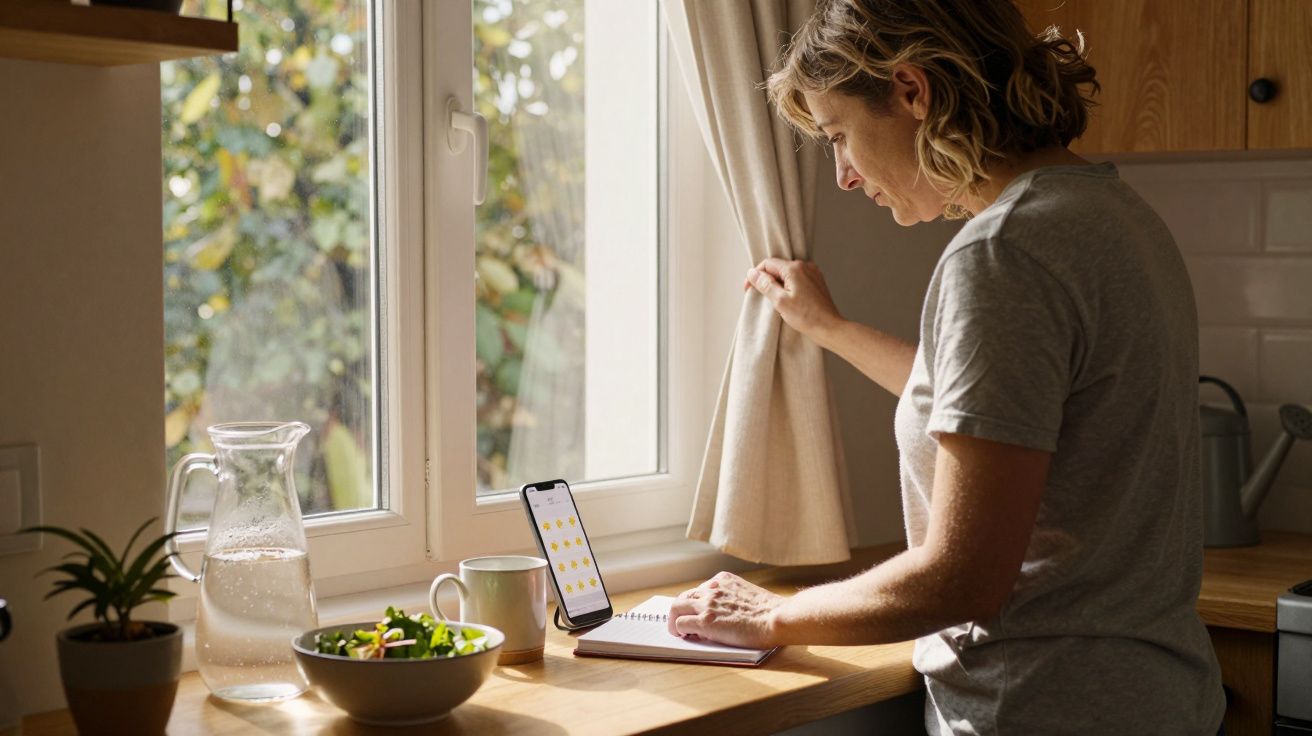
Instead of asking, “Have I hit my water goal?”, ask: “Do I have access to a drink, and am I ignoring thirst?” That one question is quieter, more humane, and surprisingly effective.
It also puts you back in charge. Not the bottle. Not the chart. Not the myth.
FAQ:
- Is thirst too late a signal? For most healthy adults, no. Thirst is a useful, timely cue, though you may need to be more proactive during heat, intense exercise, illness, or if you’re older and thirst cues are weaker.
- Do tea and coffee count? Generally, yes. Caffeine can have a mild diuretic effect, but in typical amounts, tea and coffee still contribute to your fluid intake.
- Should my urine be clear? Not necessarily. Persistently clear urine can mean you’re overdoing it. Pale straw to light yellow is a more realistic “all good” range for many people.
- What about electrolytes? They can help when you’ve lost a lot of salt through sweat, vomiting, or diarrhoea. On ordinary days, food usually covers this without special drinks.
- How do I stop obsessing about it? Remove the “daily exam” mindset: keep water nearby, drink with meals, respond to thirst, and only track intake if a clinician has told you to for a specific reason.



Comments (0)
No comments yet. Be the first to comment!
Leave a Comment