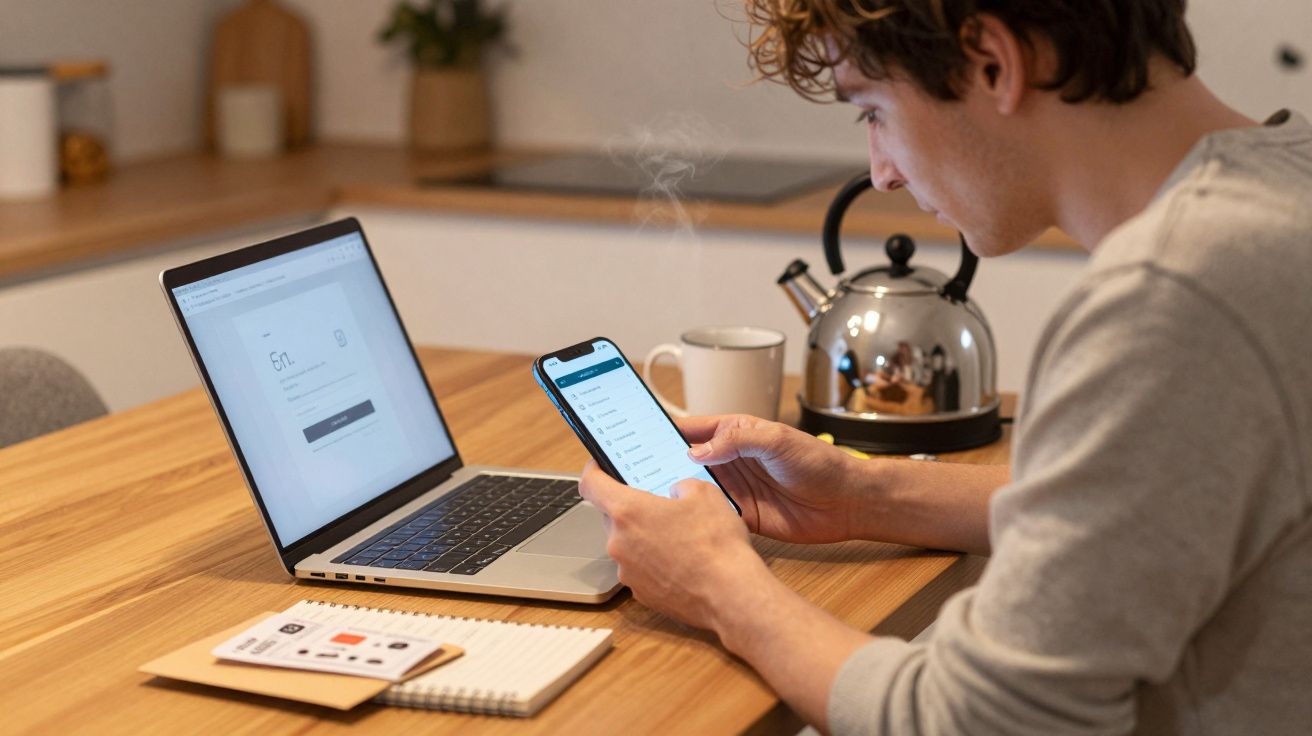
You notice it at the worst possible moment: a login prompt at 10.43pm, the kettle clicking off, your phone face-down so it doesn’t see you panic. Then comes that oddly familiar line - “it appears you haven't provided any text to translate. please provide the text you'd like me to translate into united kingdom english.” - and, right after, the even more polite nudge: “certainly! please provide the text you'd like me to translate.” Both are small reminders of a bigger shift: we’re moving from remembering passwords to managing access, and it’s changing how we behave online without much fanfare.
Outside, breaches and scam texts keep multiplying. Inside, people are quietly rewriting their habits: fewer heroic memory feats, more boring systems that don’t rely on the brain at all. It isn’t glamorous. That’s why it’s working.
The quiet trend: passwords are becoming “background noise”
For years, password advice sounded like a lecture: longer, stranger, never reused, never written down, changed often. In real life, that turned into sticky notes, predictable patterns, and the same “base” password with a different number at the end. Humans aren’t bad; the rules were.
Now the trend is simpler. People are letting passwords fade into the background while they put their trust in three things that are easier to repeat: password managers, passkeys, and multi-factor authentication (MFA). Not as a grand security manifesto - more like switching to direct debit because you got tired of late fees.
This shift matters because most account takeovers aren’t movie-hacker moments. They’re recycled credentials, guessed passwords, or convincing prompts that catch you when you’re tired.
Habit 1: One good manager beats twenty “pretty good” passwords
The single biggest behavioural change is that more people are using a password manager - not as an enthusiast’s tool, but as a default. It creates long, unique passwords you never see, never type, never reuse. Your job becomes protecting one strong master password (and ideally a second factor), rather than juggling dozens of weak ones.
A surprising number of people start for a boring reason: they got a new phone or laptop and couldn’t remember what they used “back then”. The manager is less about being secure and more about being able to log in without losing ten minutes and your temper.
The two-minute setup that changes everything
If you want the habit without the drama, the basic setup is:
- Pick a reputable password manager and install it on phone and computer.
- Create a long master password you can actually remember (a phrase beats a clever trick).
- Turn on MFA for the manager itself.
- Start with your email account first (because email resets everything else).
- Then do banking, shopping, and only then the “less important” accounts.
Once it’s in place, the manager doesn’t feel like a security tool. It feels like your keys living on a hook by the door.
Habit 2: Passkeys are slipping in through the side door
Passkeys sound like a tech headline, but their adoption is happening quietly because big platforms are baking them in. Instead of typing a password, you approve a sign-in with Face ID, fingerprint, or device PIN. Under the bonnet, it’s cryptography and device-bound credentials; in your hand, it’s one tap.
The key detail is that passkeys are designed to be phishing-resistant. A scam site can ask for a password and trick you into typing it. It can’t easily steal a passkey in the same way, because there isn’t a reusable secret travelling from your brain to their form field.
This isn’t “passwords are dead”. It’s “passwords are no longer the only door”.
Habit 3: People are choosing friction-just in the right place
There’s a strange reversal happening. For years, everyone tried to remove friction: fewer steps, faster checkout, one-click everything. Now people are adding a small amount of friction on purpose - MFA, login alerts, authenticator apps - because it reduces the big friction later: locked accounts, drained balances, identity mess.
The most common upgrade is moving from SMS codes to an authenticator app. Not because people love apps, but because they’ve learnt (often the hard way) that phone numbers can be hijacked and texts can be intercepted.
A quick MFA ladder (from “fine” to “strong”)
- Better than nothing: SMS codes
- Stronger: authenticator app (time-based codes)
- Stronger still: push approvals with number matching
- Best for many people: security key (hardware) for key accounts
You don’t need perfection everywhere. You need strength where recovery would be painful: email, banking, and anything tied to your identity.
Habit 4: “Change your password often” is quietly being retired
A lot of organisations are stepping away from forced, frequent password changes. It turns out that making people rotate passwords on a timer encourages predictable patterns and reuse. The modern approach is closer to: choose a strong password once, keep it unique, and change it if there’s evidence of compromise.
That’s a subtle cultural shift: from obedience to signal. Don’t churn for the sake of churn. Respond to real risk.
If you’re using a manager, this becomes even more straightforward. A breach alert comes in, you update the password in seconds, and you don’t have to invent a new variation of the same old thing.
The part nobody admits: recovery is the real battlefield
Most people don’t lose accounts because their password was “too short”. They lose accounts because recovery routes are weak: an old email address, a phone number you no longer control, security questions whose answers are on social media, or no backup codes saved anywhere.
This is where calm systems beat cleverness. Set recovery like you’d set a spare house key: not on the doormat, but somewhere you can actually reach when you need it.
A simple monthly check is enough:
- Can you still access your recovery email?
- Is your phone number current?
- Do you have backup codes saved (and can you find them)?
- Are login alerts turned on for key accounts?
What this trend says about us, right now
We’re finally accepting that memory is not a security strategy. The quiet trend isn’t that people are “getting better at passwords”. It’s that we’re building routines where passwords matter less day-to-day, and where one mistake doesn’t collapse the whole tower.
It’s the same logic that keeps a household afloat when costs jump: ring-fence the important stuff, make it boring to mess up, and decide in advance what happens when something goes wrong. Not dramatic. Just repeatable.
In the end, the most modern password habit looks oddly old-fashioned: do the sensible setup in peacetime, so your future panic only lasts an evening, not a season.
FAQ:
- Do I still need passwords if I use passkeys? Often yes, at least for now. Many services support passkeys alongside passwords, and you may still need a password for recovery or older devices.
- Is a password manager safe, or is it “all eggs in one basket”? It can be very safe when protected with a strong master password and MFA. The risk of reused passwords across sites is usually far worse.
- Should I change all my passwords today? Not necessarily. Prioritise email first, then banking and any account that can be used to reset others. Change passwords when there’s a breach or if you’ve reused them.
- Is SMS MFA worth using? Yes if it’s the only option available. But for key accounts, an authenticator app or security key is generally stronger.
- What’s the single best quick win? Turn on MFA for your email account and store backup codes somewhere safe. Email is the master key for most people’s digital lives.





Comments (0)
No comments yet. Be the first to comment!
Leave a Comment