
You’re halfway through a Monday when a little pop-up appears - of course! please provide the text you need translated. - and you realise you’ve spent ten minutes hunting for a file that should’ve taken ten seconds. A moment later, of course! please provide the text you would like translated. shows up in the same thread, and suddenly your “simple” work-from-home day has acquired an extra layer of admin you didn’t plan for. It’s relevant because the real cost of remote work isn’t your coffee or your Wi‑Fi; it’s the tiny bits of friction that quietly eat your time and money.
The kettle clicks off. Your laptop fans up. Somewhere, a parcel arrives and sits on the mat because you’re on a call. You move from Slack to email to a shared drive with the resigned patience of someone who’s learned to live with mild chaos.
And that’s where the overlooked rule comes in - the one most people never write down, but the organised ones quietly live by.
The overlooked rule: keep “work” in one place, and make it physically obvious
Work from home fails in small ways before it fails in big ones. A charger that’s never where it should be. Notes written on three different pads. A headset that migrates to the sofa, then disappears under a cushion like it’s trying to retire early.
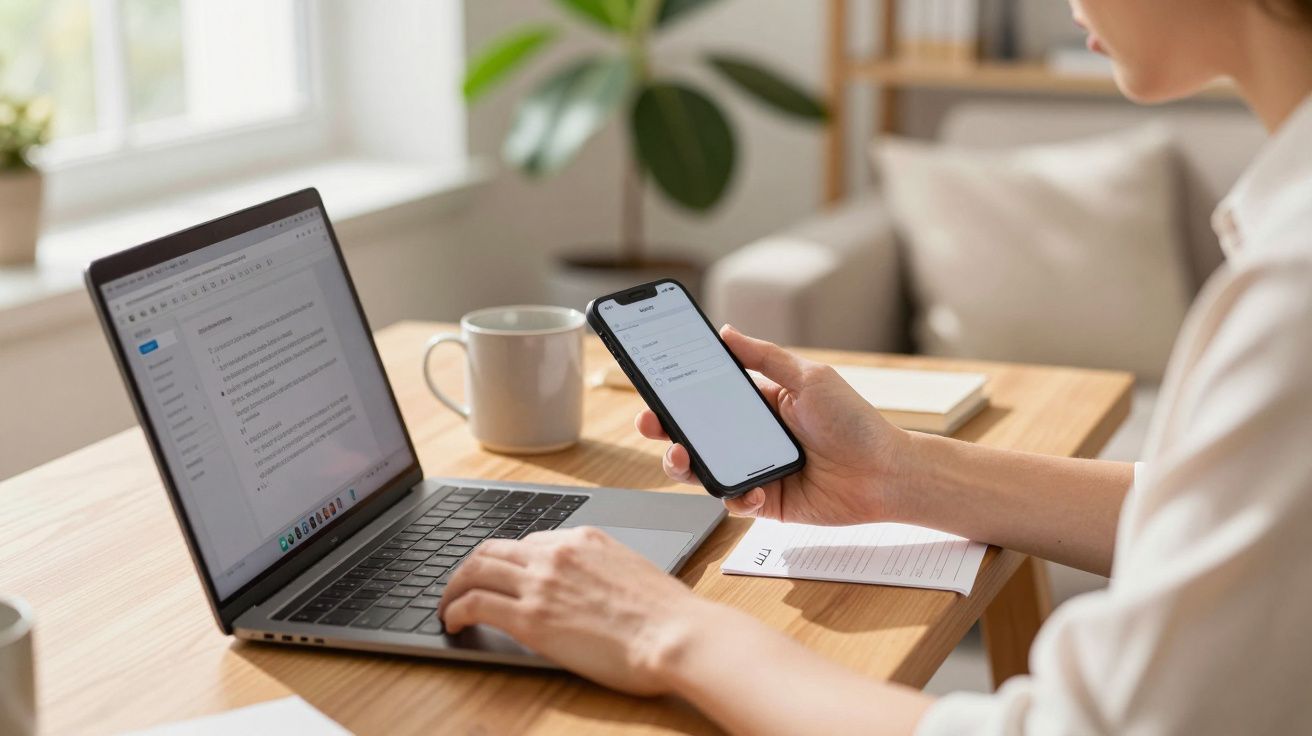
The rule is unglamorous: one workstation, one set of tools, one default set-up. Not “I can work anywhere”. Not “I’ll just perch here today”. A single place that is always ready for work, even if it’s only one end of the kitchen table.
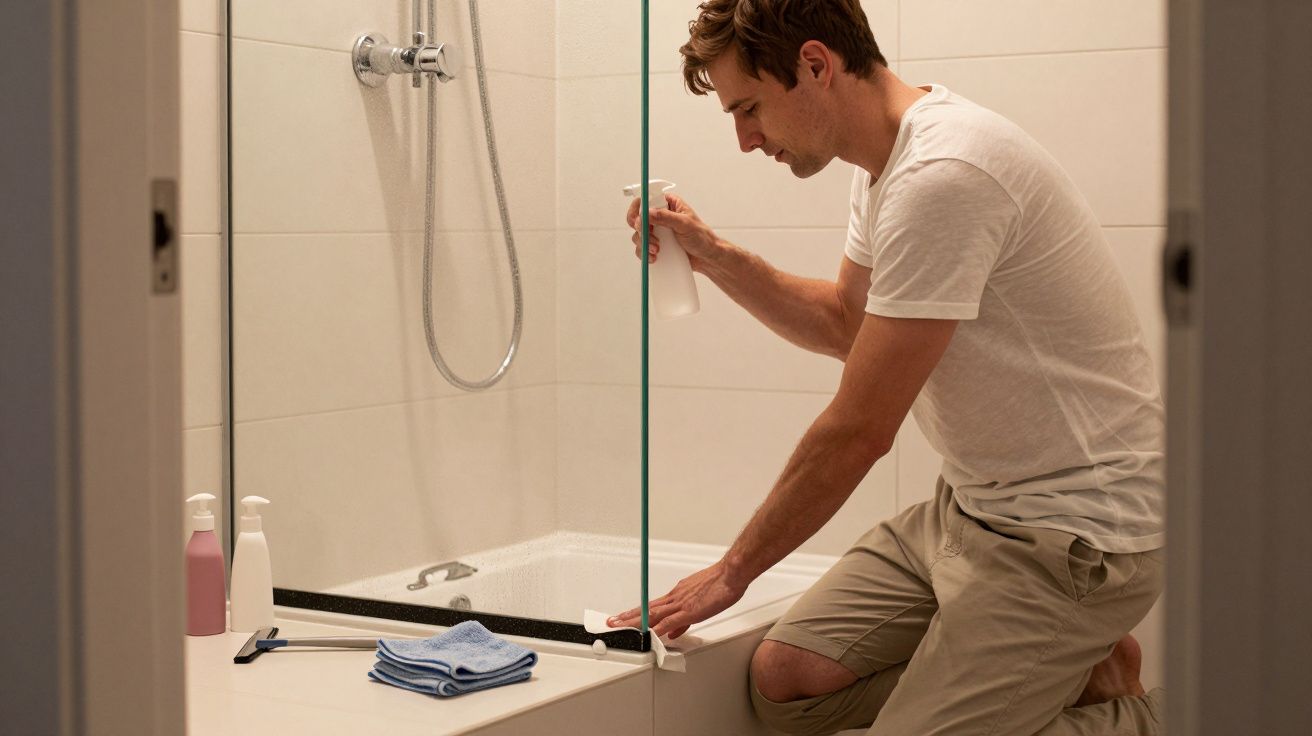
Think of it like leaving a moisture trap by the shower: the point isn’t the object, it’s the placement. The less you have to decide each morning, the less time you bleed in little drips.
Take Dan, who works in customer support and thought he was doing WFH “properly” because he could answer tickets from anywhere. He’d do mornings at the dining table, afternoons on the sofa, and the odd evening call at the coffee table with his laptop balanced like a regrettable life choice. By Friday, he was buying replacement cables, ordering another mouse because the first one “must be somewhere”, and starting every call with that tight smile people do when they’re slightly flustered.
He didn’t need a better chair to start with. He needed one place where the chair, charger, notebook, headset, and pen simply lived - no negotiations.
Why this saves money (even if it sounds like a time-management cliché)
When your tools don’t have a home, you replace them. You double-buy. You “just grab one” while you’re out, because it’s easier than searching. Remote work turns small purchases into a steady leak: USB‑C cables, HDMI adapters, printer ink you barely use, a second headset because the first one developed legs.
There’s also the expensive version of the same problem: mistakes. Late starts because you can’t find a login token. Missed deliveries because you’re working in a room where you can’t hear the door. Buying lunch because you started the day scattered and never got ahead of yourself.
A fixed workstation doesn’t just reduce clutter; it reduces micro-decisions. And micro-decisions are where days get quietly taxed.
What “one place” actually means in a normal home:
- One plug point (or one extension lead) that stays put.
- One place for your notebook and the pen you actually like.
- One spot where calls happen, so your headset isn’t roaming the house.
- One container (tray, box, drawer) where work bits go at 5.30pm.
No Pinterest required. Just a default that doesn’t move.
The two-minute set-up that makes the rule stick
People try to solve WFH friction with motivation. The better fix is to design the day so you don’t need motivation in the first place.
Here’s the tiny system that tends to hold:
- Pick a “boring” surface you can access every weekday (desk, table corner, folding table).
- Create a work tray (literally a tray or shallow box): charger, spare cable, sticky notes, one pen, lip balm if you’re that person.
- Do the 6pm reset: close laptop, plug it in, clear cups, put everything back in the tray.
The reset is the secret. Not because it’s virtuous, but because morning-you is always more gullible than evening-you thinks. If you wake up to a ready station, you start working. If you wake up to a scavenger hunt, you start negotiating.
A lot of people fail at this because they make it too ambitious. They decide they’ll be “minimalist” and store everything away, which means they’ll have to fetch everything again. Or they build a perfect set-up, then let it drift because it’s not anchored to a simple daily move.
The rule isn’t “be tidy”. The rule is “make work the easiest option”.
Living with the rule: less faff, fewer purchases, calmer starts
After a week, you notice the difference in strange places. You stop saying “give me a sec” at the start of calls. You stop buying emergency cables. You stop half-working while half-looking for the thing you need to do the work.
It also creates a clean end to the day. When work lives in one place, you can leave it there. When work is everywhere - laptop on the sofa, notes on the counter, charger in the bedroom - it never really ends. That’s not just a mood issue; it turns into longer hours, slower rest, and a creeping sense that you’re always slightly behind.
Interior designers talk about “zones” like it’s a luxury. At home, it’s often just a small boundary that saves you from yourself.
| Point clé | Détail | Intérêt pour le lecteur |
|---|---|---|
| Un seul poste par défaut | Même un coin de table, mais toujours prêt | Moins de temps perdu à s’installer |
| Outils qui ne migrent pas | Chargeur, casque, carnet, stylo au même endroit | Moins d’achats en double, moins d’imprévus |
| Reset de fin de journée | 2 minutes pour remettre en place | Démarrages plus calmes, vraie coupure le soir |
FAQ:
- Do I need a dedicated home office for this to work? No. A consistent corner of a table is enough, as long as it’s the same place and the basics live there.
- What if I genuinely have to move around (kids, housemates, small flat)? Use a portable “work tray” or box that becomes your workstation wherever you set it down. The rule is one set of tools, not one room.
- How does this save money in practice? You stop replacing lost cables and accessories, avoid rush purchases, and reduce mistakes that trigger paid fixes (delivery reattempts, last-minute lunch buys, even printing you didn’t need).
- What’s the minimum kit that should stay in the workstation? Power, audio for calls, something to write on, something to write with, and any authentication device you regularly need (key, token, passcard).




Comments (0)
No comments yet. Be the first to comment!
Leave a Comment