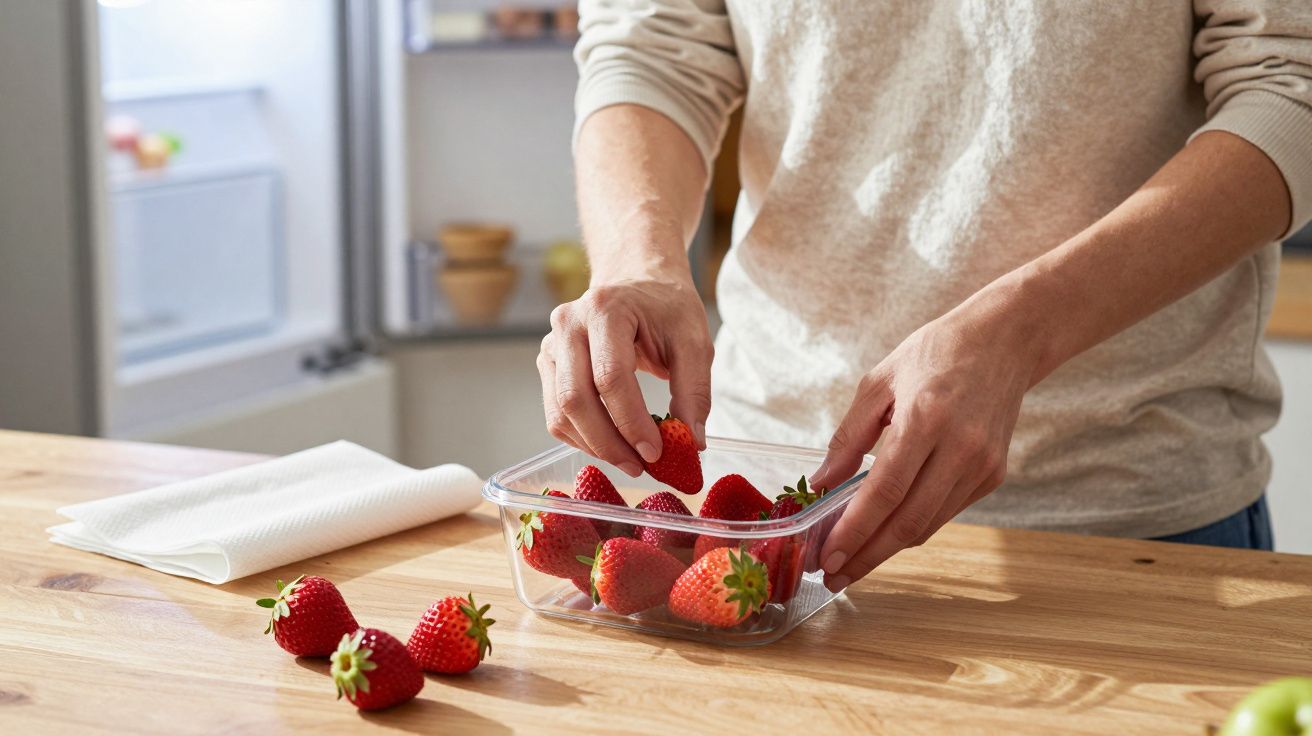
You buy strawberries for a good reason: quick breakfasts, a nice bowl after dinner, the sort of snack that feels like a treat without becoming a whole project. Then you open the punnet two days later and it’s chaos-one soft berry, a damp patch, and that odd moment where your brain hears, “of course! please provide the text you would like me to translate.” The overlooked rule that stops the waste isn’t fancy, but it changes everything: don’t wash them until you’re about to eat them.
It sounds picky. It is, in the best way. Strawberries are delicate, and water is the silent accelerant that turns “just ripe” into “why did I bother”.
The rule most people break without noticing
Strawberries don’t rot because you looked at them wrong; they rot because moisture sits where it shouldn’t. When you rinse them and put them back in the fridge, the surface stays damp, condensation gathers, and mould gets a head start. A sealed plastic punnet then traps humidity like a tiny greenhouse.
The result is familiar. You meant to be organised. You end up picking through the pack, throwing away the worst offenders, and eating the rest quickly with a faint sense of defeat.
Here’s the rule in plain English: keep strawberries dry in storage, and only wash right before eating. Everything else-paper towel, containers, vinegar baths-works best when it supports that one idea.
The five-minute setup that saves the whole punnet
Do this once when you get home. It’s not a life overhaul; it’s a small reset that buys you days.
- Don’t wash them. Not yet.
- Open the punnet and sort quickly. Remove any berry that’s already soft, leaking, or fuzzy. One bad strawberry really can spoil the rest.
- Line a container with kitchen roll. A shallow box with a lid works well; you want airflow, not a swamp.
- Store in a single layer if you can. If you must stack, keep it loose and add another sheet of kitchen roll between layers.
- Leave the lid slightly ajar (or use a container with vents). You’re aiming for dry and cool, not sealed and sweaty.
That’s it. The kitchen roll is not a gimmick. It’s a humidity buffer, quietly absorbing the damp that would otherwise settle on the fruit.
Why “just rinse them now” backfires
Strawberries have a textured skin with tiny seeds and folds that hold water. Even after a shake, droplets cling on and migrate to the bottom of the pack. In the fridge, that moisture turns into a cold, steady film-perfect conditions for mould.
It’s also a timing problem. The berries you wash first will almost always be the last ones you eat. So you end up washing the ones most likely to sit around long enough to go off.
Keeping them dry doesn’t make them immortal, but it slows the slide from glossy to mushy. It also means you stop playing fridge roulette every time you want a handful.
The “wash right before” method that doesn’t bruise them
When you’re actually going to eat them, wash gently and briefly.
- Put the strawberries in a colander.
- Rinse under cold water for 10–15 seconds, moving them with your hand rather than blasting them.
- Tip onto kitchen roll and pat dry.
- Hull them last. Once you remove the green tops, water gets inside and softens the flesh.
If you’re slicing them for yoghurt, shortcake, or a lunchbox, dry them properly first. Wet slices collapse faster and weep into everything around them.
Common traps (and what to do instead)
People mean well. Strawberries just punish good intentions.
Storing them in the original sealed punnet.
Better: open it, line with kitchen roll, and give them some breathing space.Washing the whole batch “to be healthy”.
Better: wash what you’ll eat today, keep the rest dry.Leaving one soft berry in the corner.
Better: remove it immediately, even if you feel wasteful. It’s damage control.Keeping them at the front of the fridge door.
Better: store them on a steady shelf. The door warms up every time it’s opened.
A quick guide to what to do with berries that are turning
There’s a narrow window where strawberries are too soft to snack on but still perfect for cooking. Catch it and you’ll feel like you got away with something.
| Stage | What they’re like | Best use |
|---|---|---|
| Just ripe | Firm, fragrant, dry | Eat fresh, slice for cereal |
| Softening | Tender, slightly dull | Macerate with sugar, blend into smoothies |
| Very soft | Weeping, squishy but not mouldy | Cook into compote, jam, or sauce |
If you spot mould, don’t “save the rest” by picking around it in the same damp cluster. Mould spores spread easily in soft fruit. Bin the mouldy berries and inspect the ones that touched them.
The point isn’t perfection. It’s fewer sad punnets.
This rule works because it’s realistic. You don’t need special gadgets, or a complicated soak, or a lecture about enzymes. You just need to stop introducing water to a fruit that already struggles to stay crisp.
Dry storage gives you time: time to eat them slowly, time to use them properly, time to stop throwing away money because your fridge turned into a strawberry sauna.
FAQ:
- Should I do a vinegar wash to make strawberries last longer? It can help reduce surface mould, but only if you dry them extremely well afterwards. The bigger win is still keeping them dry and unwashed until you’ll eat them.
- How long should strawberries last in the fridge if stored dry? Often 3–5 days depending on ripeness, sometimes longer. If they were very ripe when bought, you’re working with less time no matter what.
- Can I freeze strawberries to avoid waste? Yes. Hull, dry, freeze on a tray, then bag. Frozen strawberries are best for smoothies, compote, and baking rather than eating straight.
- Is it OK to store strawberries at room temperature? Only if you’ll eat them the same day. Room temperature speeds softening and mould, especially in a warm kitchen.
- Why do my strawberries go watery even when I don’t wash them? They may be overripe, bruised, or stored in a high-humidity, sealed container. Sort them, add kitchen roll, and avoid airtight storage.






Comments (0)
No comments yet. Be the first to comment!
Leave a Comment