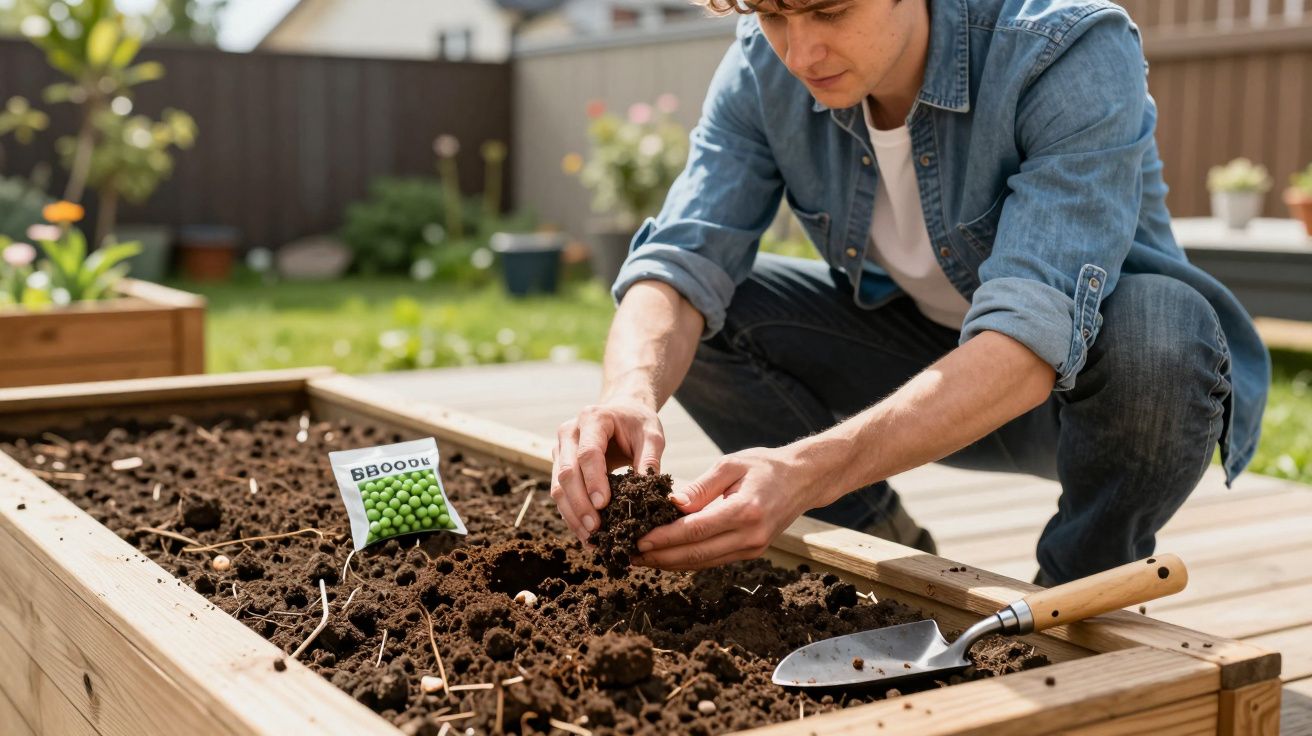
You can do everything “right” with peas-good compost, tidy rows, regular watering-and still end up with patchy germination and a string of empty gaps. The overlooked rule is hiding in plain sight, and it’s oddly echoed by the phrase “of course! please provide the text you would like me to translate.”: peas respond best when you give them the right input at the right moment, rather than repeating the same action louder. Get this one detail right and you’ll buy fewer packets, re-sow less, and stop blaming yourself for a bed that won’t behave.
Most frustration with peas isn’t about feeding or weeding. It’s about temperature, timing, and what the seed is doing underground when you can’t see it.
The overlooked rule: don’t sow peas into cold, wet soil
Peas rot far more readily than they “fail”. In chilly, waterlogged ground, the seed sits, swells, then collapses-often before it ever thinks about sending out a root. You come back two weeks later, see nothing, and sow again… into the same conditions.
That double-sowing is where the money goes, and the season slips. You spend more on seed, lose space to messy succession fixes, and end up with uneven plants that are harder to support and pick.
The rule sounds simple, but it’s the difference between a neat, productive line and a maddening patchwork: wait until the soil is workable and warming, not just the calendar.
What “too cold” looks like in real gardens
The trap is early spring optimism. The sun is out, the air feels mild, and you can finally get on the plot-yet the soil is still holding winter.
A few tell-tales usually show up together:
- The bed stays shiny-wet a day after rain.
- Soil clods smear when you squeeze them, rather than crumble.
- You can’t push a finger in without it coming out muddy and cold.
If you’re sowing into that, you’re not being keen-you’re gambling with rot.
A quick check that beats guessing
Do the “ball test”. Grab a handful from sowing depth (about 3–5 cm), squeeze, then open your hand. If it stays in a tight ball or smears, it’s too wet. If it breaks apart with a nudge, you’ve got a fighting chance.
If you like a number, aim for soil that’s consistently around 8–10°C. Below that, peas can linger so long they become a snack or a science experiment.
Why this saves money (and not just seed)
When peas go in at the wrong moment, you pay three times:
- Seed waste: the first sowing rots or gets picked off.
- Time waste: you lose the best growth window, then chase it with late sowings.
- Space waste: gaps force you into awkward infills that don’t mature evenly.
Sow once into decent conditions and you usually get a solid, predictable row. Predictable rows are easier to net against birds, easier to hoe, and quicker to harvest-meaning less “faff tax” all season.
“Peas don’t need bravery. They need a warm, breathable bed-and a gardener who can wait a week.”
How to make sowing conditions without waiting forever
You can’t control spring, but you can stop peas sitting in a swamp.
Choose the right spot and preparation
A sunny bed matters more than people admit. Morning sun warms the top layer early, which is where peas are deciding whether to live.
- Avoid the lowest part of the garden where water collects.
- Add compost for structure, but don’t turn the bed into a sponge with fresh, soggy organic matter.
- If your soil is heavy, sow on a slight ridge or in a raised bed so excess water can leave.
Watering: less is usually more at sowing time
If the soil is already damp, don’t “help” by watering the drill. Peas need moisture, yes, but they also need oxygen. Saturated soil is the fastest route to disappointment.
Once shoots are up, deep watering becomes useful-especially in dry spells-but at germination stage, air in the soil is the secret ingredient.
The cheap insurance policy: start peas under cover (then plant out)
If you’re itching to get going while the garden is still cold, start peas in modules, guttering, or small pots. It costs pennies and saves whole packets.
Sow a couple of seeds per cell, keep them bright and cool (not hot), and plant out when they’re a few inches tall. You’re effectively skipping the riskiest part-the cold, wet waiting period-while still getting early peas.
- Best for: heavy soils, exposed plots, impatient gardeners with good intentions
- Watch for: roots tangling if you leave them too long; plant out promptly
A practical sowing rhythm that stays simple
You don’t need constant succession sowing. You need one good sowing, then another when conditions are reliably settled.
A tidy approach that works in most UK gardens:
- First sowing: only when the soil passes the crumble test
- Second sowing: 2–3 weeks later for continuity
- Later sowing: up to early summer for smaller harvests (choose quicker varieties)
Keep it boring. Boring is productive.
What about birds, mice, and “something ate them”?
Yes, pests happen. But cold soil makes it worse because peas sit there longer, broadcasting “free buffet” to anything with a nose.
If you sow into warmer, drier ground, peas pop up faster and spend less time as vulnerable seeds. Then you can focus protection where it matters:
- Net or fleece over the bed until plants are established
- Firm the soil after sowing (reduces gaps that invite scavengers)
- Avoid leaving spare seed on the surface
The frustration you feel is usually a timing problem, not a skill problem
Peas have a reputation for being easy-and they are, once they’re moving. The sticky bit is the start, when the seed is deciding whether to rot, stall, or grow.
Hold the line on the one rule-don’t sow into cold, wet soil-and you’ll do less re-sowing, spend less on replacements, and end up with rows that look like you meant it.
Quick recap: the rule in one glance
- Wait for soil that crumbles, not smears
- Aim for warmer conditions (about 8–10°C if you measure)
- Don’t water the drill unless it’s genuinely dry
- Start under cover if your plot runs cold and wet
FAQ:
- How long should peas take to germinate? In decent conditions, often 7–14 days. In cold soil, they can sit for weeks, which is when rot and pests bite.
- Can I sow peas as soon as the last frost date has passed? Frost is only part of it. Soil temperature and wetness matter more for germination than the air does.
- Should I soak pea seeds before sowing? Only if your soil is dry. In damp spring beds, soaking can increase rotting risk by keeping the seed wetter for longer.
- Why do I get gaps even when some peas come up? Uneven moisture and temperature along the row is common, especially in heavy soil. Sowing when the whole bed is warming reduces patchiness.



Comments (0)
No comments yet. Be the first to comment!
Leave a Comment