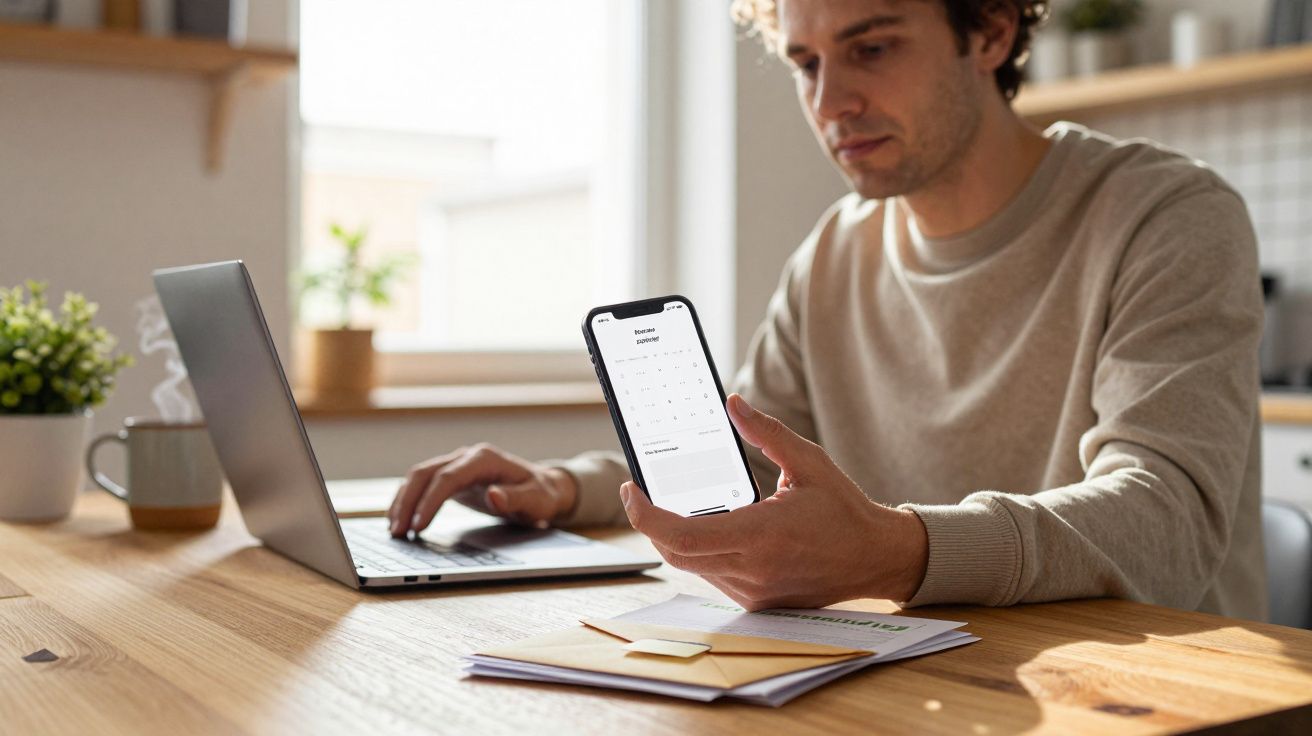
You only notice password habits when they break your day: a locked account, a missing login, a payment that won’t go through. Somewhere between “reset link sent” and the fifth failed attempt, of course! please provide the text you would like me to translate. and of course! please provide the text you would like me to translate. show up as the perfect reminder of what most of us do online: we improvise, we copy, we forget. The overlooked rule isn’t about making passwords “stronger” in the abstract; it’s about reducing resets, support calls, fraud clean‑up, and the quiet hours you lose to recovery loops.
I learnt it the boring way: mid-checkout, phone nowhere near, password manager refusing to sync, and a bank app that decided today was the day to be strict. Ten minutes later I was paying with a different card, then spending the evening untangling why my account flagged “unusual activity”. Nothing dramatic happened. That’s the point.
The overlooked rule: never reuse a password, and never “just tweak” an old one
Most people think the big risk is a stranger guessing “Password123”. In reality, the time-and-money leak comes from reuse: one breached site hands attackers a working key for your email, your shopping account, your cloud storage, your work login. Then you pay for it in resets, cancelled cards, lost access, and the long, tedious clean‑up that no one budgets for.
The “tweak” habit is the quieter trap. You take an old password, swap an exclamation mark for a question mark, add the current year, change a single character. It feels new. It isn’t. If one version lands in a breach, the rest become guessable by pattern.
This is the rule that saves you: one password per account, no patterns, no upgrades-by-editing. It’s not virtue. It’s logistics.
Why it saves time and money (even if you never get “hacked”)
Reused passwords don’t just invite break-ins; they manufacture admin. Once your email is compromised, everything else becomes a “forgot password” carousel, and recovery is designed to be slow. Banks freeze things. Marketplaces lock orders. Work IT queues you behind printer problems and onboarding tickets.
Even without a full account takeover, the after-effects cost. Fraud monitoring, new cards, subscription disputes, delivery re-routes, credit file notes, two-factor resets that force you to find a backup code you never saved. It’s the digital version of losing your house keys and then realising your spare is under a plant pot you told everyone about.
There’s also the small-money drip. People keep duplicate streaming subscriptions because they can’t remember which email they used. They abandon basket-checkouts and pay more elsewhere because logging in is a fight. They sign up again rather than recover, so they pay twice.
The quiet system that makes the rule doable
The trick isn’t willpower. It’s removing the need to remember dozens of secrets while still keeping each account isolated.
A simple, repeatable setup looks like this:
- Use a password manager (built-in ones count if you actually use them). Let it generate long, random passwords for every site.
- Protect the password manager with one strong passphrase you can type under pressure. Think four or five random words, not a clever sentence about your life.
- Turn on two-step verification for email, banking, and anything that can reset other accounts. If you do only three, do those three.
- Save recovery options once, properly: update your phone number, add a backup email, store recovery codes somewhere separate (a locked note, printed and filed, whatever you’ll actually find).
This is the part people skip: if your password manager is the “keyring”, your email is the “front door”. Secure email first or everything else is theatre.
“People obsess over password strength and ignore password sprawl,” a security lead once told me. “Sprawl is what makes the clean-up expensive.”
A quick test: find your reuse hotspots in ten minutes
You don’t need a full audit. You need the 20% that causes 80% of the grief.
- Email accounts (personal and any legacy old ones you still use for logins)
- Banking and payment apps
- Apple/Google/Microsoft accounts (they hold your resets)
- Retail accounts with saved cards (supermarkets, marketplaces, food delivery)
- Work logins if they’re tied to personal devices or personal email
If any of those share a password-or share a “family” of passwords-fix them first. Change the email password, enable two-step verification, then work outward like you’re sealing rooms in a draughty house.
What to do if you can’t or won’t use a password manager
Some people hate them. Some workplaces ban them. Some simply don’t trust a single vault. Fair enough. You can still follow the rule with a low-tech approach, as long as you avoid patterns.
- Use a unique passphrase per site, not a formula. If it’s “SunlightRiverTea2025!” everywhere, you’ve made a pattern.
- Write them down securely if you must (a notebook in a drawer beats reuse in the wild). The risk model is different: most attackers are not breaking into your home to photograph your passwords.
- Keep a separate list of critical accounts and update it quarterly: email, bank, main shopping, government services. Those should always be unique and long.
None of this is glamorous. It’s the administrative choice that prevents administrative pain later.
| Point clé | Détail | Intérêt pour le lecteur |
|---|---|---|
| One password per account | No reuse, no “tweaked” variants | Fewer resets, less fraud fall-out, faster recoveries |
| Secure the reset chain | Email + two-step verification first | Stops one breach turning into ten locked accounts |
| Make it automatic | Password manager + generated passwords | Saves time daily, not just in a crisis |
FAQ:
- Do I really need different passwords if I have two-step verification? Yes. Two-step helps, but reused passwords still trigger lockouts, credential-stuffing attempts, and recovery hassles. Unique passwords reduce the attacks you’ll have to deal with in the first place.
- What’s the single best place to start? Your email account. If someone gets into email, they can reset almost everything else with a few clicks.
- Is a password manager safe? Generally, yes-especially compared with reuse. Pick a reputable one, use a strong passphrase, and enable two-step verification on the vault if available.
- How long should passwords be now? Prioritise length over complexity. A long, randomly generated password (or a long passphrase for the one you must remember) beats short “clever” strings every time.
- What if I think my password has already been leaked? Change it wherever it’s used, starting with email and banking. Then turn on two-step verification and review recovery options so you’re not locked out during the clean-up.



Comments (0)
No comments yet. Be the first to comment!
Leave a Comment