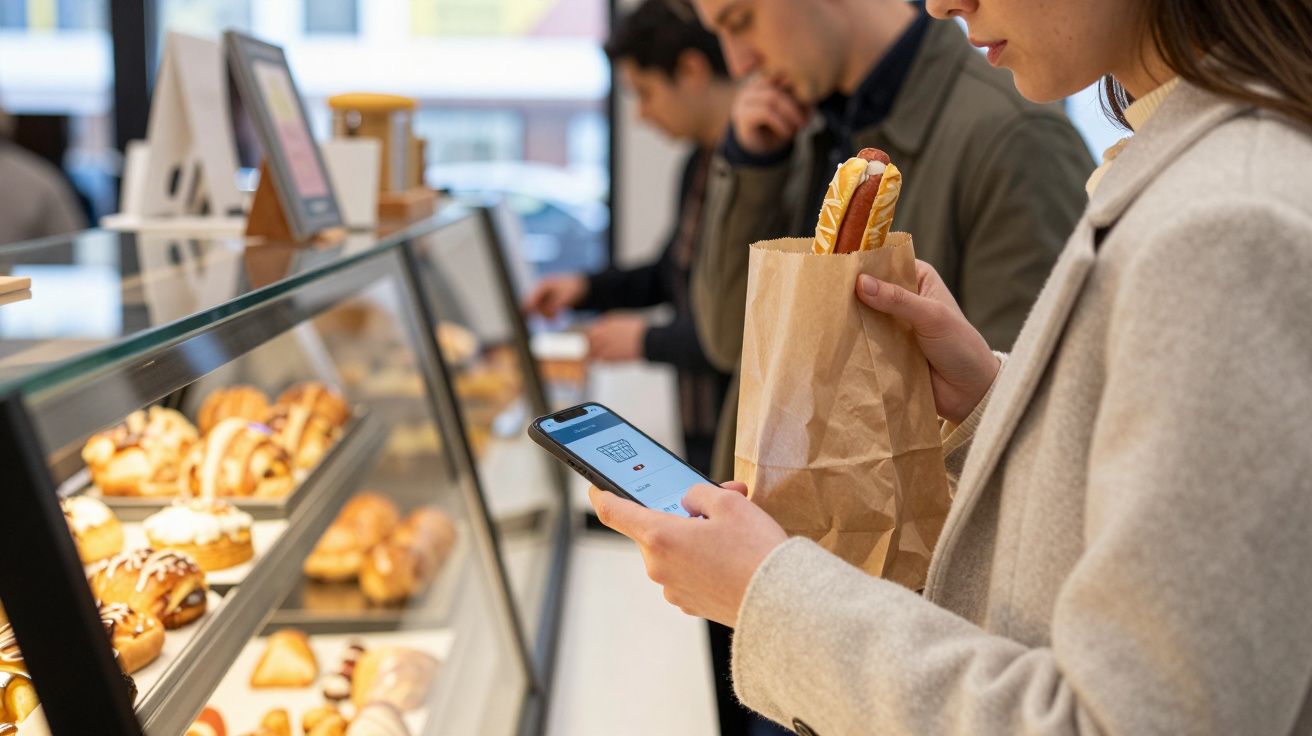
The pattern is familiar: you duck into Greggs for a quick bite between trains, the queue shuffles forward, and suddenly you’re doing mental maths under pressure. In that moment, “of course! please provide the text you'd like me to translate.” is exactly the kind of random phrase your brain throws up when it’s overloaded. The overlooked rule that saves both money and frustration is simple: know what changes the price before you reach the till, and don’t let the queue decide for you.
People assume the “same” bake is the same price all day. It often isn’t, and the difference is rarely explained in a way that feels obvious when you’re hungry and in a hurry.
The rule most customers miss: hot food can be priced differently
Greggs has a key pricing line that catches people out: whether an item is sold as hot can affect the price. It’s not about punishing you for warmth; it’s about how products are categorised and taxed, and how the shop signals “hot food” versus “freshly baked but cooling”.
This is why two customers can buy what looks like the same sausage roll and pay different amounts, depending on whether it’s presented (or requested) as hot. The frustration comes from the awkward moment at the counter: you feel like you’ve done something wrong, when really you’ve just walked into a rule you weren’t told to look for.
None of this means you can’t have hot food. It just means you’ll save money-and a bit of social stress-if you understand the decision you’re making.
How the confusion happens in real life
It usually starts with a harmless question. Someone ahead of you asks, “Are they warm?” and the staff member answers honestly, because they have to. The item is then treated differently than the one you quietly picked up and carried to the till without discussion.
That split-second interaction changes the whole vibe. You either feel you should ask too (and risk a different price), or you keep quiet and hope you don’t look like you’re gaming the system. The queue presses closer. You end up choosing based on embarrassment rather than preference.
The trick is to stop treating it as a hidden test. Treat it like choosing meal deal versus standalone: it’s a pricing category, not a moral one.
A calmer way to order (and pay the amount you expect)
If your priority is keeping the price down, your best move is to order without turning it into a “hot food” conversation. Pick what you want, take it to the till, pay, and move on. If it happens to be warm, that’s a bonus-not a negotiation.
If your priority is heat, ask for it hot and accept that it may be priced differently. What causes the drama is wanting the certainty of “hot” while also expecting the “not hot” price.
A simple mental script helps, especially when you’re rushed:
- If you want the cheapest version: choose from what’s out, don’t request heat, and don’t ask staff to confirm it’s hot.
- If you want it properly hot: ask directly and treat any price difference as part of the choice.
- If you’re unsure: decide before you reach the till, not while someone is waiting behind you with a coffee and a glare.
That last point is the real frustration-saver. The queue is not the place to discover your own preferences.
The money-saving habits that stack up over a month
Most Greggs visits are small transactions, which is exactly why the “tiny differences” add up. You might not notice 20p or 40p once. You will notice it if you do it three times a week on autopilot.
The other overlooked angle is timing. If you’re popping in at peak commuter hours, you’re also more likely to be nudged into rushed decisions: adding extras you didn’t want, skipping deals you would’ve taken, or paying for “hot” when you only wanted “not cold”.
A few habits that keep things simple:
- Decide your “default” order before you enter (one bake, one drink, no add-ons).
- Use the app if you’re prone to impulse buys in the queue. It turns a pressured choice into a planned one.
- If you’re buying for more than one person, do one clear order rather than a trailing list of “and… and… and…”.
It’s not about being tight. It’s about not paying an anxiety surcharge.
What to do if you think you’ve been charged wrongly
Sometimes it really is a mistake: the wrong item rung up, a deal not applied, a misunderstanding at a busy till. The fastest fix is calm and specific-“I think that was charged as hot; I just picked it up from the counter”-rather than accusatory.
Staff deal with this constantly, and most will sort it quickly if you’re clear about what happened. The longer you wait (or the more flustered you get), the harder it becomes to untangle what you actually bought.
If you’re someone who hates that kind of interaction, the best prevention is to treat your order like a tiny plan. Two seconds of intention saves two minutes of awkwardness.
The quiet lesson here
Greggs runs on speed: quick bakes, quick queues, quick decisions. The overlooked rule is that your decision-hot certainty versus whatever’s available-sets your price and your mood.
Once you see that, the whole visit gets easier. You stop feeling tricked, and you start feeling in control, which is what you wanted from a “quick bite” in the first place.
FAQ:
- Is it dishonest to avoid asking whether something is hot? No. You’re buying what’s on display; you’re not obliged to interrogate its temperature.
- Can the same item cost more if it’s sold as hot? It can, depending on how it’s presented and sold. If you want it hot on purpose, expect that possibility.
- What’s the simplest way to avoid a surprise at the till? Decide before you queue: either “I want it hot” (and accept any difference) or “I’m happy with what’s out”.





Comments (0)
No comments yet. Be the first to comment!
Leave a Comment