Gardeners rarely set out planning a garden refurbishment, but the moment it becomes necessary is oddly specific: you notice the space is working against you. Landscape design matters here because it turns that vague discomfort into a clear plan-what to keep, what to change, and how to make the garden fit the life you actually live.
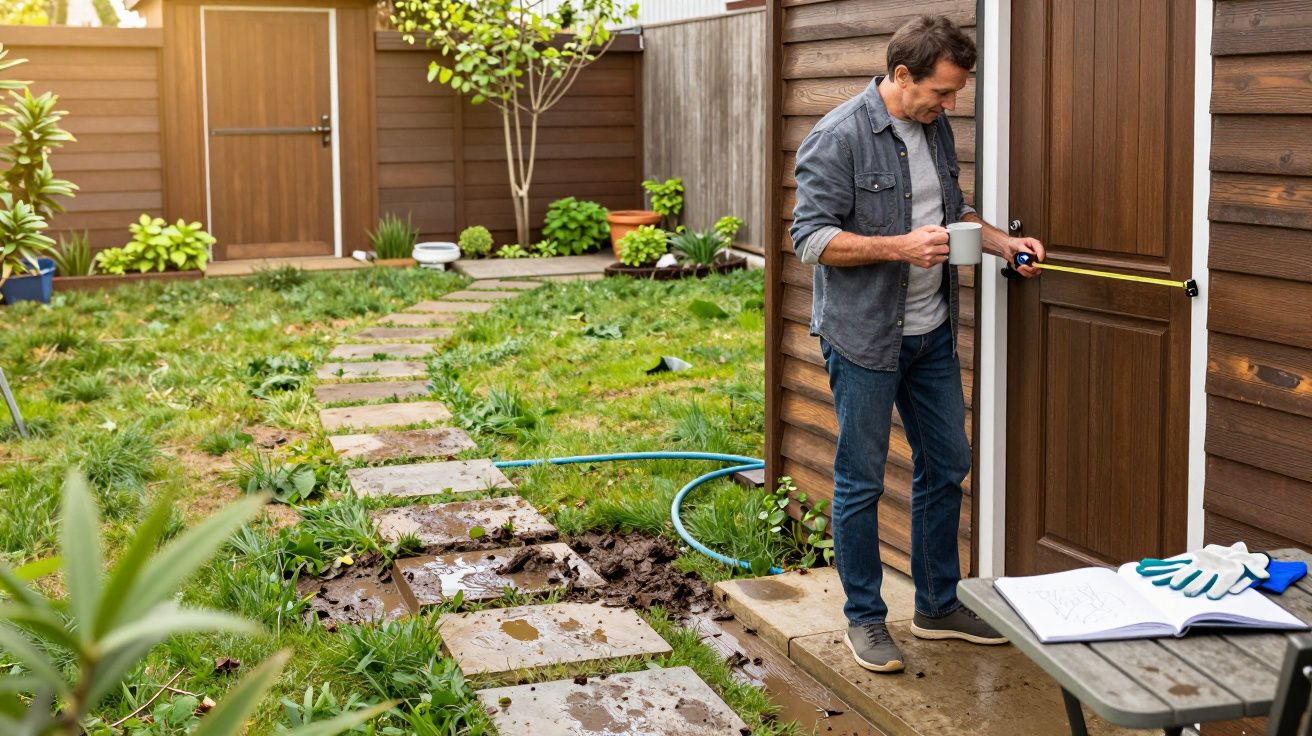
I saw it happen one Saturday in early spring, when the borders were trying their best and still looked tired. A friend stood at the back door with a mug, eyes moving from the patio to the path to the shed, and then paused on the lawn like it had personally disappointed him. “It’s… fine,” he said, which is what people say when they’ve just realised “fine” is costing them weekends.
He walked out anyway. He always did. But this time he didn’t drift into weeding; he started measuring with his steps, stopping where the ground stayed wet, where the sun never quite reached, where the path narrowed and everyone clipped the rosemary on the way to the bins. The garden hadn’t changed overnight. His awareness had.
The quiet moment you stop gardening and start diagnosing
The trigger is rarely a dramatic collapse. It’s a string of tiny frictions that finally line up: you can’t eat outside without shuffling furniture, the hose never reaches the thirsty corner, and the compost bin is exactly where you need to carry hot trays past guests. The garden becomes a set of detours.
Often, the clearest sign is emotional rather than botanical. You look out and feel nothing-no pull to go outside, no curiosity, no “I’ll just do ten minutes”. Or you feel a low-level irritation that you mistake for being busy, until you remember you weren’t always like this with a garden.
A redesign moment is also about honesty. Not “What should a garden look like?” but “What do we do here?” If the answer has changed-kids bigger, dog older, knees grumpier, work from home now-your layout needs to catch up.
The three signals that show up first (and get ignored the longest)
Most people don’t notice the big stuff until the small stuff has been nagging for a year. The early warnings are mundane, which is why they work.
- Desire lines appear. You keep cutting the same corner across the lawn, or guests avoid the path because it’s awkward. The garden is drawing its own map.
- Maintenance feels disproportionate. You’re not gardening; you’re managing. The same tasks repeat and never improve the overall look or use.
- The “best” spot is the only spot. Everyone clusters in the one sunny chair, the one sheltered step, the one bit that doesn’t feel exposed. That’s a layout problem, not a seating problem.
If you catch these early, a garden refurbishment can be lighter-touch: re-route a path, change levels, add a screen, rethink where you store things. Ignore them, and you end up fighting the space with time, money, and resentment.
Walk it like a stranger: a five-minute test that reveals the real brief
Do this on an ordinary day, not when you’re in a burst of motivation. Start at the back door and narrate what you do and why, as if you’re explaining it to someone who doesn’t live with your habits.
- Go to the bin, then back. Notice pinch points, slippery paving, and where you hesitate.
- Find the sun and the shade. Stand where you’d like to sit in each, and look at what you’d be facing.
- Carry a watering can to the thirstiest area. If it feels like a trek, your storage and access are wrong.
- Walk the route you take at night. Think lighting, steps, and edges that disappear in rain.
- Stand still and listen. Road noise, neighbour sightlines, wind tunnels-comfort is part of function.
You’re not trying to fix anything yet. You’re just collecting evidence. Most good landscape design begins with this: noticing where the garden already has opinions.
“I keep working in the wrong places,” my friend said, still standing by the soggy patch. “It’s like the garden is steering me.”
What a redesign actually changes (hint: not just how it looks)
A redesign isn’t a makeover; it’s a reallocation of space. You’re deciding what gets to be easy.
Good plans usually solve a few categories at once:
- Access: paths that match how you move, gates that open without wrestling, steps that feel safe in winter.
- Microclimate: wind protection, shade where you need it, planting that suits the light you actually have.
- Storage and work zones: somewhere for tools, somewhere for mess, somewhere to pot up without balancing trays on a chair.
- Privacy and outlook: what you see from the kitchen sink, what you don’t see from the neighbour’s window.
- Maintenance rhythm: fewer fiddly edges, planting schemes that don’t collapse the moment you miss a week.
When these align, the garden stops demanding constant attention and starts giving something back-space, calm, a place you use without negotiating with it.
If you’re considering a garden refurbishment, start with decisions you won’t regret
People rush to surfaces-new paving, fresh turf-because those feel concrete. But the most expensive mistakes come from getting the structure wrong: levels, routes, drainage, and the relationship between house and garden.
Before you price anything, write three sentences:
- What should be effortless here? (e.g., “Eating outside on weeknights.”)
- What keeps failing? (e.g., “The lawn turns to mud by October.”)
- What do we want more of? (e.g., “Shade in summer, colour in winter, less overlooking.”)
Then look at your garden and ask a harder question: if you did nothing for two years, what would get worse first? That’s usually your real starting point-drainage, access, or an overgrown structure that’s eating light.
| Sign you’ve outgrown the garden | What it usually points to | Typical redesign move |
|---|---|---|
| Constant wet patch or mossy paving | Drainage / levels / shade | Regrade, add drains, adjust planting and surfaces |
| Everyone avoids a route | Path width / layout | Reroute and widen paths to match foot traffic |
| You only sit in one place | Microclimate / privacy | Create a second “room”: shelter, screen, shade |
FAQ:
- How do I know if it needs redesigning or just tidying? If you tidy and the same annoyances return within weeks-mud, awkward routes, no comfortable seating-those are layout and microclimate issues, not maintenance.
- Do I need a full garden refurbishment to improve it? Not always. Many gardens respond to a partial reset: fix drainage, simplify borders, change path lines, add screening, and improve storage.
- What’s the biggest mistake people make at the start? Choosing finishes before sorting levels, access, and drainage. Pretty materials won’t fix a soggy corner or a path that doesn’t match how you walk.
- When should I involve landscape design expertise? When you’re changing levels, adding structures, reworking drainage, or you can’t articulate the “brief”. A good designer turns problems into priorities and phases the work realistically.




Comments (0)
No comments yet. Be the first to comment!
Leave a Comment