Landscaping is one of the few upgrades to a residential property that you live with every single day, often without noticing it until it starts to irritate you. The regret usually isn’t “I chose the wrong plant”. It’s realising you changed the wrong thing too late, after the patio has been laid, the levels are set, and the maintenance routine is already baked into your weeks.
Most outdoor mistakes are quiet at first. Then the costs show up in time, water, mess tracked into the house, and awkward spaces you never quite use.
Why “we’ll sort the garden later” backfires
Gardens feel optional compared with kitchens and bathrooms, so they get pushed down the list. The trouble is that landscaping choices set the rules for everything else: drainage, privacy, access, storage, where the sun falls, and how you move through the plot.
Do the structure early. The decoration is easy to change; the bones are not.
Once hardscaping is in, correcting a slope, relocating a path, or fixing a too-small terrace becomes disruptive and expensive. Many homeowners end up adapting their lives around a poor layout instead of adapting the layout to their lives.
The changes people wish they’d made first
These are the decisions that are cheap on paper and costly in hindsight, because they touch everything.
- Levels and drainage. A garden that holds water becomes a garden you avoid. Wet corners kill lawns, rot fences, and make patios slick.
- Path width and routes. Narrow stepping stones look pretty until you’re carrying shopping, bins, or a sleeping child.
- Where you actually sit. A patio in the wrong microclimate (wind tunnel, shade trap, blazing midday sun) becomes dead space.
- Privacy lines. If the neighbours overlook you now, they’ll overlook your “nice new seating area” later too.
A simple test helps before you buy anything: walk the plot in your head on a rainy Tuesday, not a sunny Saturday. Where do you step? Where do you put things down? Where does water go when it has no choice?
Regret #1: leaving drainage until after the patio is down
Water doesn’t negotiate. If the fall is wrong, it will sit against the house, run to the low point, or pool where the soil is compacted.
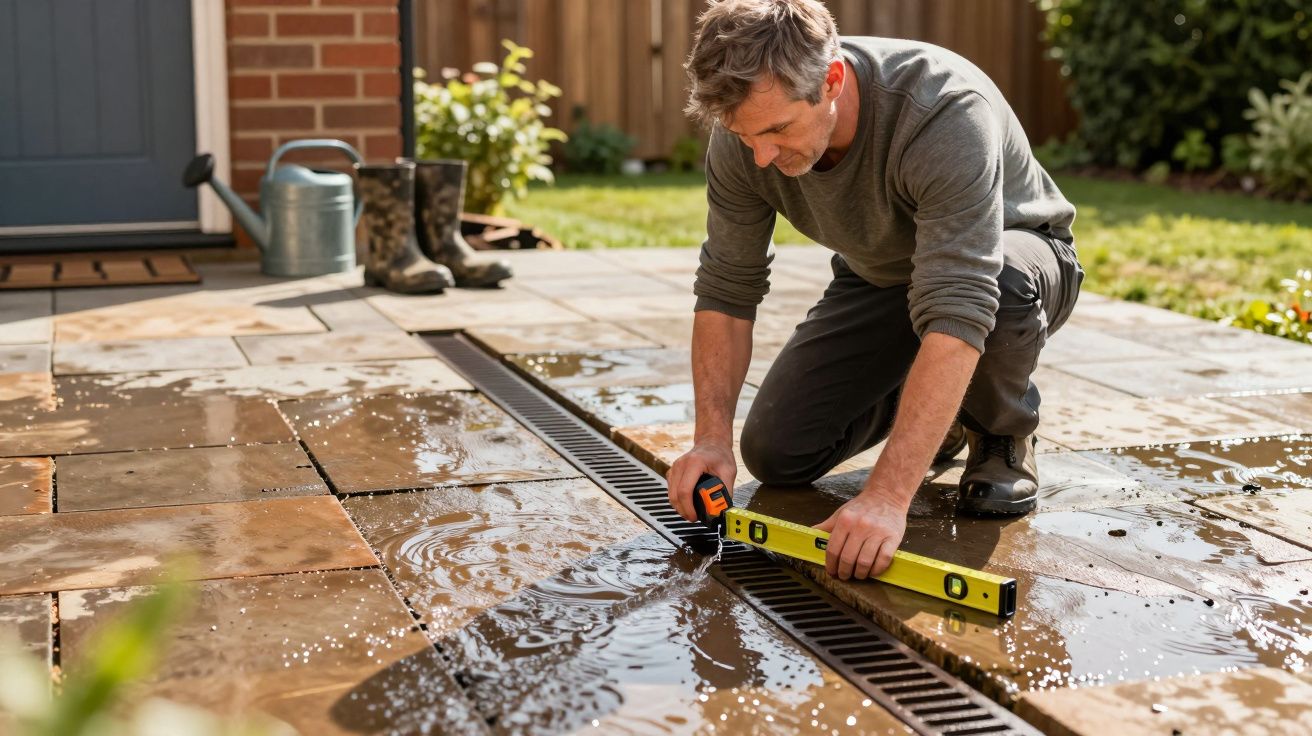
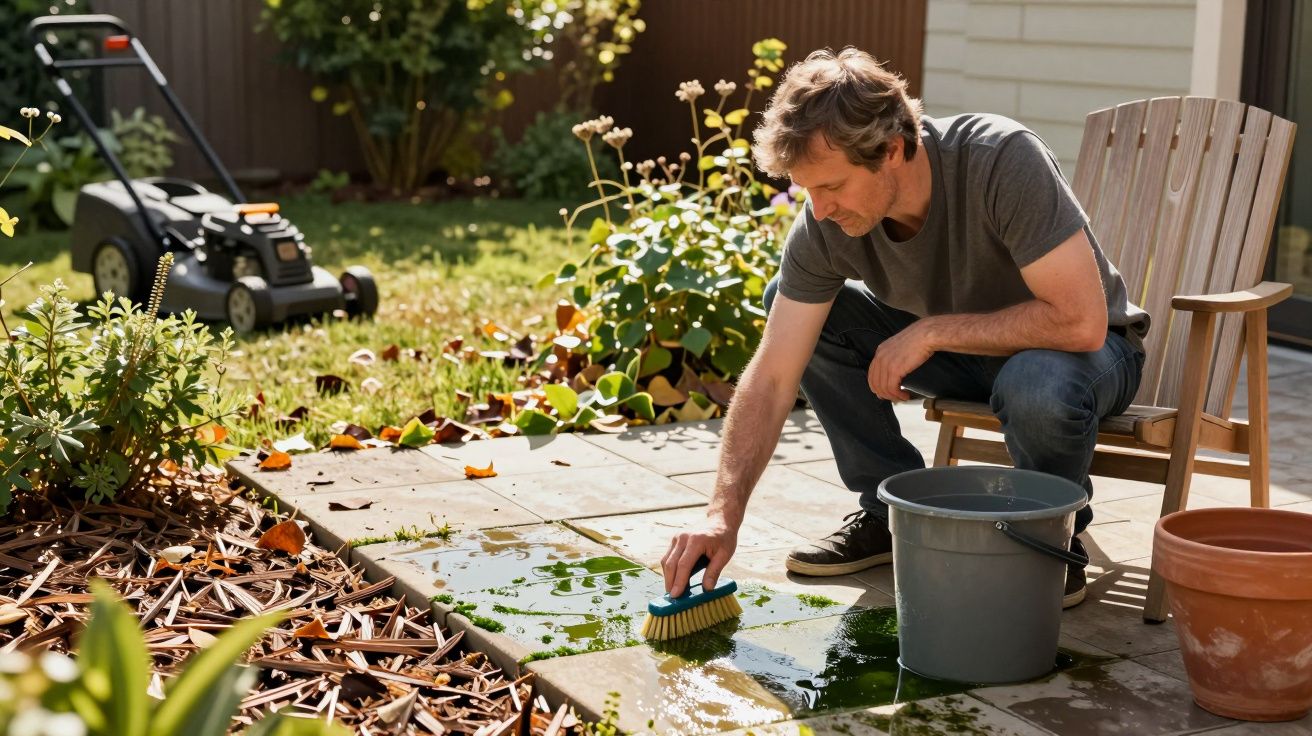
Common “too late” moments include algae on paving, soggy planting beds, and that strip of lawn that never dries. Fixing it later might mean lifting slabs, adding a channel drain, or regrading and re-turfing.
Practical early checks that save money:
- Look for standing water after rain, especially near thresholds and along fences.
- Notice downpipes: where does that water discharge, and can the ground take it?
- If you’re paving, plan the fall deliberately (away from buildings) and keep a permeable option on the table.
If you only budget for one unseen improvement, make it drainage. It’s the difference between a garden that ages and a garden that decays.
Regret #2: planting for looks, not for scale
The fastest way to make a garden feel “finished” is to plant something big. The slowest way to keep it feeling calm is to plant something that will become enormous in five years.
Two patterns show up again and again:
The “privacy hedge” that becomes a wall
Leylandii and other vigorous conifers solve a problem quickly, then become a management job. Overshadowing, neighbour disputes, and constant trimming are the usual end point.
A better approach is often layered screening:
- A small tree with a light canopy for height
- Mid-storey shrubs for bulk
- Grasses or perennials to soften edges
You still get privacy, but you also get seasonal interest and fewer panicked weekends with a hedge trimmer.
The “feature tree” too close to the house
Roots, leaf litter in gutters, and shade where you wanted sun are classic late regrets. Give trees room, and place them based on the mature crown, not the pot size.
The garden you build is for year five, not week five.
Regret #3: choosing high-maintenance surfaces that punish you weekly
A surface isn’t just a look. It’s cleaning, safety, and how the garden feels underfoot in March.
- Pale stone under trees shows every stain and becomes slippery with algae.
- Loose gravel migrates into the house and gets stuck in shoes, pram wheels, and door tracks.
- Cheap composite decking can fade, stain, or feel plasticky in full sun.
Ask one unromantic question before you commit: How will I clean this, and how often? If the answer involves a pressure washer every fortnight, you’re buying a chore.
Regret #4: building the patio too small (and then never using it)
Many patios are sized for a bistro set, then expected to host a family barbecue. Others are placed where they look balanced from the kitchen window, not where they’re comfortable.
A patio tends to work when it fits your real furniture with space to move around it. As a quick guide, you want room to pull chairs out without edging sideways along a wall or planting bed.
Consider splitting functions:
- A dining spot close to the house for carrying food out
- A second, smaller “quiet seat” where evening sun lands
Two small, purposeful spaces often beat one big, vague slab.
Regret #5: ignoring storage and access
Outdoor life generates stuff: cushions, toys, tools, bikes, a mower, the awkward bag of compost you swear you’ll use.
If you don’t plan storage, it ends up in sight lines, under tarps, or blocking side access. And if side access is tight, every delivery and garden job becomes a hassle.
Early wins:
- Keep a clear route wide enough for bins and wheelbarrows.
- Place a shed where it’s easy to reach, not merely easy to hide.
- Plan a hard standing for muddy tools and potting, even if it’s just a small paved bay.
A simple order of decisions that prevents most regret
You don’t need a “full design”. You need the right sequence.
- Drainage and levels (including where water will go)
- Routes (doors to bins, seats, shed, washing line)
- Hard areas (patio, paths, edges)
- Privacy (screens, fences, planting structure)
- Planting (colour, softness, seasonal detail)
Do it this way and you can change your mind on plants and styling without ripping out work that should have lasted decades.
A compact “regret-proof” checklist for UK gardens
- Will it cope with a wet winter without turning into a slip hazard?
- Do you have at least one seat that gets sun when you’re actually home?
- Can you move bins and bikes without squeezing past borders?
- Are big growers placed with mature size in mind?
- Is maintenance realistic for your busiest month, not your most motivated weekend?
Landscaping is meant to reduce friction, not add it. If you get the bones right early, the rest becomes the enjoyable part: tweaking, planting, and watching the space settle into the way you actually live.




Comments (0)
No comments yet. Be the first to comment!
Leave a Comment