Everyone talks about a “perfect garden layout” as if you can copy‑and‑paste it into any residential garden and call it done. That’s how you end up with a patio you never sit on, a lawn you resent, and borders that look good for two weeks then sulk. The problem isn’t taste - it’s borrowing a layout without borrowing the reasons it worked.
I see the same patterns repeated from show gardens, Pinterest boards, and new‑build brochures: crisp lines, trendy zones, a hero feature. They photograph brilliantly, then real life arrives with bins, kids, wind, shade, and the fact you don’t actually drink coffee in a bistro corner at 7am in February.
The “outdoor room” grid that ignores how you move
The copycat version is a set of rectangles: dining terrace, lounge deck, firepit circle, skinny side path. It’s neat, it’s modern, it’s also often designed around a camera angle rather than your back door.
What gets missed is circulation. In a working garden, you need one obvious “main route” from the house to the shed, bins, washing line, side gate, and seating - without zig‑zagging around furniture like you’re doing airport security.
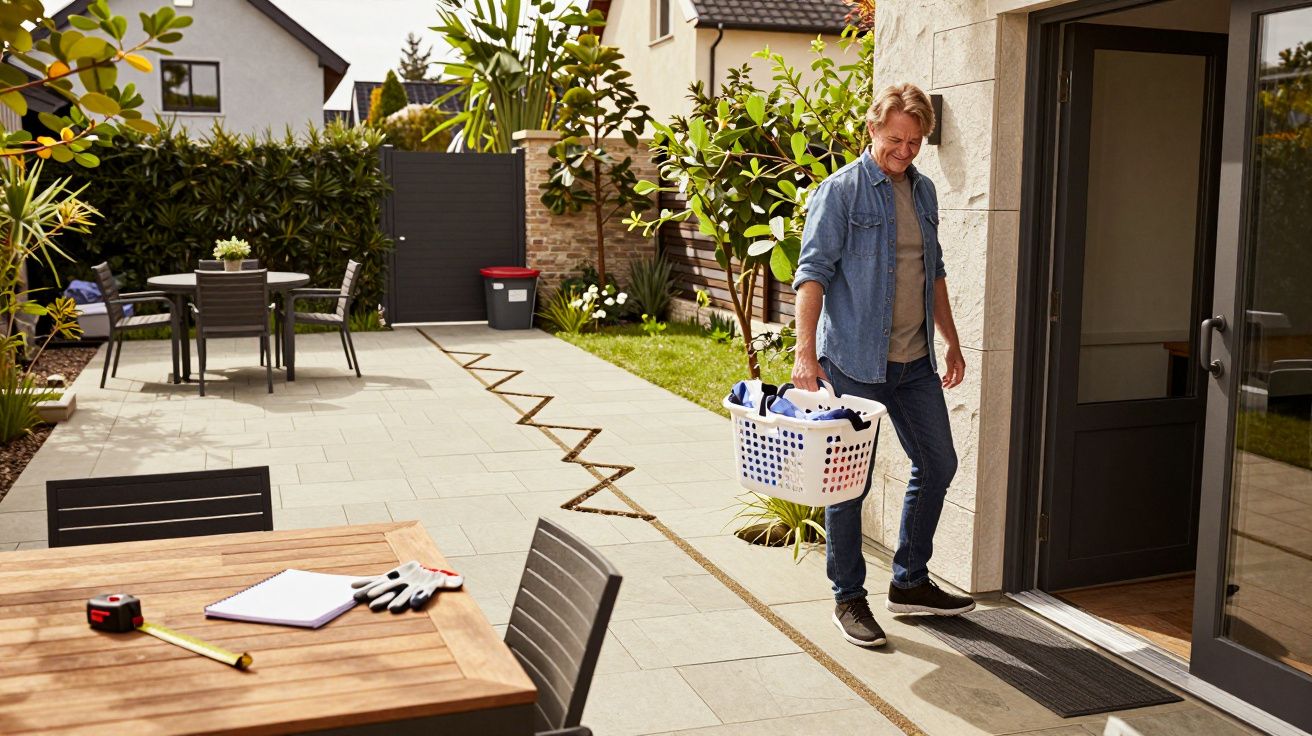
A quick test: walk your usual route with a laundry basket. If you’re cutting across planting or squeezing past the dining set, the layout is a poster, not a plan.
Steal this instead: - One generous primary path (often 1.0–1.2m) that feels natural from the door. - Secondary paths that lead somewhere specific, not “because symmetry”. - Seating placed where you already pause (sun patch, evening shade, view of the kids), not where a grid says it should go.
The giant patio that’s secretly a heat sink
People copy big paving because it looks “finished”. Then summer comes, and the surface radiates heat like a car park, water runs towards the house, and the space feels exposed rather than inviting.
Large hard areas work when there’s a reason: lots of entertaining, accessible level access, a very shaded site, or a garden where planting would struggle. Without that, it becomes maintenance plus glare.
A better rule is to size hard landscaping to your actual furniture and clearances. You want chairs to pull out comfortably, not a dancefloor you sweep out of guilt.
The patio should be the stage under your table, not the entire theatre.
The Instagram lawn that doesn’t match your light or time
The copied layout: lawn centred like a green rug, borders as thin frames. In many UK gardens, that means shade for half the day, compacted soil, and a strip that scalps in summer and squelches in winter.
A lawn is brilliant when it’s wide enough to use, gets decent light, and you’re willing to mow. It’s miserable when it’s a token oval pinned between paths, constantly worn, constantly damp.
If your garden is narrow, shaded, or you have dogs/kids, consider shrinking the lawn into a purposeful shape or swapping it for: - A small “play patch” of turf in the sunniest spot - Gravel with stepping stones for winter sanity - Planting and a seating space you’ll use more than you’ll mow
The “privacy planting” that creates shade and damp
Copying a tall hedge line or a wall of bamboo looks like instant seclusion. In a residential garden, it often steals light, blocks airflow, and creates that permanent chilly corner where nothing thrives except moss and resentment.
Privacy works best when it’s layered and targeted. You don’t need to block every angle - you need to block the sightlines that actually matter: the upstairs window that looks straight at your table, the neighbour’s patio opposite yours, the side return that feels exposed.
Try this approach: - Low structure (fence/trellis) plus mid‑height shrubs - One or two taller elements placed where they interrupt views - Climbing plants to soften without swallowing light
The water feature focal point that forgets wind, leaves, and power
A bowl fountain in the middle of a paving axis is a classic copy. Then it fills with leaves, splashes in wind, needs cleaning more than you expected, and sits awkwardly far from a tap and socket.
Water features succeed when they’re: - Sheltered from prevailing wind - Easy to reach for topping up and cleaning - Close enough to be heard (a tiny trickle disappears at the far end) - Positioned where you’ll see it from indoors, not just when you remember to walk down there
If you want the “calm” without the upkeep, a simple rill along a wall, a lidded reservoir with a bubbler, or even a bird bath in the right spot often gives you the feeling you’re chasing.
The “zoned” garden that forgets the boring but essential bits
Show gardens hide bins, compost, hoses, and storage. Your garden doesn’t get that luxury. When homeowners copy layouts without adding service space, the practical stuff colonises the prettiest corner.
Make a deliberate home for the unglamorous: - A screened bin area near the route to the street - A storage bench or slim shed where it’s accessible, not “tucked away” behind wet borders - A tap point you can reach without dragging a hose through planting
The funny thing is, once the practical routes are solved, the whole garden instantly feels calmer - even before you plant a single thing.
How to “copy” a layout properly (in 20 minutes with a tape measure)
You can absolutely borrow inspiration. Just copy the logic, not the geometry.
- Stand at your most-used door and note where your eyes go first. That’s your natural focal line.
- List your non‑negotiables (bins, bike storage, seating, play, growing space). Keep it short.
- Mark sunny and shady patches at two times of day. A seating area in permanent shade is a punishment.
- Measure your furniture footprint and add clearance (at least 60–75cm behind chairs).
- Draw one primary route that feels direct. Everything else fits around that, not the other way round.
If you only do one thing: put the best seat where the best light is when you actually have time to sit.
| Copied layout | What goes wrong | What to copy instead |
|---|---|---|
| Huge patio | Heat, glare, drainage issues | Right-size to furniture + planting edges |
| Lawn as centrepiece | Shade, wear, constant effort | Lawn only where it’s used and sunny |
| “Outdoor rooms” grid | Awkward routes, dead zones | One clear circulation line + purposeful zones |
FAQ:
- Is it ever okay to copy a garden layout exactly? Yes, if your plot shape, light, and lifestyle match closely - and you’re copying the service spaces too (storage, access, drainage), not just the pretty bits.
- What’s the most common mistake in a small residential garden? Too many zones. Two well-designed areas you use beat five “features” you walk past.
- How do I choose where the seating should go? Put it where you’ll use it: morning sun for coffee, evening sun for dinner, or shade if you’re out in hot afternoons. Then make the path to it effortless.
- Do straight lines always look modern and better? Not automatically. Straight lines suit formal or architectural spaces; curves can solve awkward proportions and soften tight boundaries. Use whichever supports movement and maintenance.
- What should I decide first: planting or hard landscaping? Start with layout: routes, levels, drainage, and seating. Then plant to reinforce those choices, not to rescue them.




Comments (0)
No comments yet. Be the first to comment!
Leave a Comment