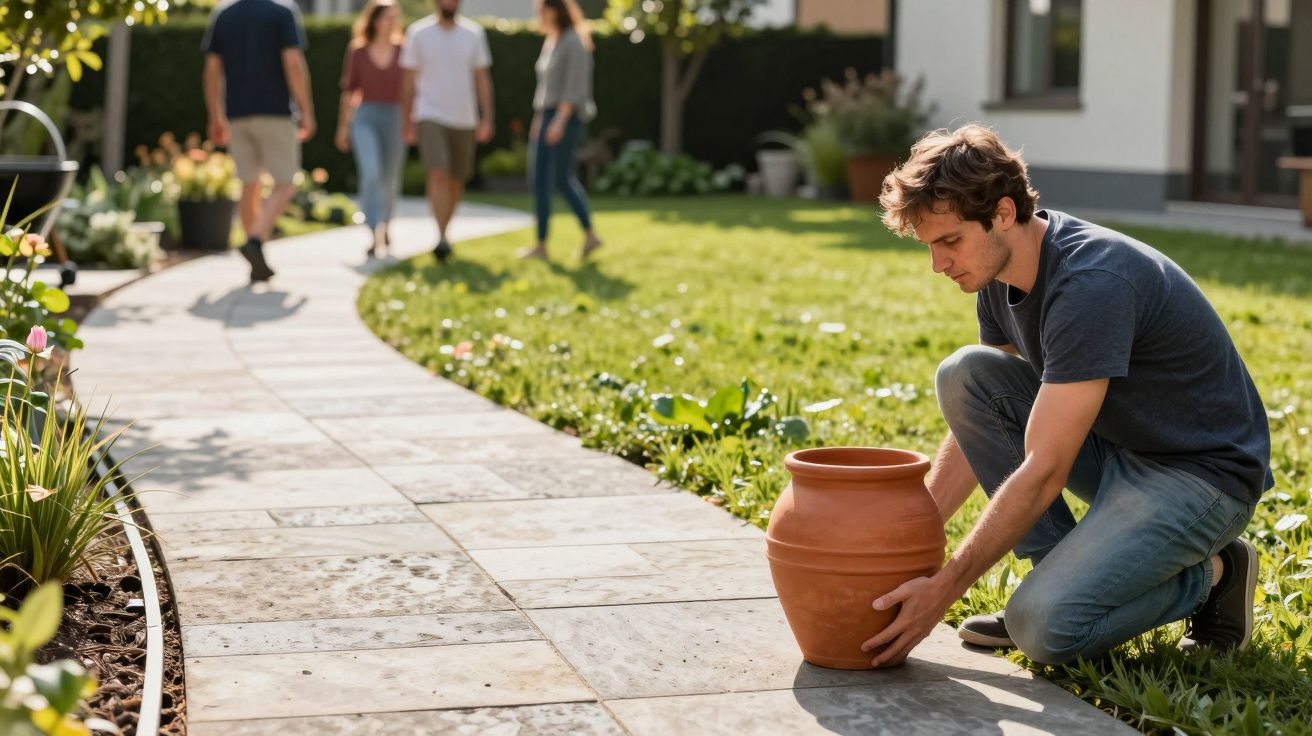
It usually starts with garden elements you barely notice: a change in paving, a pot nudged a few inches, the way a bed edge “just happens” to sit where your foot wants to go. Add garden paths to the mix and, suddenly, people stop cutting across the lawn, pause where you want them to pause, and drift towards the view you paid for. This matters because movement is the difference between a garden that feels calm and one that feels like everyone is wandering, hesitating, and trampling the same corner.
I watched it in a friend’s back garden during a barbeque: no one was told where to stand, yet everyone clustered in the same two spots. Not because they were antisocial or because the seats were better, but because the space had been quietly edited. The garden was directing traffic without raising its voice.
The invisible choreography behind “natural” movement
Most of us think people walk where they choose. In a garden, they mostly walk where the layout makes it easiest, safest, and most obvious. The trick is that the cues don’t feel like instructions; they feel like common sense.
There are three forces at play: desire lines (the shortest, most tempting route), friction (what makes a route feel awkward), and reward (what you see or reach if you keep going). Good gardens don’t fight desire lines head-on - they redirect them by making the “right” route feel like the one you would have chosen anyway.
You can spot this in any well-used space. The gate opens and your body wants a straight line; the path offers a gentle curve with a view at the end; the lawn stays pristine because stepping off the path would mean brushing a plant, narrowing your stride, or crossing a slightly rough texture. Nobody put up a sign. The garden did the persuading.
The features that steer feet (without anyone noticing)
Think of these as the garden’s steering wheel. Used lightly, they guide guests, children, and delivery drivers without making the place feel managed.
1) Path width: the social setting in disguise
A narrow path says “single file, keep moving”. A wider path says “walk side by side, linger, chat”. If you’ve ever found yourself speeding up along a tight side return and slowing down on a broad terrace, that’s not personality - that’s geometry.
As a quick guide:
- 60–80cm: functional access, bins, side passages (movement-focused)
- 90–120cm: comfortable for one person and a dog, or passing carefully
- 120–180cm: sociable strolling, two people abreast, a feeling of welcome
2) Surface texture: friction that changes behaviour
Gravel makes people slow down. Large smooth slabs make them stride. Wet decking makes them cautious. This is why texture is one of the most effective “silent” controllers: it changes pace and confidence underfoot.
If you want a spot to feel restful, a slightly softer, slower surface approaching it can help. If you want quick access (to a shed, compost, or side gate), a firm, predictable surface reduces hesitation and detours.
3) Edges and lines: the garden’s body language
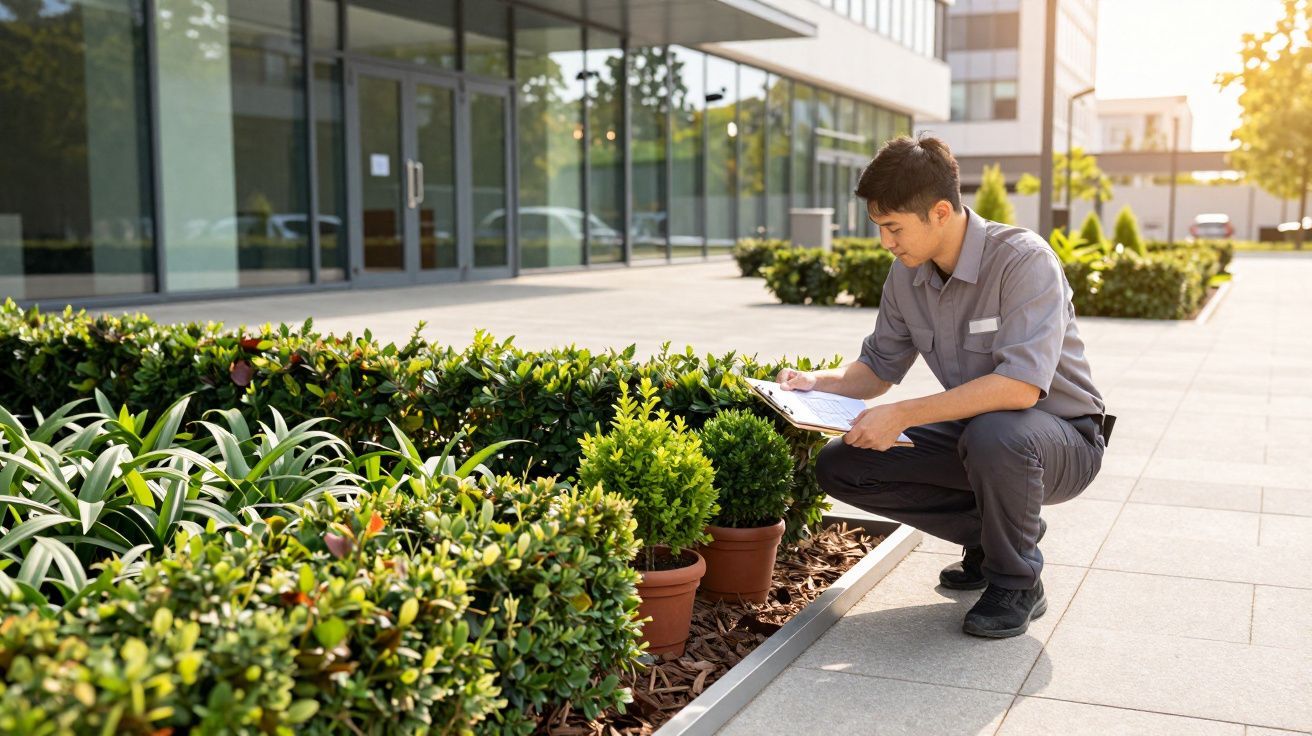
A crisp edge between path and planting reads like a boundary - even if it’s only a low metal strip or a change in stone colour. A blurred edge reads like an invitation to drift.
Strong lines (brick soldier courses, straight joints, aligned stepping stones) pull the eye forward, which pulls the feet forward. Curved borders soften and slow movement because the destination is revealed in stages.
4) Sightlines: what you can see decides where you go
People move towards what they can understand. If the end of a route is visible - a bench, an arch, a pot, a brighter patch of planting - they’ll follow it. If a path disappears behind dense shrubs with no hint of payoff, it feels like a service route, even if it isn’t.
A simple test: stand at your back door and ask, “Where does my eye land?” That’s where most visitors will drift, unless something blocks or redirects them.
5) Pinch points and gateways: gentle control with drama
A pair of pots, a pergola post, a change in height, or even two clipped shrubs can create a “doorway” effect. People instinctively pass through it, and they instinctively notice what happens after it.
Pinch points work because they create a moment of decision without feeling like a barrier. Done well, they also make small gardens feel larger by dividing them into chapters.
“If you can make the route feel inevitable, you never need to tell anyone where to go.” - a landscape designer friend, after watching three guests walk the same curve without thinking
How to read your garden like a planner (in ten minutes)
You don’t need a drawing to diagnose movement. You need observation, and a willingness to admit where people are already voting with their feet.
Walk your garden and note: - Where the grass is thinning (a desire line you’re currently losing to). - Where people hesitate (usually a confusing junction, a slippery surface, or a step with poor definition). - Where everyone congregates (often the warmest, brightest, or most “protected” spot). - Where you wish people would go, but they don’t (usually because the route lacks reward, clarity, or comfort).
Then look at the transitions. The most effective changes are rarely big rebuilds; they’re small edits: a path that lands more cleanly on a patio, an edge that’s sharpened, a plant moved to stop a shortcut from feeling effortless.
Small fixes that change everything (without redesigning the whole plot)
You can control movement with tweaks that cost less than a new patio and take an afternoon.
- Make the right route 10% easier: widen a tight section, remove a wobble, level a slab.
- Add a visible “end point”: a pot, seat, birdbath, or feature at the end of a path.
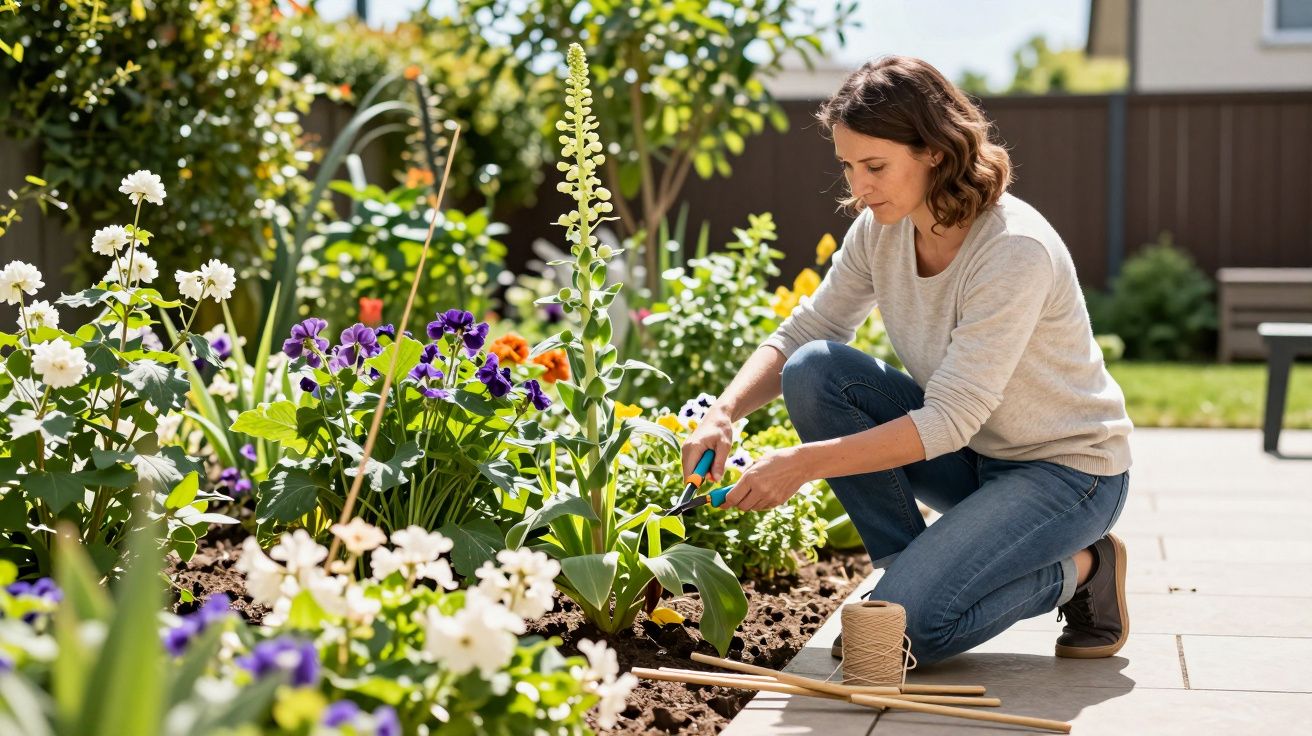
- Use planting as a soft barrier: airy grasses and low shrubs discourage cutting across without feeling like fencing.
- Define steps and thresholds: a contrasting nosing or a change of material reduces the “is this safe?” pause.
- Anchor corners: a focal point in a dead corner turns it from ignored space into a destination.
The goal isn’t to police your garden. It’s to reduce the tiny moments of uncertainty that make movement feel awkward - and to protect the areas you don’t want turned into footpaths by habit.
| Silent controller | What it does | Best use |
|---|---|---|
| Path width | Sets pace and sociability | Main routes vs side access |
| Surface texture | Adds or removes “friction” | Slow zones, safety, flow |
| Sightline reward | Creates destinations | Seating areas, corners, junctions |
FAQ:
- Do garden paths always need to follow the shortest route? No. They need to follow the most tempting route. If you offer a slightly longer path with a clearer line, better footing, and a visible reward, most people will choose it.
- What’s the quickest way to stop people cutting across the lawn? Make the shortcut feel mildly inconvenient: add a defined edge, shift a bed line, or place low planting where the foot naturally lands - and make the path itself smoother and more obvious.
- Is gravel a bad idea if I want easy access? Not necessarily, but it changes behaviour. Loose gravel slows pace and can be awkward for pushchairs and wheels; a stabilised gravel system improves access while keeping the same look.
- How do I make a small garden feel like it has “rooms”? Use a pinch point (pots, posts, planting) and a change of surface or level. The moment of passing through a threshold creates structure without walls.

Comments (0)
No comments yet. Be the first to comment!
Leave a Comment