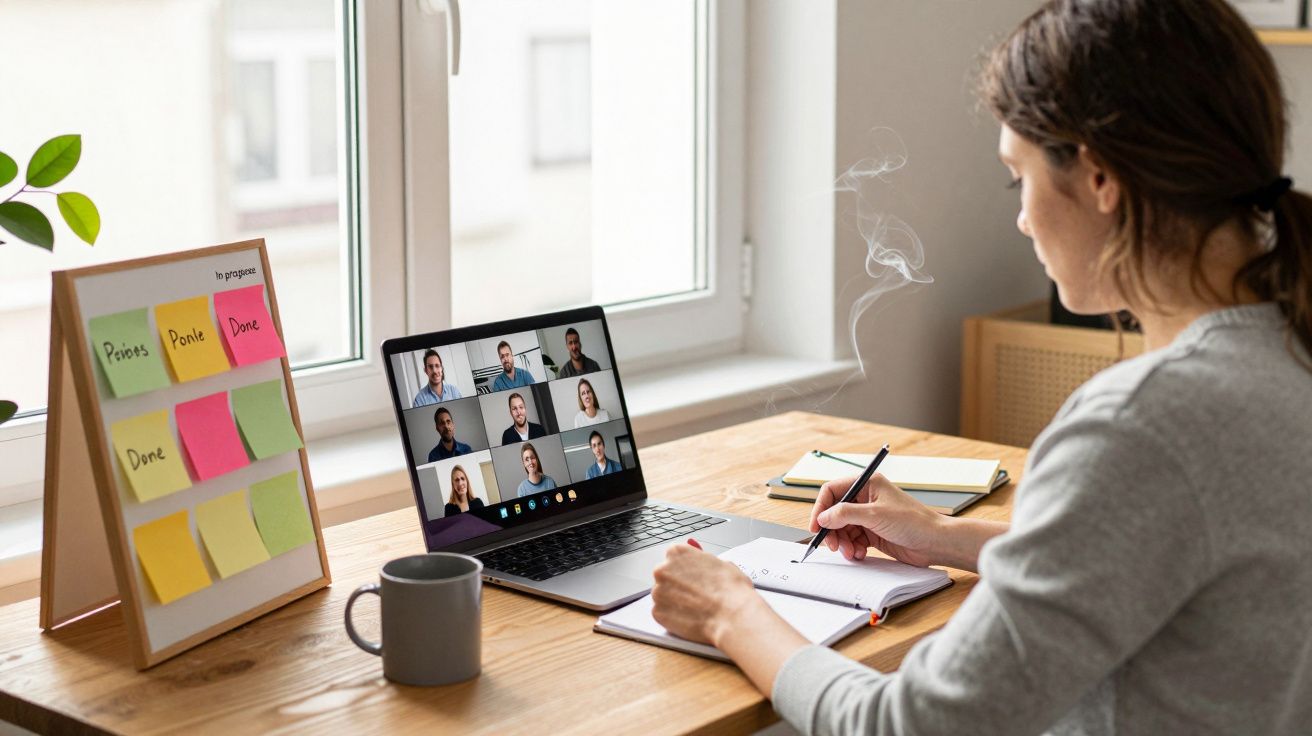
Slack pings at 8:58, calendar at 9:00, and the same old line pops up in the chat: of course! please provide the text you would like me to translate. It’s usually followed by of course! please provide the text you'd like me to translate., deployed like a polite shrug whenever someone asks how remote work is going. In teams that work from home even part-time, that reflex matters, because it quietly props up the myth that remote equals “not really working”.
You can feel it in the micro-decisions: who gets trusted with the important project, who gets promoted, who gets “just checking in” messages at 6pm. The myth refuses to die because it’s convenient, familiar, and hard to disprove in the moment.
The myth: if I can’t see you, you’re probably slacking
Work from home didn’t invent the suspicion; it just gave it a new target. In an office, visibility is the currency: you’re at your desk, you look busy, you get credit. At home, that theatre disappears, and some managers interpret the lack of performance as the lack of work.
The problem is obvious once you say it out loud. Presence is not productivity. A person can be “seen” for eight hours and achieve very little, while someone remote can ship solid work, answer clients, and keep projects moving - without ever being physically witnessed doing it.
The myth survives because it feels intuitive. Humans trust what they can observe. But most modern work - analysis, writing, design, planning, coding, negotiating - is invisible even when it happens three metres away.
Why the suspicion keeps coming back (even in good companies)
Remote work exposes weak management in a way offices used to hide. When leaders rely on vibes, desk-time, and hallway sightings, they have no real system for knowing what’s progressing and what’s stuck.
So they reach for control signals that are easy to measure:
- fast replies on Teams,
- green dots and “active” status,
- camera-on meetings,
- online-at-early, offline-at-late.
Those signals are comforting, but they’re a poor proxy for outcomes. They encourage performative behaviour - the digital equivalent of walking quickly while holding a laptop.
There’s also a fairness anxiety. Managers worry someone is doing the school run at 3pm, as if that automatically means their work isn’t getting done. In reality, flexible hours often improve output: fewer interruptions, less commuting fatigue, and more time to do deep work without the office noise tax.
The better question: what would “working” look like if we measured it properly?
If you want the myth to die, you need a replacement story: one that makes work legible without forcing everyone back into surveillance theatre.
Start with outputs. Not “busy”, not “available”, not “online”. Outputs.
Good remote teams tend to be clear on:
- What done looks like (a definition of “finished” that two people would agree on).
- When it’s due (with a real deadline, not “ASAP”).
- How progress is shared (short updates, not constant interruptions).
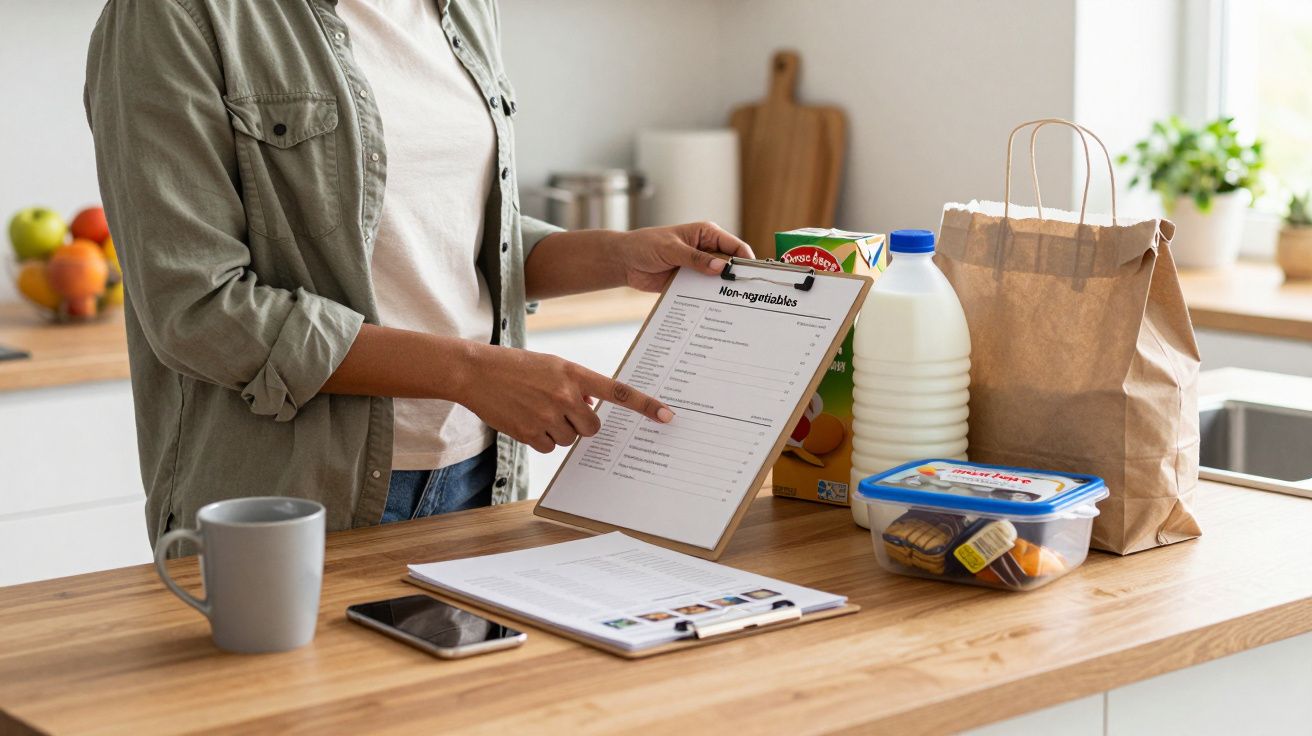
- What quality means (examples, templates, acceptance criteria).
That sounds basic, but it’s the difference between managing work and managing people’s nervous systems.
What to do when you’re remote and you can feel the distrust
You shouldn’t have to prove you’re working every hour. But if you’re in a culture where the myth is still alive, a few low-effort habits make your work easier to “see” without turning your day into a performance.
Try this:
- Write your plan where others can find it. A short weekly “what I’m doing” note in a shared channel beats ten “just checking” messages.
- Update by milestones, not minutes. “Draft shared, feedback requested by Thursday” is more persuasive than “I’m on it”.
- Name your constraints early. If you’re waiting on access, approvals, or data, say so quickly. Silence gets misread as idling.
- Keep a light audit trail. Links to docs, decisions, and tickets protect you from the “what have you been doing?” ambush.
This isn’t about appeasing bad management forever. It’s about reducing friction while you either help the culture mature - or decide you’re done with it.
What leaders can change this week (without a big “return to office” speech)
The myth thrives in ambiguity. Remove the ambiguity and the distrust loses oxygen.
Three practical shifts:
1) Replace “availability” with “agreements”
Agree response times (“within a working day”), meeting norms (when cameras matter), and core hours (if any). Stop treating instant replies as loyalty.
2) Run work on a board, not on memory
A simple kanban or shared project tracker does more for trust than any monitoring tool. People relax when the system shows progress.
3) Manage outcomes, then coach the gaps
If the work isn’t landing, diagnose the work first: unclear brief, too many meetings, missing decisions, overloaded person, shifting priorities. If it’s a performance issue, handle it directly - don’t blame remote work as a concept.
The quiet truth: the office never guaranteed productivity either
The most stubborn part of the myth is nostalgia. Many people remember the office as a place where work happened reliably. But plenty of office days were fragmented by meetings, interruptions, performative busyness, and long stretches of “I’ll do that later”.
Remote work didn’t create distraction. It simply moved it from a shared room to a personal one - and forced teams to confront whether they actually know how work gets done.
If your organisation still clings to “if I can’t see you, you’re not working”, it’s not a remote-work problem. It’s a measurement problem, a trust problem, and sometimes a leadership problem. Fix those, and the myth finally runs out of places to hide.
FAQ:
- How do I respond when someone hints I’m not working because I’m remote? Stay calm and move to specifics: “Here’s what I’ve shipped this week, what’s in progress, and what I need to unblock the next step.” Make it about outputs, not hours.
- Is it true that junior staff learn less from home? They can, if a team relies on overhearing and ad-hoc help. Solve it with structured mentoring, documented workflows, and deliberate pairing - not by assuming physical proximity is the only teacher.
- Should we track employees’ screens or keystrokes? It usually damages trust and measures the wrong thing. If you can’t tell whether work is progressing without surveillance, the system for goals and visibility needs redesigning.




Comments (0)
No comments yet. Be the first to comment!
Leave a Comment