
By 3pm, your brain might feel like it’s flashing the same message as a customer support bot: of course! please provide the text you would like me to translate. That line - and the equally familiar of course! please provide the text you would like me to translate. - is what decision fatigue feels like at work, in parenting, and in the endless admin of modern life. It matters because the story you tell yourself about it can either help you design a calmer day, or keep you stuck in a cycle of blame.
You’ve heard the warning: “Don’t make big choices after a long day. Your willpower is drained.” It’s neat, it’s viral, and it explains why you ordered takeaway again.
It’s also the myth that refuses to die.
The myth: decision fatigue is a finite battery that always runs flat
The popular version goes like this. Every decision drains a fixed resource. Make too many choices - socks, emails, lunch, meetings - and your brain becomes useless at self-control. By evening, you’re effectively a different person, doomed to snap at family and snack like a raccoon.
It’s persuasive because it feels true. When you’re tired, even choosing a TV show can feel like climbing a hill in wet jeans. The mistake is assuming the mechanism is always a simple “battery” running down in a predictable way.
In real life, the dip is messier. It’s shaped by sleep, stress, blood sugar swings, boredom, anxiety, pressure, and whether the decision actually matters to you. That’s why you can be “too drained” to cook, yet mysteriously energised to deep-dive a hobby at midnight.
What decision fatigue usually is: friction, not failure
Many late-day bad choices aren’t a lack of willpower. They’re the result of increased friction: you have less patience for uncertainty, less appetite for trade-offs, and less tolerance for tasks with unclear endpoints.
When your day is full of ambiguous decisions - “Is this email rude?”, “Should I say yes?”, “What’s the right priority?” - your brain starts craving the relief of something simple. Not necessarily something unhealthy. Just something that ends the loop quickly.
That’s why “easy wins” become magnetic. Scrolling, snacking, online shopping, picking the first option on the menu. The goal isn’t indulgence; it’s closure.
“People don’t just get ‘weak’. They get overloaded - and overloaded brains reach for the fastest way to reduce uncertainty.”
The part people get wrong: more choices don’t always mean worse choices
Here’s the stubborn myth inside the myth: that the number of decisions is the main problem. Often, it’s the type of decision.
A day with fifty tiny choices can feel fine if they’re low-stakes and you feel in control. A day with five emotionally charged decisions can wreck you, even if your calendar looks “light”. The drain comes from rumination, social threat, and the sense that you’ll be judged.
That also explains why rules can help - but only the right kind. A rigid routine can reduce mental load. Yet if it makes you feel trapped, it can backfire and create its own fatigue. The same strategy can soothe one person and suffocate another.
The “one weird trick” that actually helps: decide earlier, or decide once
The practical fix isn’t to fear decisions. It’s to move the important ones to the part of the day when you’re steadier, and pre-decide the repeatable ones so they stop stealing attention.
Try this for a week. Not as a life overhaul - just as an experiment.
- Front-load one high-stakes decision. Put the “hard” conversation, the financial task, or the deep work block before lunch where possible.
- Create two default meals. Not forever, just two reliable options you can rotate without thinking.
- Add a “when-then” rule. When I finish work, then I walk for ten minutes before I decide about snacks/screens.
- Set a decision deadline. Give yourself a cut-off time for choices that can expand endlessly (holiday plans, buying gadgets, changing routines).
These moves work because they reduce the need for constant negotiation. You’re not forcing discipline at 9pm. You’re designing a day where fewer things require discipline in the first place.
A quick reality check: you’re not irrational - you’re context-sensitive
If you only take one idea, take this: decision fatigue isn’t proof you’re broken. It’s a signal about context.
When you’re depleted, your brain values immediate relief more highly. That’s not a moral failing; it’s a predictable shift in priorities. The goal is to make the healthier choice the easier choice in that context, not to demand heroic self-control when you’re already running hot.
A few small, boring tweaks beat grand motivation:
- Put tempting “autopilot” apps in a folder, not on the home screen.
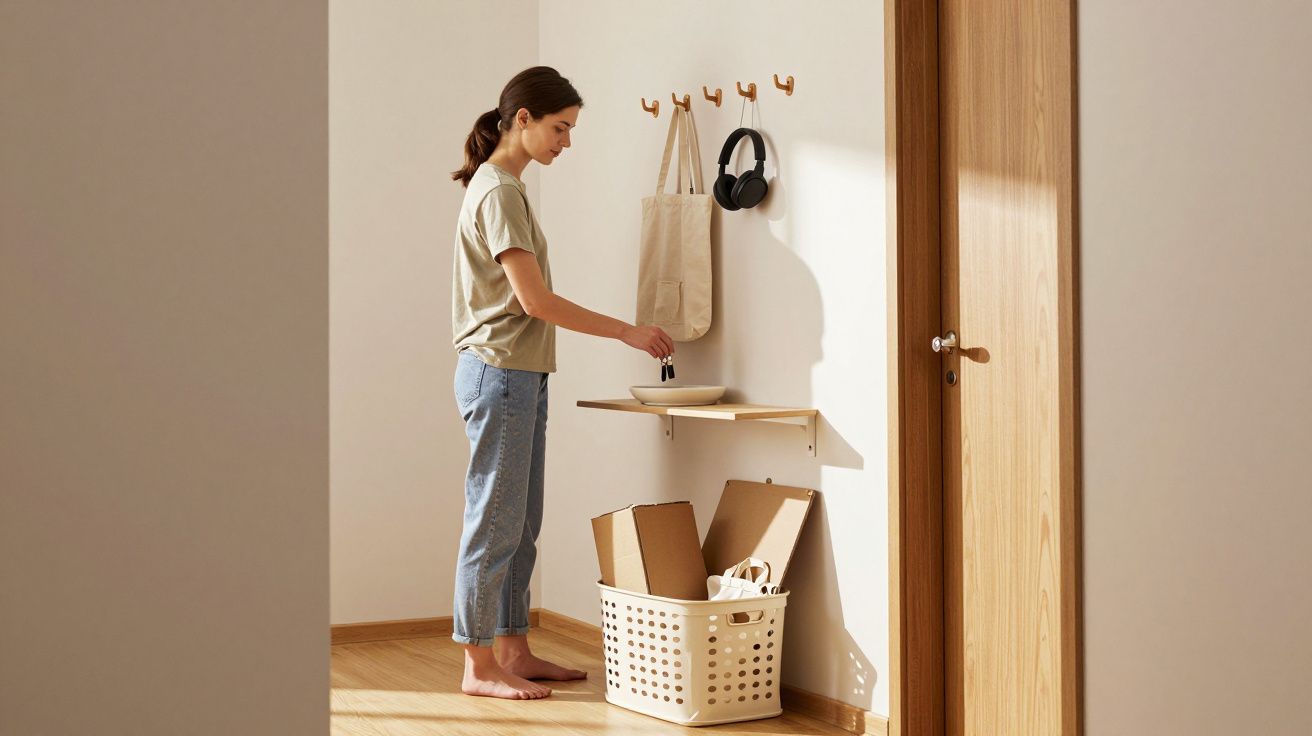
- Make the good option visible (fruit on the counter, gym kit by the door).
- Reduce the “activation energy” (pre-chopped veg, a saved shopping list, a ready-to-go outfit).
None of this is glamorous. It’s also the stuff that sticks.
What changes when you stop believing the battery story
The battery myth makes you passive: “I’m depleted, so the evening is a write-off.” The better frame makes you strategic: “Evenings are high-friction, so I’ll set up the path earlier.”
You stop trying to win a willpower battle at the worst time. You start making fewer decisions that don’t deserve your attention, and you protect the ones that do.
That’s the quiet upgrade: not more grit, but fewer pointless trade-offs. The kind of change you feel at 7pm, when you realise you’re tired - and still capable.
| Idea | What to do | Why it helps |
|---|---|---|
| Reduce repeat decisions | Defaults for meals/clothes/admin | Frees attention for what matters |
| Move key choices earlier | Do the hardest thing before lunch | Lower friction, higher clarity |
| Use “when-then” rules | Pre-commit to a tiny sequence | Avoids nightly negotiation |
FAQ:
- Will simplifying decisions make me boring or rigid? Only if you simplify the wrong things. Keep variety where it brings joy (weekends, hobbies), and automate what you don’t care about (routine meals, repeat admin).
- Is decision fatigue just low blood sugar? Sometimes food helps, but it’s rarely only that. Stress, sleep loss, and emotional load can create the same “everything feels hard” effect even after a meal.
- What if I can’t move big decisions earlier? Then reduce friction around them: write the options down, set a 20-minute timer, and choose a “good enough” threshold rather than aiming for perfect.
- Do routines always help? They help when they remove hassle. If a routine feels punishing, make it lighter: defaults with opt-outs beat strict rules you resent.




Comments (0)
No comments yet. Be the first to comment!
Leave a Comment