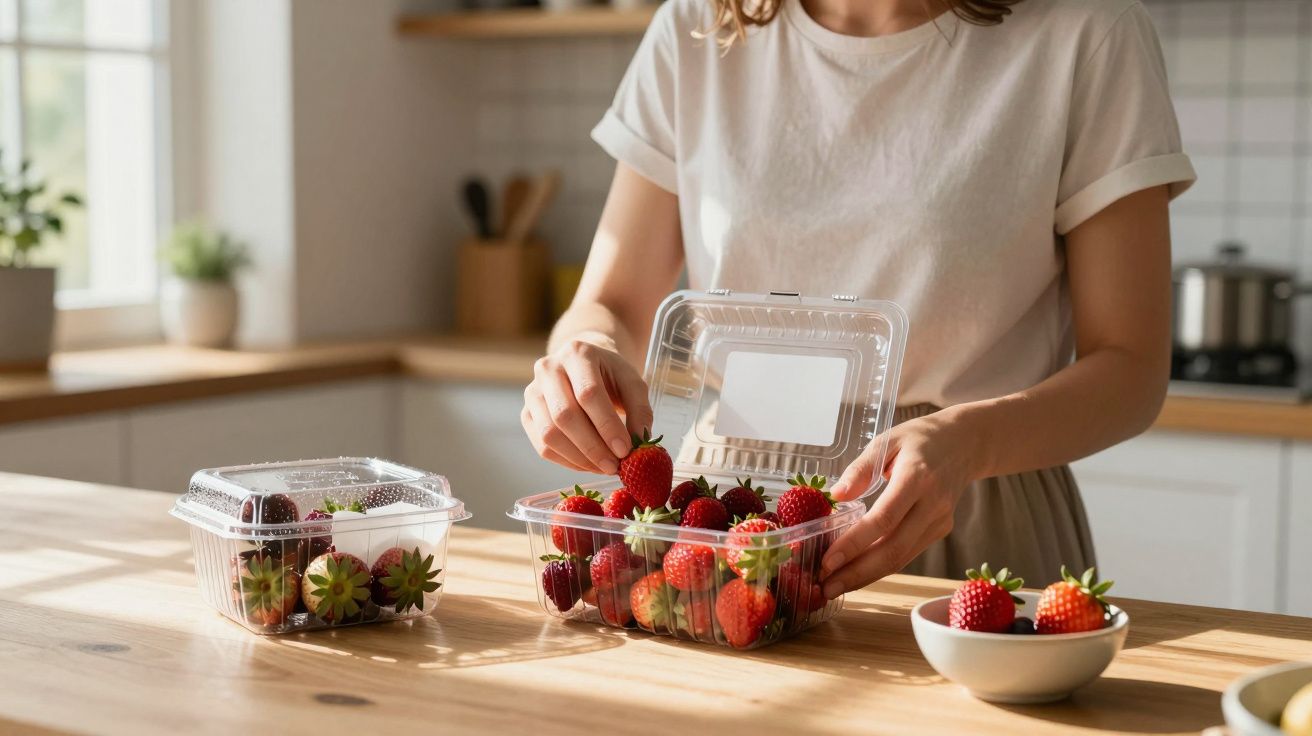
Strawberries show up everywhere - tipped onto porridge, tucked into lunchboxes, piled into Wimbledon cream - and they feel like the easiest “healthy treat” in the shop. Then you hit a message that looks like an error: it appears you did not enter any text to be translated. please provide the text you would like translated into united kingdom english. That’s the vibe of strawberry shopping, too: you think you’re buying one simple thing, until the details make you stop and ask what you’re actually paying for.
You pick up a punnet that smells faintly sweet through the plastic, bright as a promise. You get home, wash them, bite in - and one is watery, another is perfect, three are pale in the middle, and the last has a soft spot you didn’t see. It’s not bad luck. It’s the catch: strawberries are sold on looks, but they behave on time.
The catch most people miss: strawberries don’t “ripen” in your kitchen
With a banana, you can buy it firm and let it turn. With strawberries, what you buy is what you’ve got. They stop developing sweetness once they’re picked, and they only move in one direction afterwards: softer, duller, then mould.
That’s why a punnet can look flawless under supermarket lights and still taste thin. Colour tells you some truth, but not the whole truth; and “best before” tells you even less if they were picked early to survive transport. The clock started days ago - you’re just holding the last stretch of it.
How to read a punnet in 15 seconds (without turning into a produce detective)
Start with the parts people ignore because the berries are doing all the posing: the leaves, the bottom layer, and the air inside the box. Those three are where the reality leaks out.
Here’s a quick check that works in a hurry:
- Look at the calyx (the green leafy top): fresh, perky leaves usually mean fresher fruit; dry, curling leaves suggest age.
- Tip the punnet slightly: if berries slide as a single mass, they’re often soft and leaking; if they move individually, you’re in better territory.
- Scan the bottom corners: one crushed berry underneath can seed a whole punnet with mould by tomorrow.
- Check for condensation: misty plastic means moisture; moisture means mould moves faster.
- Smell through the vents if you can: a strong strawberry scent is good; a faint “wine” note means fermentation has started.
Let’s be honest: nobody does all of this every time. But doing even two of these checks cuts your “beautiful but bland” punnets down dramatically.
The price-per-berry trap (and why bigger isn’t always better)
Large strawberries photograph well and fill a punnet with confidence. They’re also more likely to be watery if they’ve been pushed for size over flavour, and they bruise more easily in transit. Smaller berries can be sweeter because the flavour-to-water balance often feels more concentrated - and because they’re sometimes grown for taste rather than shelf presence.
A simple example. Two punnets at the same price: one has 12 large berries, one has 20 smaller ones. If three large berries are soft by day two, you’ve lost a quarter of the pack. If three small berries go, it’s annoying - but it’s not the same hit. Waste changes the “bargain” more than a yellow sticker does.
Make them last longer with one boring rule (and two small exceptions)
The boring rule is dryness. Strawberries hate sitting wet, and washing them early is like giving mould a head start. Keep them cold, keep them dry, and handle them less than you think you should.
A low-effort routine that works:
- Don’t wash until you’re about to eat. If you must rinse ahead, dry thoroughly on kitchen roll.
- Store in the fridge, but not sealed. A slightly open container reduces condensation.
- Line the container with kitchen roll to catch moisture, and swap it if it dampens.
- Remove any bruised berry immediately. One bad one really does spoil the rest.
Two exceptions are worth knowing. If your berries are already damp when you buy them, pat them dry straight away. And if you’ve got a punnet that’s on the edge, eat those first and save the firmer ones for later - “rotation” sounds silly until it saves half the pack.
“Strawberries are a freshness purchase masquerading as a pantry purchase. Treat them like fish: buy with intention, eat with urgency.” - a greengrocer in south London, said while stacking punnets like they were glass
A simple reality check you can do at home
Slice one strawberry in half from the middle of the punnet, not the top layer. If the centre is pale and the texture looks spongy, you’ve likely got fruit picked early. If it’s evenly red with a glossy, tight grain, you’re in luck.
This isn’t about being fussy. It’s about matching expectations: a watery punnet is fine for blending, cooking, or jam; it’s disappointing for eating raw. The catch isn’t that strawberries are unreliable - it’s that we buy them for one job and end up using them for another.
| What you notice | What it often means | What to do |
|---|---|---|
| Condensation inside the punnet | Moisture = faster mould | Choose a drier punnet; store slightly open |
| Dry, curling leaves | Older fruit / longer time since picking | Eat same day or cook |
| Pale centres when cut | Picked early, less sweetness | Use for smoothies, compote, baking |
FAQ:
- Should I wash strawberries as soon as I get home? Usually no. Wash just before eating to avoid adding moisture that speeds up mould. If they’re already damp, dry them well.
- Are organic strawberries always better tasting? Not always. Organic can be excellent, but flavour still depends on variety, ripeness at picking, and freshness.
- Is it safe to cut off a mouldy bit and eat the rest? Best avoided. Mould can spread beyond what you can see, especially in soft fruit.
- Do strawberries get sweeter if I leave them on the counter? They’ll soften and smell stronger, but they won’t develop more sweetness like some other fruit.
- What’s the best use for bland strawberries? Roast them with a little sugar, make a quick compote, blend into smoothies, or cook down into jam - heat concentrates flavour.




Comments (0)
No comments yet. Be the first to comment!
Leave a Comment